
Most people picture Paris under a July sun, sitting outside a café with a glass of rosé. That picture is wrong for at least four months of the year. Paris in winter runs cold, gray and often wet, yet it’s also the version of the city where you get the Mona Lisa room without 200 people blocking the view. The Seine turns steel-colored, the chestnut sellers disappear and the Christmas lights on the Champs-Élysées stay lit from late November into early January.
This guide covers what Paris in winter actually feels like month by month, what the Christmas markets cost and where to find them, which museums and day trips make sense when it’s 5°C outside and the specific mistakes that catch first-time winter visitors off guard.
In this guide you will find:
- Exact average temperatures and rainfall for December, January and February
- Where the real Christmas markets are (and which ones are tourist traps)
- Current 2026 Louvre ticket prices and how to avoid the security line
- Ice skating rink locations, prices and opening months
- A realistic daily budget broken into hotel, food and transport
- Which day trips work in winter and which ones don’t
Quick Info Box
| Detail | Information |
| Location | Paris, Île-de-France, France |
| Nearest Airport | Charles de Gaulle (CDG), 35 km / 45–60 min from city center |
| Best Time to Visit | Late November to mid-January for lights and markets January for lowest crowds and prices |
| Travel Time from Nearest Major City | 2h 15min from London by Eurostar 3h 15min from Amsterdam by train |
| Days Recommended | 4 to 6 days |
| Average Daily Cost | €90 to €140 per person (budget to mid-range, excluding flights) |
Paris in Winter: What the Weather Actually Does
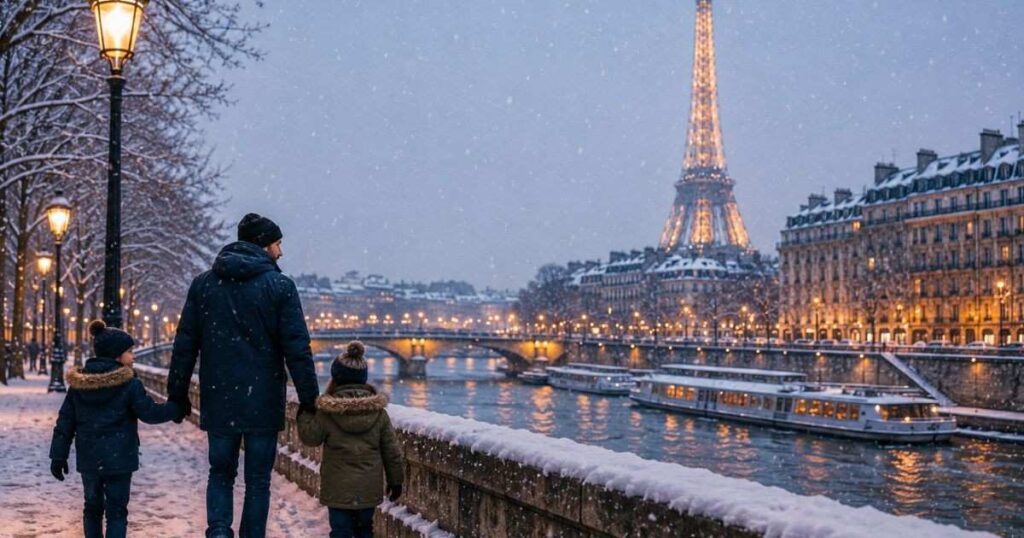
Paris in winter means three distinct months and they don’t feel the same. December runs mild for winter, with highs near 7°C (45°F) and lows around 3°C (37°F) but it’s also one of the wettest months, with rain falling on roughly half the days. January is colder and drier, with highs near 6°C (43°F) and lows dropping to 2°C (35°F) and it’s the quietest month for tourism.
February sits close to January in temperature, around 8°C (46°F) by day but daylight starts stretching back out. Snow is rare across all three months and usually melts within a day when it falls. Paris almost never drops below freezing during the day, so a proper wool coat, waterproof shoes and a scarf handle 90% of what winter throws at you.
The sun sets around 5:00 PM in December and January, so plan museum visits and outdoor walks for daylight hours. Rain gear matters more than a heavy parka you’ll duck in and out of heated cafés and metro stations all day anyway. Pack layers you can remove indoors, since French buildings run their heating hot.
Pro Tip: Book a hotel room with actual radiator heat, not just central air, older Haussmann-era buildings vary wildly in how warm they keep guest rooms.
Christmas Markets, Lights and Winter-Only Events
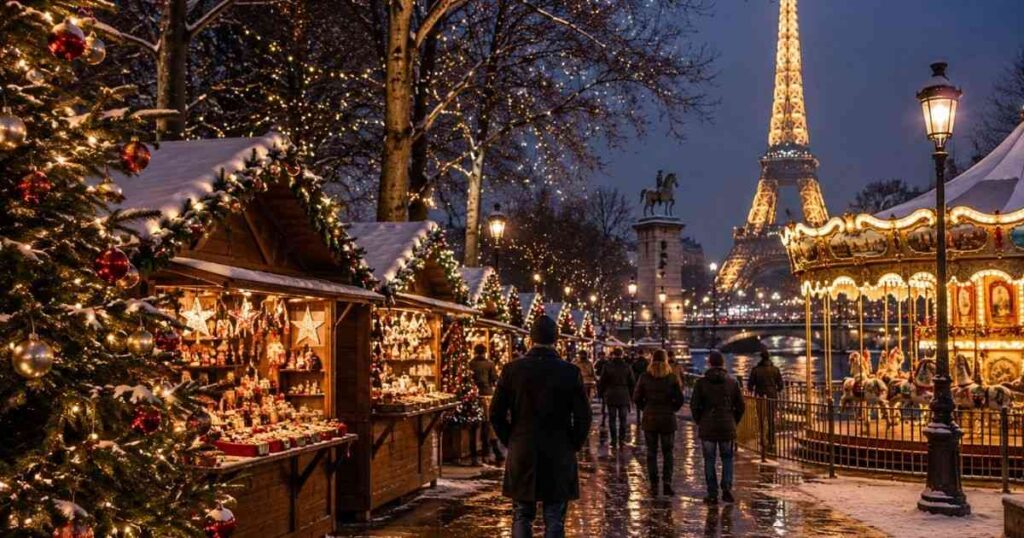
Paris in winter means Christmas markets from late November through December 31, though they don’t cluster in one central square like in Strasbourg or Vienna. The Tuileries Garden hosts La Magie de Noël, sandwiched between the Louvre and Place de la Concorde, with a Ferris wheel, an ice rink and food stalls selling vin chaud (mulled wine) for around €6 a cup. It’s the biggest and busiest of the city’s markets.
A smaller, quieter option sits at Place des Abbesses in Montmartre, a five-minute walk from Sacré-Cœur. It has fewer stalls but far fewer crowds and it pairs naturally with a walk down Rue Lepic afterward. The Champs-Élysées itself isn’t a market so much as a light show, the trees along the avenue get wrapped in illuminations from late November through mid-January and it costs nothing to walk it.
Ice skating adds another free-to-cheap activity. Rinks open at Hôtel de Ville and near the Montparnasse Tower from December through March, with skate rental running about €7. In some years, a rink opens on the Eiffel Tower’s first level, though that one requires paying tower admission on top of skate rental. Most visitors don’t realize the markets start winding down right after New Year’s Day, so a January 2 arrival misses the market stalls entirely, even though the lights often stay up another week or two.
Verdict: Go the first two weeks of December for markets and lights together go in January if markets don’t matter and low prices do.
Best Things to Do in Paris in Winter
Winter is museum season in Paris, plain and simple indoor attractions turn from “an option” into “the plan.” The Louvre now charges €22 for EEA residents and €32 for everyone else as of January 2026 and winter is when you can actually stand in front of the Mona Lisa for more than ten seconds. Book a timed-entry slot online regardless of season walk-up lines still form even in January, just shorter ones.
The Musée d’Orsay, home to the Impressionist collection, runs about €16 for a standard adult ticket and gets noticeably quieter after New Year’s. For something warmer than air, Aquaboulevard Paris’s indoor water park near Porte de Sèvres makes an odd but genuinely fun contrast to a freezing afternoon outside.
Day trips shrink in appeal during winter because gardens and outdoor chateaux lose their draw but Versailles still works well since most of what you’re paying for (the Hall of Mirrors, the State Apartments) is indoor. The trip takes about 40 minutes by RER C train from central Paris and costs roughly €10 round-trip. Skip the Gardens of Versailles unless you enjoy bare trees and mud save that trip for April through June instead.
Compare this to Nice or Lyon, both popular French winter alternatives Nice stays milder (12–14°C) but has far fewer indoor attractions to fill a rainy day, while Lyon’s food scene rivals Paris at half the hotel cost. Paris still wins for winter specifically because so much of its appeal, the Louvre, the Musée d’Orsay, the department stores, sits indoors already.
Pro Tip: Visit the Louvre on a Wednesday or Friday evening both nights it stays open until 9:45 PM and the after-6 PM crowd thins out fast.
Practical Tips: Getting Around and What to Avoid
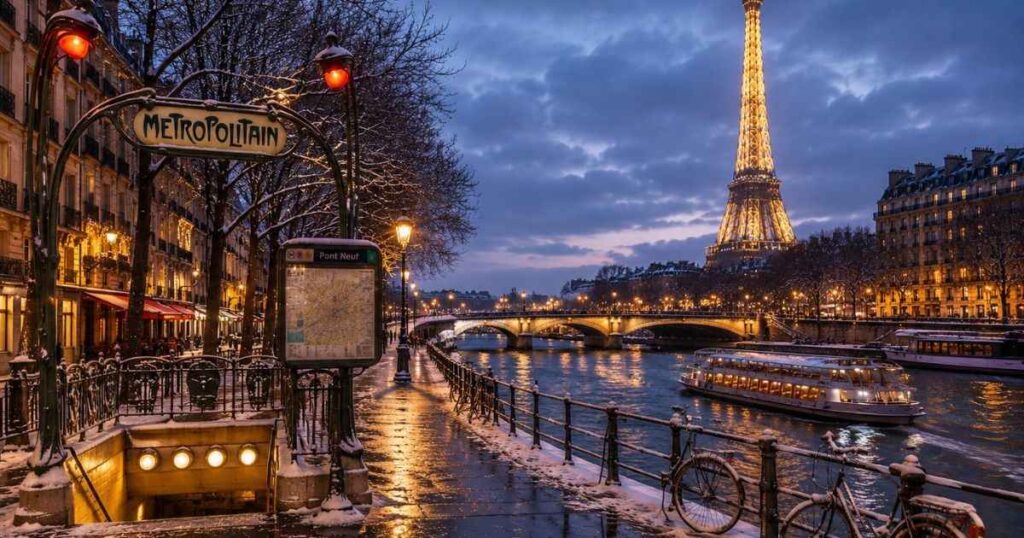
Paris in winter runs on the same metro and RER system as summer and honestly it’s the better season to use it if you’re not sweating on a non-air-conditioned platform in July. A weekly Navigo pass costs about €30 and covers unlimited metro, bus and RER travel within central zones, which usually beats paying per ride if you’re staying four days or more.
Restaurants add a seasonal upside: winter menus lean into duck, venison and game birds that don’t appear on summer cards. A sit-down bistro dinner runs €25 to €40 per person without wine, while a bakery lunch (a sandwich and pastry) costs closer to €8 to €12. Hotel prices drop the most of any season, sometimes 20-30% below summer rates for the same room, especially in the first three weeks of January.
What most tourists get wrong is they pack one heavy coat and nothing else, then overheat constantly moving between 18°C metro cars and freezing streets. Layers beat one big coat every time. They also assume rain means the trip is ruined. Paris in winter deals with light rain or drizzle on most days, not downpours and it rarely disrupts a walking itinerary.
Avoid visiting outdoor-first attractions like the Luxembourg Gardens’ fountains or a Seine river cruise’s open-top deck expecting summer conditions book the enclosed boat option instead, which runs year-round for about €15.
Pro Tip: Buy a carnet-style multi-ride pass only if staying under three days otherwise the weekly Navigo pass is cheaper per trip.
“Planning more Hawaii day trips? Our guides on things to do in antibes cover the rest of the region in detail.”
Frequently Asked Questions
How many days do you need in Paris in winter?
Four to six days covers the major sights without rushing, since shorter daylight hours (sunset around 5 PM) mean less usable time per day compared to summer. Five days lets you split time between the Louvre, Musée d’Orsay, Montmartre and a one day trip to Versailles. Fewer than three days forces you to cut either a major museum or a neighborhood walk.
Is Paris worth visiting in winter?
Yes, winter delivers the lowest hotel prices, the shortest museum lines and the only window to see the Christmas markets and light displays. The tradeoff is cold, often wet weather and shorter days. For anyone prioritizing indoor culture over outdoor scenery, winter beats summer on value alone.
What is the best time to visit Paris in winter?
The first two weeks of December combine mild-for-winter temperatures with Christmas markets and lights still fully running. Early-to-mid January offers the lowest prices and quietest museums but markets have already closed. Choose December for atmosphere, January for budget and crowds.
Is Paris expensive for tourists in winter?
Paris in winter costs noticeably less than summer, with hotel rates often down 20-30% and flights typically cheaper outside the December 20–January 2 holiday window. A realistic daily budget runs €90 to €140 per person for a hotel room, two meals, transport and one paid attraction. Peak Christmas week (December 18–31) prices climb back toward summer rates.
Can you do a day trip from Paris to Versailles in winter?
Yes, the Château de Versailles stays open year-round and the RER C train takes about 40 minutes from central Paris for roughly €10 round-trip. The palace interior (Hall of Mirrors, State Apartments) works fine in winter since it’s entirely indoors. Skip the gardens themselves, which look bare and muddy until spring.
Final Thoughts
Paris in winter isn’t the postcard version of the city and that’s exactly the appeal of fewer crowds, lower prices and the Louvre without an elbow in your ribs. The cold and the rain are real but layered clothing and a city built around cafés and covered passages make it manageable. If you go for one thing, make it the Tuileries Christmas market at dusk in mid-December, when the Ferris wheel lights up against the Louvre and the vin chaud actually earns its purpose. Arrive by 4:30 PM, before the crowds peak and stay until the lights on the Champs-Élysées switch on for the night.