
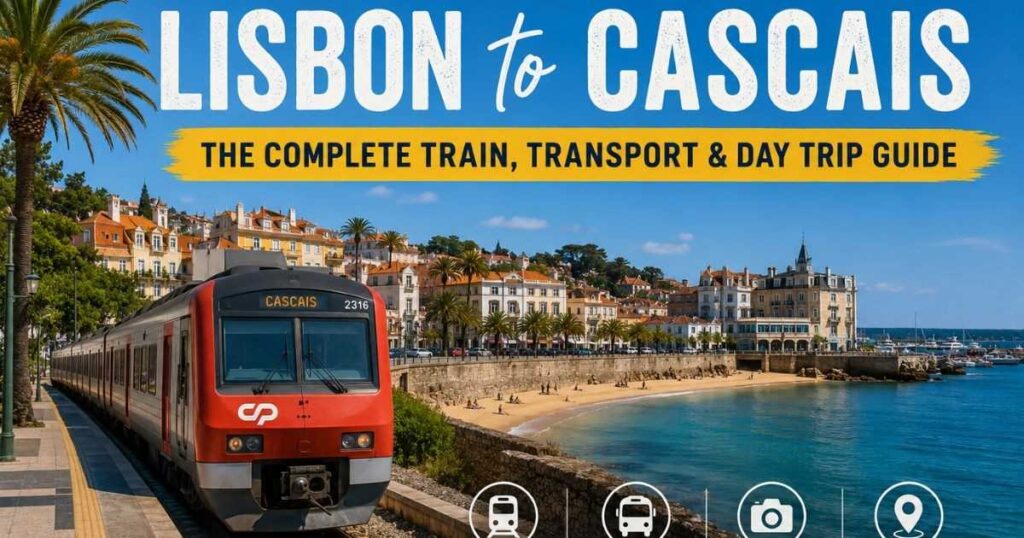
Most tourists treat Cascais like a beach suburb, something to tick off in two hours. The Lisbon to Cascais train costs €2.55 one way, runs every 20 minutes from Cais do Sodré Station and delivers you into a working harbor town where Portuguese royalty spent summers from 1870 onward. Three beaches, a 16th-century citadel and the westernmost point of continental Europe sit within reach of the station. This guide covers every transport option, the right beach for your visit and the spots most day-trippers walk straight past.
In this guide you will find:
- Exact train fares for Lisbon to Cascais and how to skip the 30-minute ticket queue
- Which beach suits swimming, surfing or families with station distances
- How to reach Cabo da Roca without a car using the 403 bus
- The free seawater pool most visitors never find
- The best months to go and when to arrive to avoid peak crowds
Quick Info Box
| Detail | Info |
| Location | Cascais, Lisbon District — 30 km west of Lisbon |
| Nearest Airport | Lisbon Airport (LIS) — 37 km / 90 min via metro + train |
| Best Time to Visit | May–June and September–October |
| Travel Time from Lisbon | 33–40 minutes by train |
| Days Recommended | Half-day to full day |
| Average Daily Cost | €30–€70 per person |
Lisbon to Cascais by Train: Tickets and Timing
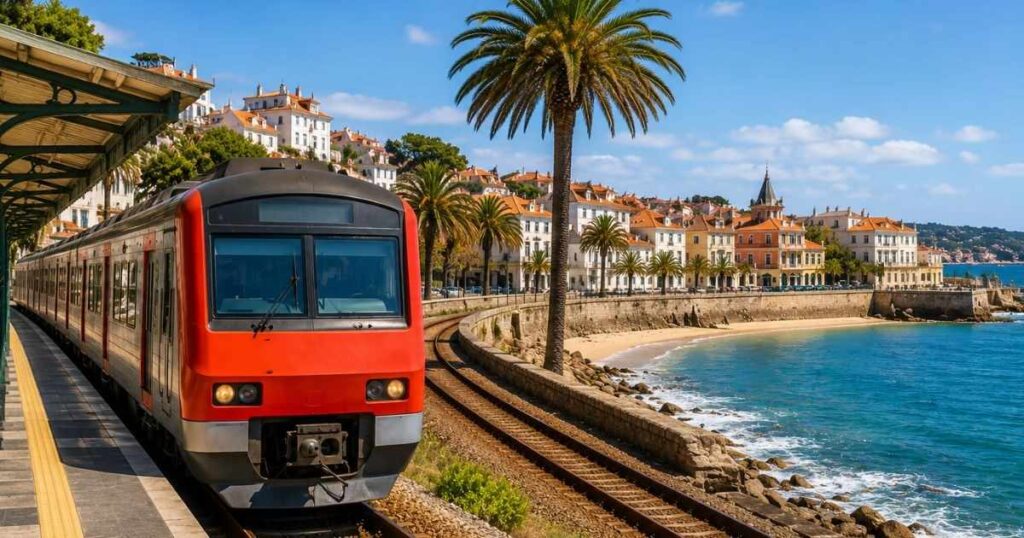
The Lisbon to Cascais train runs from Cais do Sodré Station, a 5-minute walk from Praça do Comércio. Trains run every 20 minutes from 05:30 to 00:30. The journey takes 33–40 minutes.
A single adult ticket costs €2.55 on the Navegante card (€0.50 card fee on first purchase). Children pay €1.30. No return ticket exists, two singles make a €5.10 round trip. No seat reservations, this is a commuter line.
The biggest friction on the Lisbon to Cascais route is the Cais do Sodré ticket queue. In July and August, machines back up 20–30 minutes between 08:30 and 11:00 trains leave while people still wait. The fix: load Zapping credit onto your Navegante card at any metro station the night before and tap in at the barrier.
To combine the Lisbon to Cascais train with Sintra the same day, buy the €11 24-hour transport pass at any metro station, it covers both lines with no per-journey queuing.
Pro Tip: Sit on the right side of the train facing forward from Oeiras onward, the line runs alongside the Atlantic for 15 uninterrupted minutes before Cascais station.
Cascais Beaches: Which One Matches Your Day
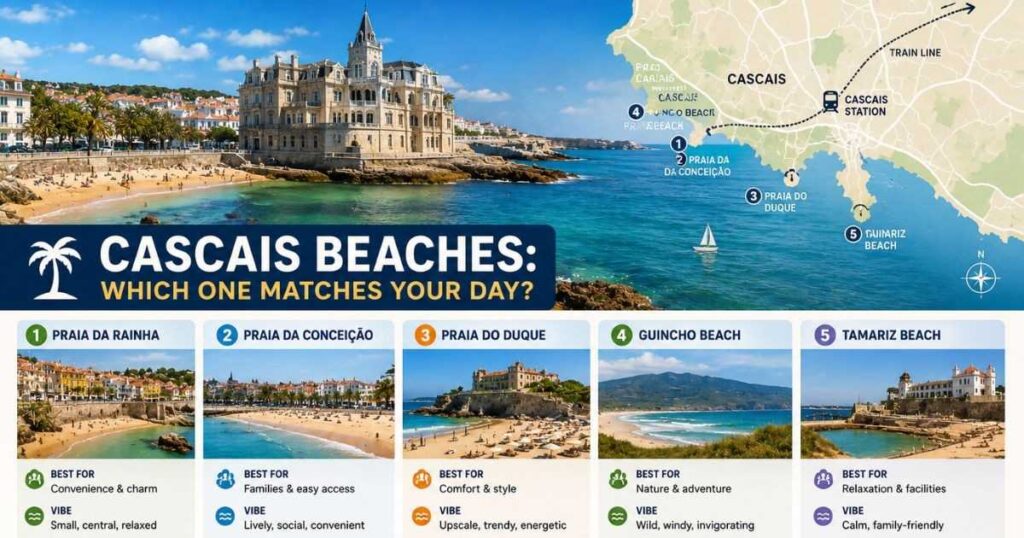
Cascais has six beaches across 6 km of coastline. Three sit within 10 minutes of the station.
Praia da Conceição 5 minutes from the station is the best all-round swimming beach. Calm water, lifeguards in summer, sun loungers at €14.50 for two. Families and swimmers start here.
Praia da Rainha connects directly to Conceição via a 300 m promenade. Smaller and quieter, it suits anyone wanting less crowd without walking further.
Praia do Guincho sits 9 km northwest 403 bus from Cascais, €2.50, 20 minutos. Facing the open Atlantic with consistent swell, it is the correct choice for surfing and kitesurfing. Strong currents make it unsuitable for children.
Most people doing the Lisbon to Cascais trip never find the Piscina Oceânica Alberto Romano, a free seawater pool 1.5 km from the station along the coastal promenade. Sheltered, no admission fee and warmer than the open sea. The best option for young children.
Pro Tip: Rent a bike near the station for €8–€10 per hour and ride the Paredão promenade westward, a 5 km car-free coastal path past cove beaches that appear on no tourist map.
What to Do in Cascais Town
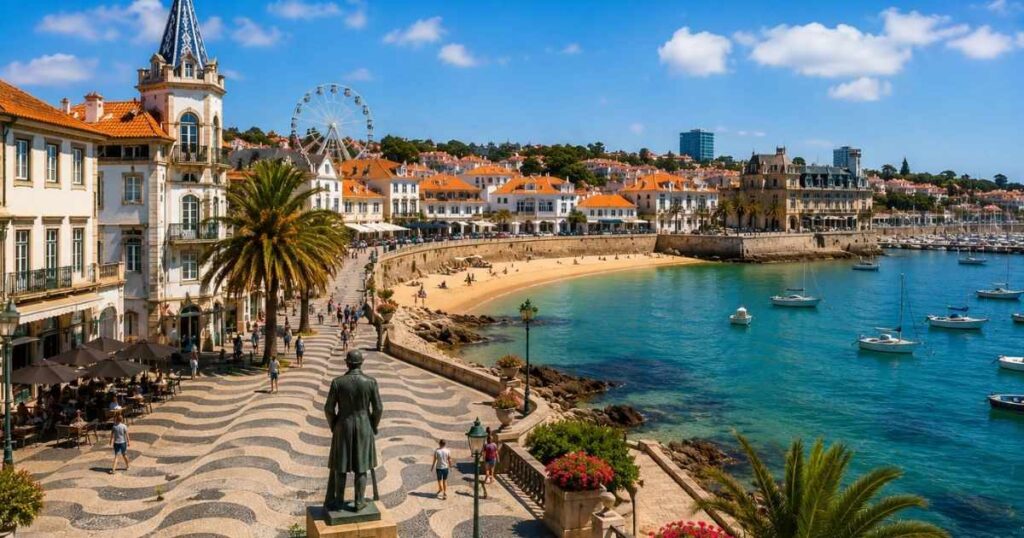
The Cascais Citadel sits 600 m from the train station on the harbor headland entry to the outer walls and tower is free. Built in the 16th century, it gives unobstructed views over the harbor and Atlantic from the rampart walk.
Boca do Inferno is a cliff formation 2 km west of town where Atlantic waves blow upward through a natural blowhole. Entry is free. Most day-trippers from Lisbon to Cascais stay 10 minutes and leave, arriving at high tide in September or October produces far stronger wave action than the flat summer version.
The Museu Condes de Castro Guimarães sits on the coastal road between town and Boca do Inferno, a turreted mansion with Portuguese 17th-century furniture and a 16th-century illuminated manuscript. Entry costs €4, takes 45 minutes. Almost every visitor on the Lisbon to Cascais route walks straight past it.
For lunch, eat near the Largo do Mercado fish market grilled fish plates run €13–€17 at Taberna da Praça versus €18–€25 at harbor-front tourist spots 300 m away.
Verdict: One full day covers three beaches, Boca do Inferno, the Citadel and lunch but only if you arrive before 10:00.
Lisbon to Cascais and Cabo da Roca: The Full Day Route
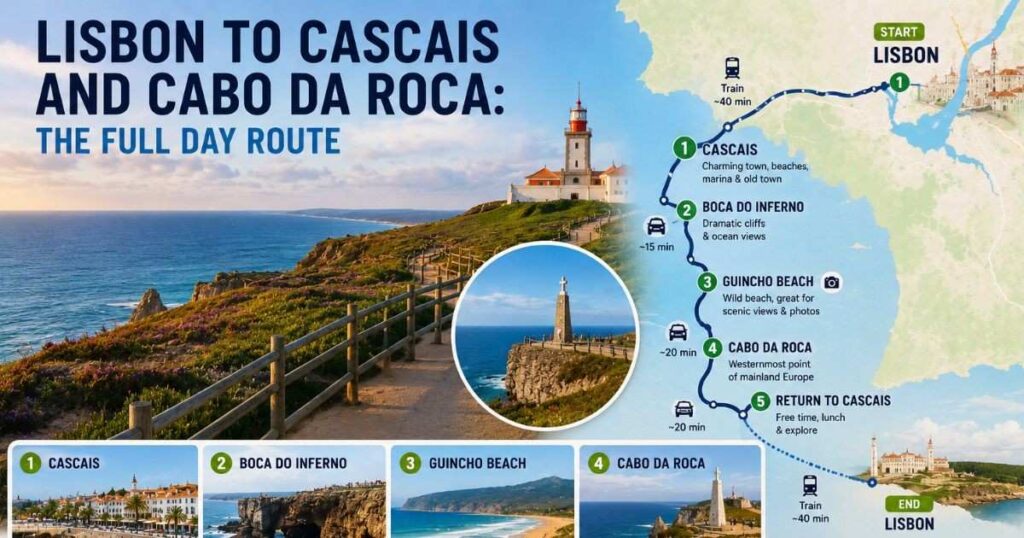
Cabo da Roca is the westernmost point of continental Europe, a 140 m Atlantic cliff with a lighthouse built in 1772. It sits 18 km from Cascais, reachable by the 403 bus: 35 minutes, €4.35 one way, cash to the driver.
The practical route: take the Lisbon to Cascais train in the morning, spend 3–4 hours in town, then catch the 403 bus to Cabo da Roca in the afternoon. Return to Lisbon on the 1624 bus back to Cascais (35 minutes, €4.35), then the train. The 1624 runs a different coastal road from the 403, stops at beaches inside the Sintra–Cascais Natural Park and avoids doubling back.
| Option | Time | Cost | Best For |
| Train | 33–40 min | €2.55 | Most visitors |
| Uber | 35–45 min | €25–40 | Convenience |
| Rental Car | 40 min | Variable | Multi-stop trips |
Pro Tip: The 403 bus stops at Praia da Adraga, a beach below a 100 m cliff inside the Natural Park that ranks among Europe’s best beaches and sees a fraction of Cascais town crowds.
Best Time for the Lisbon to Cascais Trip
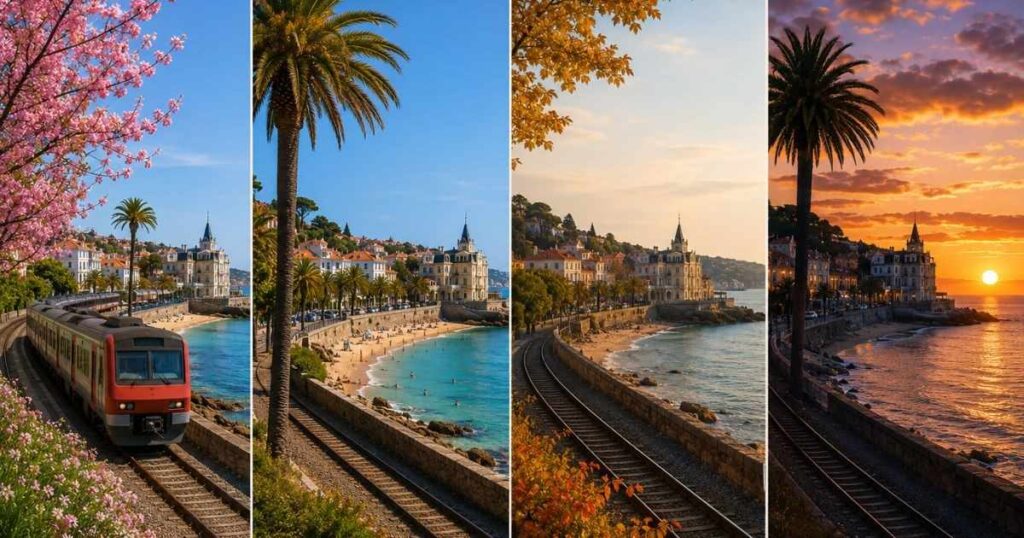
June and September are the strongest months. June gives full beach infrastructure at sea temperatures of 18–20°C and 30–40% fewer visitors than August. September keeps water at 19–21°C while crowds drop sharply after school holidays end the second week of the month.
July and August work only with an early start, take the 08:00 train from Cais do Sodré to arrive before sun loungers fill by 10:30. Trains run standing-room by 09:30 on summer weekends.
October through April, Cascais runs local and quiet. Restaurants operate without tourist pricing, Guincho picks up Atlantic swell for wind sports and accommodation costs roughly half of August rates.
Pro Tip: Visit on a Wednesday morning the Largo do Mercado area runs a flea market from 09:00 to 13:00 and the fish market peaks with the morning catch around 07:30.
“Planning more Portugal day trips? Our guides on Day Trips From Lisbon cover the rest of the region in detail.”
Frequently Asked Questions
How long does the Lisbon to Cascais train take?
The Lisbon to Cascais train takes 33 to 40 minutes from Cais do Sodré Station. Express services take 33 minutes, services stopping at Estoril and Oeiras take 37–40 minutes. Trains run every 20 minutes from 05:30 to 00:30 with no advance booking needed. The adult single fare is €2.55 on the Navegante card.
Is Cascais worth a day trip from Lisbon?
Cascais is one of the most practical day trips you can take from Lisbon 40 minutes by train for €2.55, with beaches, a citadel and coastal walks all reachable on foot from the station. A full day on the Lisbon to Cascais route covers beaches, town and the 403 bus to Cabo da Roca comfortably.
What is the best time to visit Cascais from Lisbon?
June and September are the best months for the Lisbon to Cascais trip. June delivers full beach infrastructure at 18–20°C with 30–40% fewer crowds than August. September keeps water at 19–21°C with lighter visitor numbers after school holidays. July and August require an 08:00 departure to beat peak crowds between 10:00 and 14:00.
Is Cascais expensive compared to Lisbon?
Cascais runs slightly more expensive at harbor restaurants but reasonably near the fish market. Grilled fish costs €13–€17 at Largo do Mercado versus €18–€25 at harbor-front spots. A full Lisbon to Cascais day including train, lunch and beach loungers costs €35–€50 per person.
Is Cascais better than Sintra as a day trip from Lisbon?
Cascais and Sintra serve completely different purposes. Sintra delivers UNESCO World Heritage palaces at €60–€100 per person for a full day. The Lisbon to Cascais train offers beaches and a harbor town at €5.10 return for a half-day or full beach day. Most visitors should do both on separate days they leave from different Lisbon stations and share only the €11 combined day pass.
Conclusion
The Lisbon to Cascais train is the most straightforward coastal day trip in Portugal €2.55, 40 minutes, no booking and you step off into a harbor town with beaches and a cliff walk to the edge of continental Europe.
Take the 08:00 train from Cais do Sodré on a weekday in September, walk the promenade west to Boca do Inferno while the town is still quiet and reach the cliff at 09:30 before the first tour buses arrive that hour with the Atlantic below and the path to yourself earns every cent of the ticket.