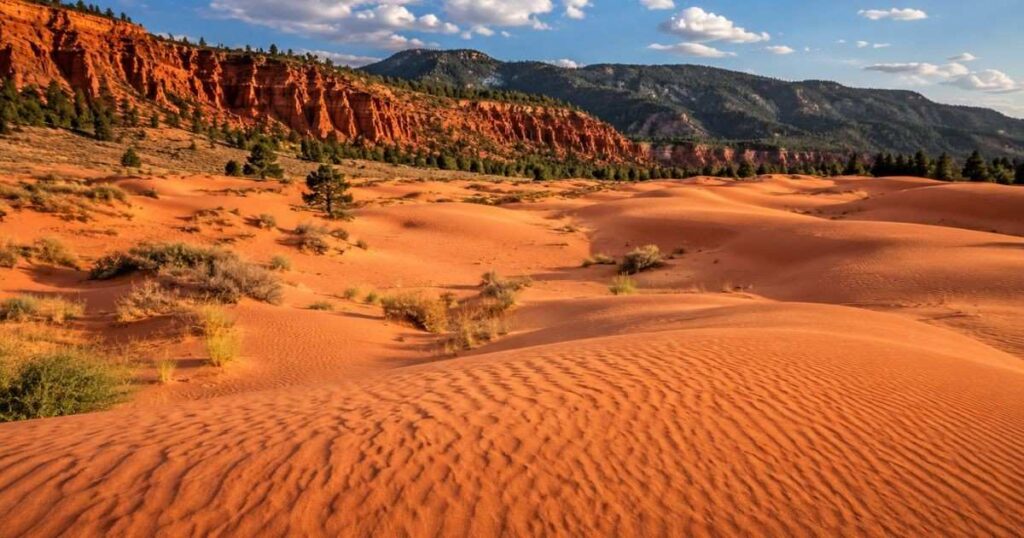
Most travelers picture Utah’s dunes as a minor pit stop before Zion and then they crest the first ridge at Coral Pink Sand Dunes Utah and watch the sand shift color from salmon to deep rose as clouds pass overhead. Wind funnels through a gap between the Moquith and Moccasin Mountains, piling sand into dunes at Coral Pink Sand Dunes Utah that reach 50 feet tall and move up to 50 feet a year. The park protects 3,730 acres and roughly 2,000 of those acres are open to off-highway vehicles. This guide covers what it costs to ride, hike or camp here, plus how it fits into a Zion or Grand Canyon North Rim road trip.
IN THIS GUIDE YOU WILL FIND:
- Current entry and camping fees for Coral Pink Sand Dunes Utah in 2026
- Which sections of the park allow ATVs and which stay foot-traffic only
- Why this is the only place on Earth to find the Coral Pink Tiger Beetle
- The best months to avoid sand hot enough to burn bare feet
- Exact driving distances to Kanab, Zion and the Grand Canyon’s North Rim
- What most visitors skip that’s worth the extra 20 minutes
QUICK INFO
Location | Kane County, Utah, 12 miles southwest of Kanab off Hancock Road Nearest Airport | Kanab Municipal Airport, 15 minutes St. George Regional Airport, about 1.5 hours Best Time to Visit | April to June and September to October, before summer sand temperatures climb past 120°F Travel Time from Nearest Major City | About 4.5 hours from Salt Lake City, 1.5 hours from Las Vegas Days Recommended | Half a day for hiking and photos, a full day if you’re riding OHVs Average Daily Cost | $15 to $150 per person depending on whether you rent an ATV
What Makes Coral Pink Sand Dunes Utah Different
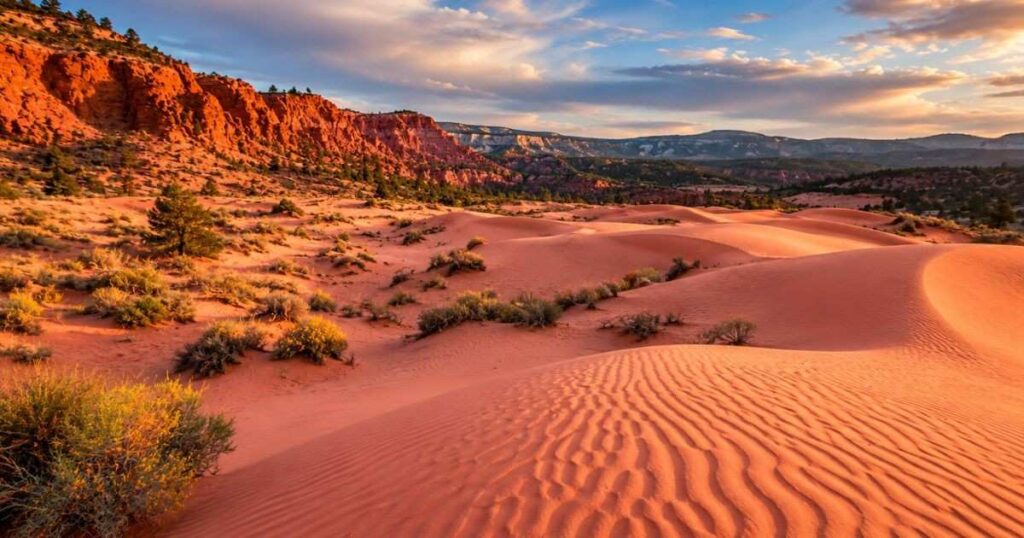
Coral Pink Sand Dunes Utah gets its rust-colored sand from eroded Navajo sandstone, rich in iron oxide, that wind has ground down over thousands of years. The dunes sit at 6,000 feet elevation, which keeps summer nights cooler here than in nearby Zion Canyon even when daytime sand temperatures still climb past 120°F. This is the only major dune field on the entire Colorado Plateau and the shifting sand supports the Coral Pink Tiger Beetle, an insect found nowhere else on the planet. You will find piñon-juniper forest and red sandstone cliffs framing the dunes on every side, a contrast most photos of the park don’t fully capture.
About 90% of the dune field, roughly 2,000 acres, is open to off-highway vehicles, while the rest stays foot-traffic only for hikers and families. The Sand Highway offers wide, open riding across the main dune field and the South Boundary Trail runs several miles along the eastern edge for a longer loop. Most visitors don’t realize you can rent an ATV in Kanab and never bring your own, since several local outfitters run guided tours straight into the park. The dunes themselves move as much as 50 feet per year, so the exact shape of the landscape genuinely looks different from one season to the next.
Pro Tip: Walk the dunes barefoot only in the early morning before 10 a.m., since the coral-pink sand gets hot enough by midday to burn skin within seconds.
Fees, Camping and What Coral Pink Sand Dunes Utah Charges
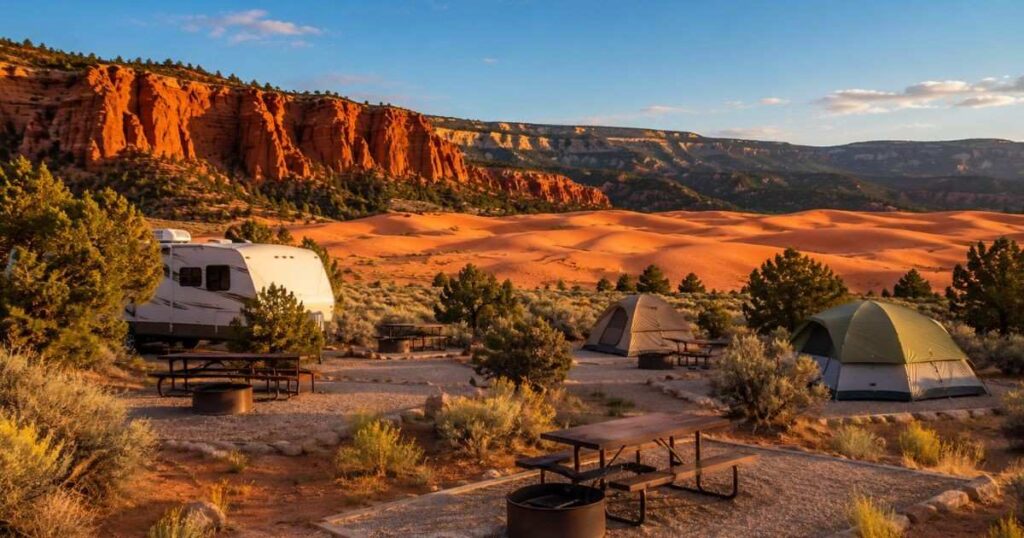
Day-use entry costs $15 per vehicle or $10 per vehicle for Utah seniors 65 and older and covers up to eight people in the car. The Utah State Parks annual pass covers entry here and at 43 other parks statewide for $75, which pays off after about six visits. Two campgrounds serve the park: the older campground offers dry sites without hookups starting around $20 to $28 a night and the newer campground provides water and electric hookups for roughly $30 to $45 a night. Both campgrounds include hot showers and flush toilets, a step up from the vault-toilet-only setups at most nearby state parks.
Reservations for camping at Coral Pink Sand Dunes Utah run through the Utah State Parks reservation system and summer weekends fill up weeks in advance. ATV rentals from outfitters in Kanab typically run $100 to $150 for a half-day, not including the park’s separate entry fee. Sandboards and sand sleds rent for around $15 to $25 for the day if you’d rather slide down a dune than ride across it. Bring your own water regardless of your plans, since the visitor center sells only limited snacks and the nearest full grocery store is back in Kanab.
Pro Tip: Book a campsite in the newer campground with hookups if you’re visiting between June and August, since the hot showers make a real difference after a dusty afternoon on the dunes.
Best Time to Visit and Nearby Stops
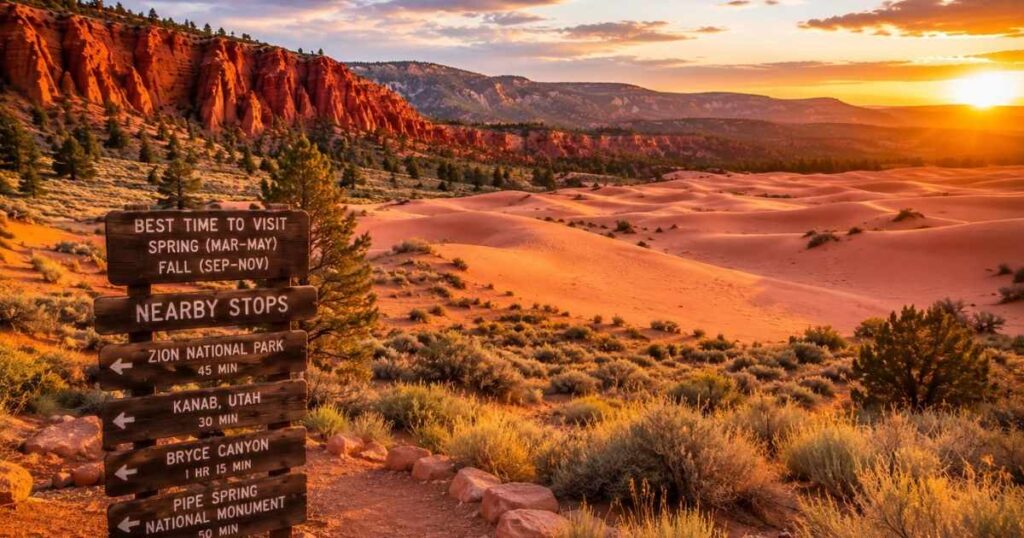
April through June and September through October bring the mildest conditions, with air temperatures in the 60s and 70s and sand that stays walkable well past midday. Summer months push air temperatures over 100°F and sand surface temperatures past 120°F, which makes hiking or riding after 11 a.m. genuinely risky without real shade or hydration. Winter transforms Coral Pink Sand Dunes Utah into one of the quietest seasons at the park, with far fewer OHV riders and occasional light snow dusting the red sand. Clear nights any season deliver strong stargazing, since the remote location keeps light pollution low enough to see the Milky Way with the naked eye.
Kanab sits just 10 miles southeast, nicknamed “Little Hollywood” after more than 200 Western films shot there, including scenes from Westworld filmed right on these dunes. Zion National Park’s south entrance is about 20 miles west, roughly a 40-minute drive along Highway 9. The Grand Canyon’s North Rim sits about 80 miles south, making a two-park day feasible if you leave Coral Pink Sand Dunes Utah by early afternoon. Bryce Canyon National Park is roughly 90 minutes northeast, a common third stop on a southern Utah loop.
Verdict: Visit in May or late September if timing is flexible, since you’ll get comfortable sand temperatures and thinner crowds than the June-through-August OHV rush.
Getting to Coral Pink Sand Dunes Utah and What to Avoid
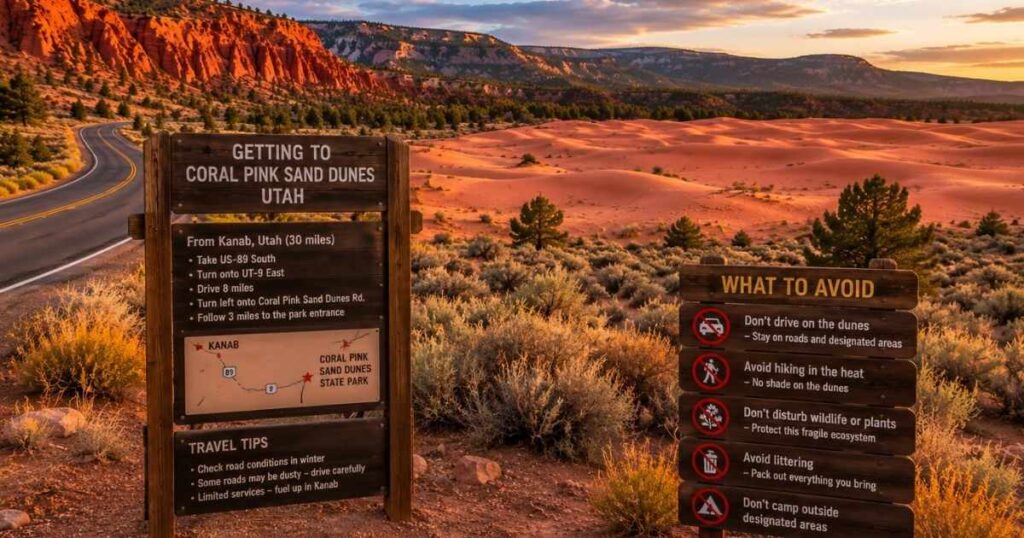
From Kanab, take US Highway 89 north for 10 miles to Hancock Road, then follow the signed turns west into the park the entire route is paved to the parking lot. From Salt Lake City, the drive covers about 310 miles and takes close to 4.5 hours, usually routed through Interstate 15 to Highway 89 South near Mount Carmel Junction. The park stays open year-round during daylight hours only, so plan your arrival with enough daylight left for the drive back to lodging. GPS occasionally suggests unpaved shortcuts through backcountry roads stick to the signed Hancock Road route instead.
The most common mistake is arriving without a helmet if you plan to ride, since Utah law requires helmets for OHV riders under 18 and strongly recommends them for everyone. Another frequent error is skipping the nature trail near the visitor center, a short interpretive loop that explains how the dunes form and shift, something most visitors walk right past. Pets need a six-foot leash at all times and the hot sand poses the same burn risk to paws that it does to bare feet. Carrying passengers on OHVs built for a single rider is illegal and dangerous, regardless of what you’ve seen other riders do.
Pro Tip: Check the Coral Pink Sand Dunes Utah park website the morning of your visit for any Stage 2 fire restrictions, which ban all open flames including charcoal grills during dry summer stretches.
“Planning more Arizona day trips? Our guides on bell rock trail, Cathedral Rock Sedona, montezuma castle arizona , flagstaff to grand canyon, phoenix to grand canyon, north rim grand canyon, upper vs lower antelope canyon and goosenecks state park utah cover the rest of the region in detail.”
Frequently Asked Questions
How many days do you need at Coral Pink Sand Dunes Utah?
Half a day at Coral Pink Sand Dunes Utah covers the hiking trails, photography spots and a short walk into the dunes without any OHV rental. A full day makes sense if you’re riding ATVs, since guided tours and rentals typically run two to four hours each. Most travelers pair it with an overnight stay in Kanab rather than camping inside the park itself.
Is Coral Pink Sand Dunes Utah worth visiting in 2026?
Yes, it remains the only major sand dune field on the entire Colorado Plateau and the coral-colored sand looks nothing like the white dunes at White Sands or the tan dunes at Great Sand Dunes National Park. The moment you arrive, the contrast between the rose-colored sand and the surrounding red cliffs and green piñon-juniper forest becomes obvious. The $15 entry fee is modest compared to nearby national park entrance costs.
What is the best time to visit Coral Pink Sand Dunes Utah?
Spring and fall, specifically April through June and September through October, offer the most comfortable air and sand temperatures for hiking or riding. Summer sand surface temperatures regularly exceed 120°F, making midday activity uncomfortable without shade. Winter brings the smallest crowds and occasional snow, which creates a striking contrast against the pink sand.
Is Coral Pink Sand Dunes Utah expensive for tourists?
Entry alone is inexpensive at $15 per vehicle but costs rise quickly if you add ATV rentals, which run $100 to $150 for a half-day through Kanab outfitters. Camping adds another $20 to $45 per night depending on hookups. A car-only visit with no rentals or camping can realistically cost under $20 for the whole group.
Can you do a day trip from Zion National Park to Coral Pink Sand Dunes Utah?
Yes, the drive from Zion’s south entrance takes about 40 minutes along Highway 9 and US-89, making this an easy half-day add-on. Many visitors base themselves in Kanab or Springdale and split a day between Zion’s canyon trails and the dunes. Arrive at the dunes in late afternoon if you’ve spent the morning in Zion, since the lower sun angle brings out the deepest pink and orange tones in the sand.
Final Thoughts
Coral Pink Sand Dunes Utah delivers a genuinely different landscape than the red rock canyons that dominate the rest of southern Utah, all for a $15 entry fee and a short detour off Highway 89. Whether you spend the day riding ATVs across 2,000 acres of open dune or just walking barefoot up the nearest ridge at sunrise, the rose-colored sand against piñon-juniper forest is worth the stop on its own. Arrive by 8 a.m. in summer to catch the sand while it’s still cool enough to walk without shoes and climb the tallest visible dune for a 360-degree view of the Moquith Mountains. Stay until the low sun turns the entire field a deeper shade of crimson before you head back toward Kanab.