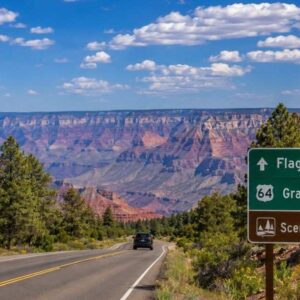
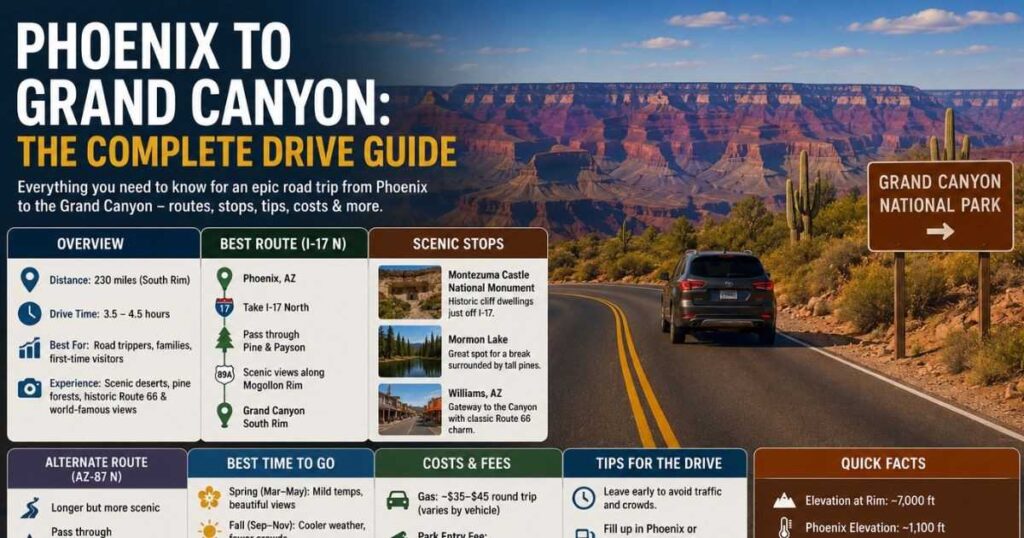
Phoenix to Grand Canyon looks like a straightforward highway run on a map but the drive itself is the part most visitors underestimate. You’ll climb from 1,100 feet of desert saguaro cactus in Phoenix to nearly 7,000 feet of pine forest at the South Rim in under four hours and the temperature swing is real enough to need a jacket you didn’t pack. The direct route covers 230 miles up I-17 through Flagstaff, though three real route variations exist depending on whether you want speed, scenery or a stop in Sedona. This guide breaks down the actual distance, the entrance fee and whether attempting Phoenix to Grand Canyon as a single-day trip is worth the exhaustion.
In this guide you will find:
- The exact mileage and drive time for all three main routes north
- Whether a Sedona detour is worth the extra 40 minutes
- The Grand Canyon entrance fee and what it actually covers
- Why Williams, Arizona makes a smarter overnight stop than Tusayan
- The best months to drive based on temperature and crowd levels
- Whether a same-day Phoenix to Grand Canyon round trip is realistic
Quick Info Box
| Detail | Information |
| Location | Grand Canyon National Park South Rim, Coconino County, Arizona |
| Nearest Airport | Phoenix Sky Harbor International Airport (PHX), the starting point of this drive |
| Best Time to Visit | March-May and September-November |
| Travel Time from Phoenix | 230 miles, 3.5-4 hours via I-17 and Flagstaff |
| Days Recommended | 1 day trip is possible but rushed 2-3 days is comfortable |
| Average Daily Cost | $70-100 budget, $180-260 mid-range, $350+ luxury (per person, lodging included) |
Phoenix to Grand Canyon: Distance and Route Options
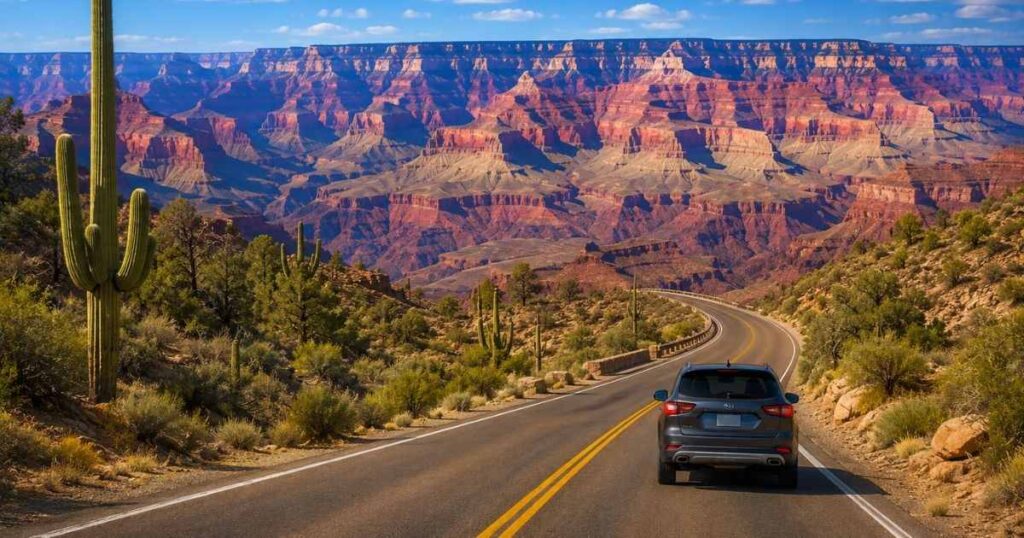
The most direct route from Phoenix to Grand Canyon covers 230 miles, taking Interstate 17 north to Flagstaff, then Highway 180 or Highway 64 the final 80 miles to the South Rim entrance, a drive of about 3.5 to 4 hours without stops. This route climbs steadily from the Sonoran Desert through juniper grasslands and into ponderosa pine forest, with almost the entire drive on well-maintained interstate and state highway. Fuel stations sit frequently enough along I-17 that planning ahead isn’t necessary until you’re past Flagstaff.
A second option follows I-17 to the Highway 179 exit, detours through Sedona’s red rock scenery, then continues north through Oak Creek Canyon on Highway 89A before rejoining the direct route near Flagstaff. This adds roughly 40 minutes to the total drive but trades highway monotony for one of Arizona’s most photographed stretches of road. Most first-time visitors to the state consider this detour worth the extra time, even on a tight schedule.
A third route swaps I-17 for Highway 69 and 89 through Prescott, adding about 10 minutes overall while passing through the former territorial capital’s Victorian downtown. None of the three routes require technical driving skill or four-wheel drive and all three merge onto the same final stretch through Williams or directly into the South Rim entrance.
Pro Tip: Take the Sedona detour on the way up when you’re fresh and stick to the direct I-17 route on the way back when you’re ready to get home faster.
Grand Canyon Entrance Fee and What It Covers
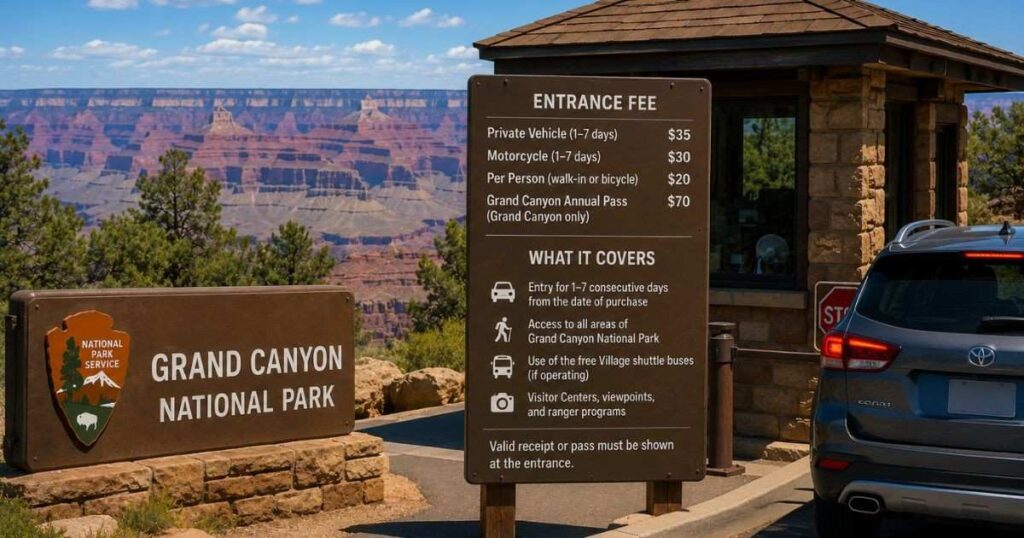
The entrance fee for Grand Canyon National Park is $35 per vehicle, valid for seven consecutive days, which matters if you’re planning to enter more than once during a multi-day stay near Williams or Tusayan. Motorcycles pay $30 and pedestrians or cyclists pay $20 per person. An America the Beautiful Pass costs $80 and covers every federal fee site nationwide for a full year, paying for itself after just two visits to any national park.
No reservation or timed entry is required to enter the South Rim, unlike some national parks that now cap daily visitor numbers. You simply pay at the gate or show your pass and parking near the Canyon View Information Plaza connects to the free shuttle system covering Mather Point, Yavapai Point and the Hermit’s Rest route along the rim. Overflow lots handle the summer crowds, though arriving before 10am still gives you the shortest wait and the easiest parking.
Most visitors don’t realize lodging inside the park itself, at places like El Tovar, needs to be booked months ahead during peak season, while Williams and Flagstaff hotels usually have same-week availability even in July. Staying in Williams also means you can catch the Grand Canyon Railway the next morning instead of driving the final stretch yourself.
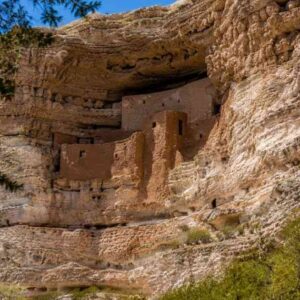
Pro Tip: Buy the America the Beautiful Pass online before you leave Phoenix if you’re planning to visit Montezuma Castle or Sedona’s national forest trailheads on the same trip it covers both.
Best Time to Drive Phoenix to Grand Canyon
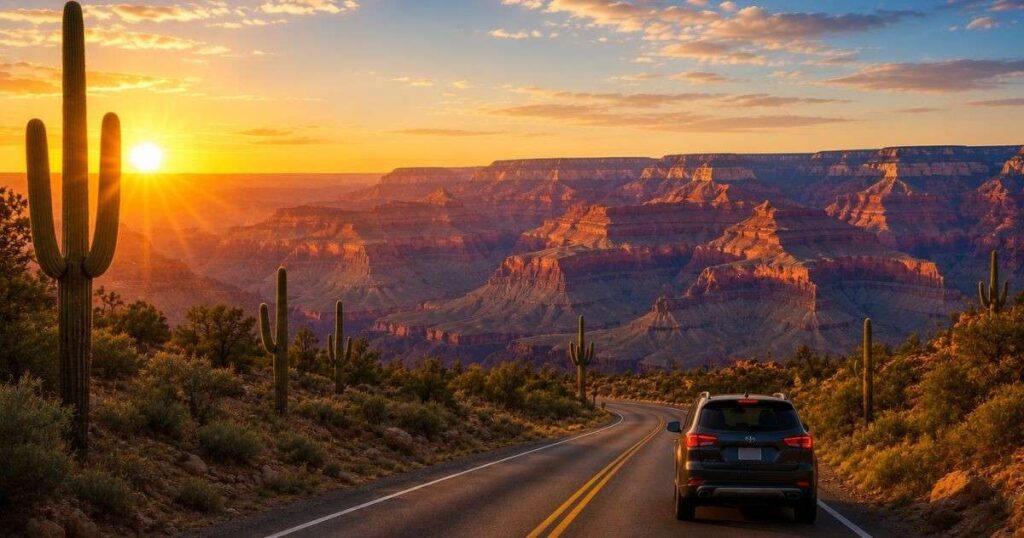
March through May and September through November bring the most comfortable driving conditions, with Phoenix temperatures still bearable for the desert stretch and South Rim highs sitting in the 60s and 70s°F. Summer months push Phoenix past 100°F before you’ve even left the city, though the elevation gain means the South Rim itself stays noticeably cooler than the desert you started in. This temperature contrast is part of what makes the drive memorable but it also means dressing in layers rather than just packing for one climate.
Winter driving is entirely doable on the direct I-17 route, though snow and occasional road closures hit the Flagstaff area and the final stretch into the park more often than the desert portion. December through February brings the thinnest crowds of the year at the South Rim and popular viewpoints that feel packed in July go nearly quiet. Spring weather can swing unpredictably, with 70°F afternoons at the rim following near-freezing mornings within the same week.
Weekend return trips from the Grand Canyon back toward Phoenix regularly run 15-45 minutes longer than the outbound drive, especially on Sunday afternoons, due to traffic bottlenecking through Flagstaff and Sedona. Leaving the canyon by early afternoon on a Sunday avoids most of that delay.
Verdict: Drive up in April or October for the mildest temperatures on both ends of the trip and if you’re going in summer, leave Phoenix before sunrise to beat the desert heat on the first leg.
Is a Same-Day Phoenix to Grand Canyon Trip Realistic?
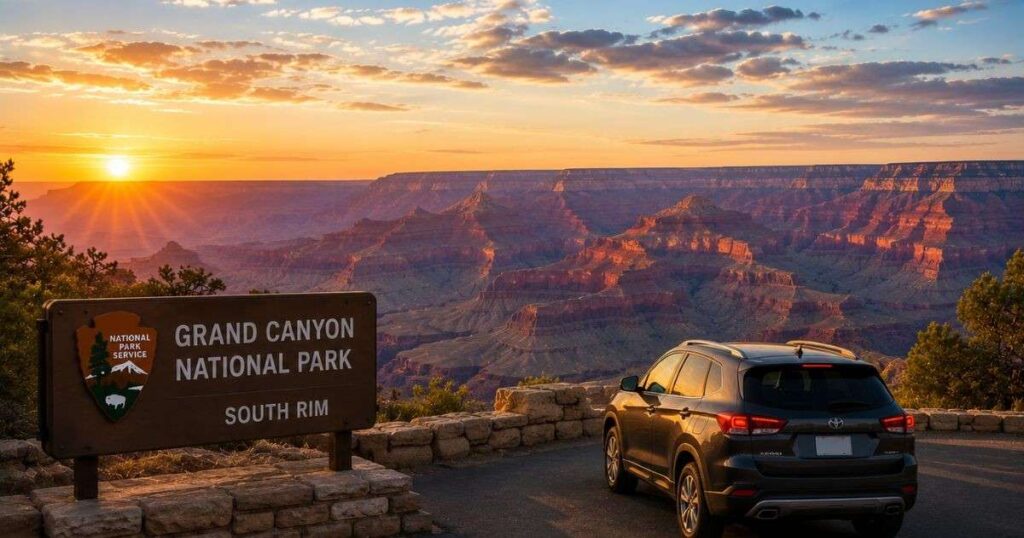
A same-day round trip from Phoenix to Grand Canyon is technically possible but it means roughly 7-8 hours of total driving squeezed around whatever time you spend at the rim, which usually works out to just 3-4 hours actually at the canyon. That math makes sense for travelers on a tight itinerary who simply want to see it once but it leaves no room for a sunrise or sunset session, a rim trail walk or any of the small-town stops along I-17 that make the drive itself worthwhile. Staying overnight in Williams, just over an hour from the South Rim, turns the same trip into something far less exhausting.
Two days lets you drive up with a Sedona detour on day one, spend a full day exploring the South Rim’s viewpoints and shuttle routes, then head back through Flagstaff or Prescott on day three if you extend it further. Families with young kids or anyone prone to motion sickness on the winding Sedona stretch should lean toward the direct I-17 route instead, since it’s flatter and has fewer switchbacks.
Pro Tip: If you’re committed to a single day, leave Phoenix by 5am, you’ll reach the South Rim by 9am, well before the 10am crowd surge and still have the entire afternoon before the drive back.
“Planning more Hawaii day trips? Our guides on bell rock trail, Cathedral Rock Sedona, montezuma castle arizona and flagstaff to grand canyon cover the rest of the region in detail.”
Frequently Asked Questions
How many days do you need for a Phoenix to Grand Canyon trip?
A single day is possible but rushed, leaving only 3-4 hours at the rim after 7-8 hours of total driving. Two to three days gives you time for a Sedona detour, a full day at the South Rim and an overnight stop in Williams or Flagstaff without feeling exhausted.
Is the Grand Canyon worth visiting from Phoenix?
Yes, at 230 miles and roughly 3.5 to 4 hours, it’s one of the most accessible national park trips from any major U.S. city and the elevation change alone makes the drive part of the experience. Rock layers along the South Rim date back nearly two billion years and no photograph fully captures the scale up close.
What is the best time to drive from Phoenix to the Grand Canyon?
March through May and September through November offer the mildest temperatures at both ends of the trip, with South Rim highs in the 60s and 70s°F. Winter brings the thinnest crowds but occasional snow near Flagstaff, while summer means a hot start in Phoenix balanced by a cooler arrival at the rim.
Is a Grand Canyon trip expensive after driving from Phoenix?
No, the park entrance fee is just $35 per vehicle and covers seven full days, so a multi-day visit costs the same as a single afternoon stop. Lodging in Williams or Flagstaff runs noticeably cheaper than staying inside the park itself.
Can you do a day trip from Phoenix to the Grand Canyon?
Yes, but it’s a long one roughly 7-8 hours of total driving for 3-4 hours at the rim if you leave by 5am and return the same night. Most travelers get more out of the trip by staying at least one night in Williams or near the South Rim instead.
Final Thoughts
The drive from Phoenix to Grand Canyon covers more climate change in four hours than most road trips manage in an entire day, going from desert saguaros to pine forest and 7,000 feet of elevation by the time you park. Leave Phoenix before sunrise if you’re attempting it in a single day, take the Sedona detour if you have the extra 40 minutes and walk straight to Mather Point for your first look at the canyon before the midday crowds arrive.