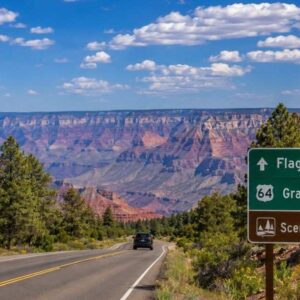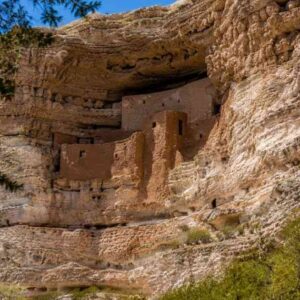
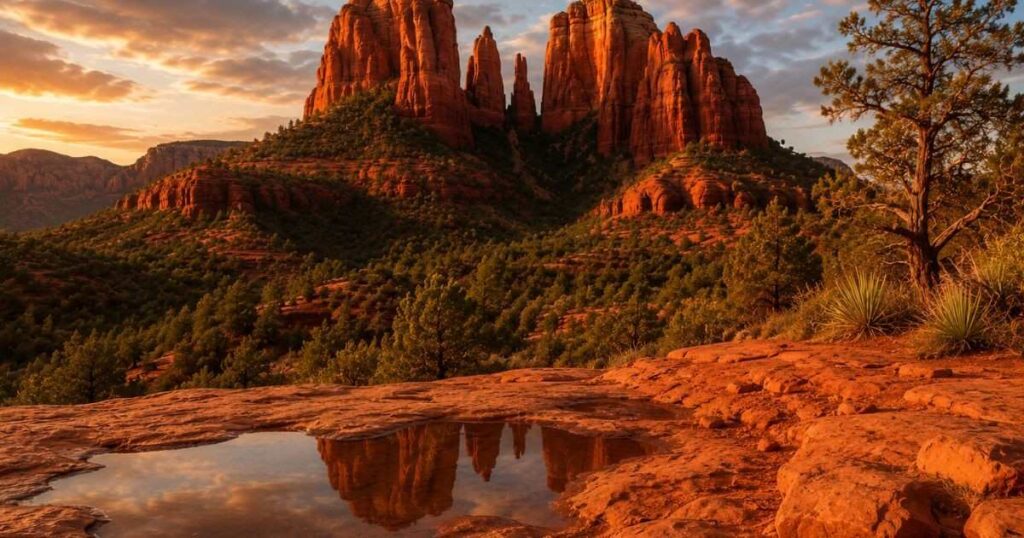
Cathedral Rock Sedona photographs like a gentle red rock backdrop and that photo is exactly why so many hikers underestimate it. The official trail is only 1.1 miles round trip, yet it gains 669 feet of elevation in that short distance, according to the U.S. Forest Service. You’ll find yourself using both hands on slickrock within the first twenty minutes, not scrolling through a filtered feed. This guide covers the real numbers behind Cathedral Rock Sedona: the elevation gain, the parking rules that catch people off guard and the shuttle schedule most first-timers never see coming.
In this guide you will find:
- The exact distance, elevation gain and hiking time for the main trail
- Why the parking lot closes on certain days and what the Sedona Shuttle actually costs
- The Red Rock Pass fee and where to buy it before you arrive
- The best sunset viewpoint most tourists walk past without noticing
- How Cathedral Rock Sedona compares to Bell Rock for a shorter visit
- The safest months to hike it without midday heat working against you
Quick Info Box
| Detail | Information |
| Location | South Sedona, off Back O’ Beyond Road (Coconino National Forest) |
| Nearest Airport | Flagstaff Pulliam Airport (FLG), 25 miles / 40 minutes north |
| Best Time to Visit | October-November and March-April, early morning |
| Travel Time from Phoenix | About 2 hours by car (119 miles) |
| Days Recommended | 1-2 hours for the trail 2-3 days for the wider Sedona area |
| Average Daily Cost | $80-120 budget, $180-280 mid-range, $350+ luxury (per person, lodging included) |
Cathedral Rock Sedona Trail Distance and Difficulty
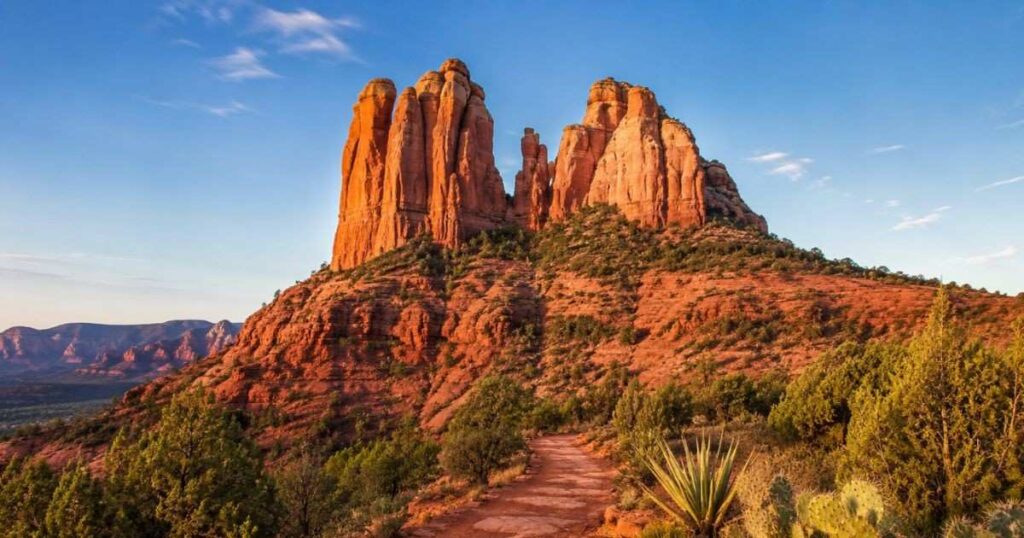
The main Cathedral Rock Trail runs 1.1 miles round trip with 669 feet of elevation gain and the U.S. Forest Service rates the standard 1.5-hour hike as moderate to strenuous. Most of that elevation hits in the second half, where the packed dirt path gives way to open slickrock with almost no shade. You’ll be using your hands within the first half-mile, not just your legs, so this isn’t the flat family stroll that photos of this formation often suggest.
The trail climbs steeply and directly, without switchbacks, up a slickrock slope to a saddle wedged between the main spire and a neighboring summit. Cairns mark the trickiest sections and the rock is grippy when dry but genuinely slick after rain. A short Class 2 scramble near the top is where most hikers stop, since the official trail ends at a saddle with 360-degree views rather than continuing to the summit itself.
For a longer alternative, starting from the Baldwin Trailhead instead turns this into a 3.8-mile out-and-back hike along Oak Creek before joining the same final climb. It’s not technically harder, just longer and it’s the better option if the main lot is already full when you arrive.
Pro Tip: Wear shoes with real rubber tread, not trail runners with worn soles, the slickrock scramble punishes smooth footwear more than any other Sedona trail.
Parking, Fees and the Sedona Shuttle

Parking at Cathedral Rock is the single biggest logistical hurdle, not the climb itself. The trailhead lot off Back O’ Beyond Road holds roughly 18-22 vehicles and regularly fills by 6:30-7am on weekends. A Red Rock Pass costs $5 for a day or $15 for a week and you’ll need it displayed on your dashboard even if you find street parking nearby.
From Thursday through Sunday year-round and daily during spring break and major holidays, the road to the trailhead closes to private cars entirely. During those hours, the free Sedona Shuttle picks up from a park-and-ride lot on AZ-179 roughly every 15 minutes between 7am and 5:30pm. There’s no reservation and no charge, which makes it the easiest way to guarantee a spot rather than circling for parking.
If both the trailhead lot and the shuttle timing don’t work for your schedule, the Baldwin Trailhead offers a backup lot about a 20-minute drive around, though it turns the hike into a longer 3.8-mile route. Most visitors don’t realize the Crescent Moon Picnic Site, a $12 entrance fee, gives the single best photo of Cathedral Rock reflected in Oak Creek, without any hiking required at all.
Pro Tip: Check the Sedona Shuttle schedule before you drive out showing up on a Saturday without knowing the road is closed to cars wastes 30-40 minutes of your morning.
Best Time to Visit and What to Expect
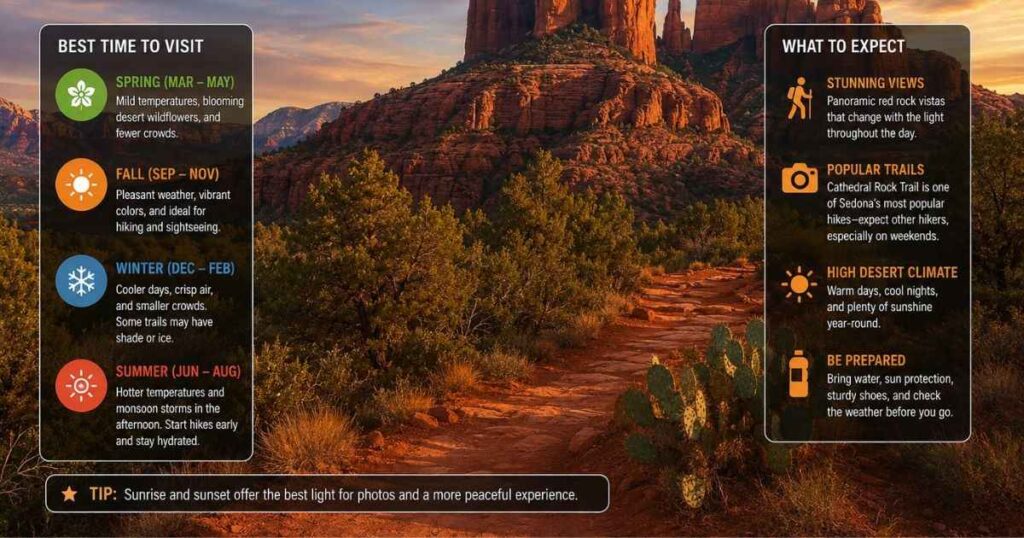
October through November and March through April bring daytime highs in the 60s and 70s°F, the clearest skies of the year and noticeably cooler slickrock underfoot during the exposed second half of the climb. Summer regularly pushes past 100°F with zero shade on the trail, turning the steep scramble into a real heat hazard rather than a scenic challenge. A frozen puddle near the trailhead in December confirms winter mornings can dip below freezing, so early starts need a real layer, not just a light jacket.
Sunset from the saddle is the reward most hikers come for, with views stretching over Oak Creek, Red Rock Crossing and Bell Rock in the distance. Hiking down after dark without a headlamp is a common mistake, since the unmarked sections near the top are easy to lose in low light. Weekday mornings before 8am consistently offer both the coolest temperatures and the shortest wait for parking.
The trail stays open year-round with no seasonal closures, though the shuttle schedule shifts slightly outside peak spring months. Plan for 1 to 2 hours if you’re doing the standard out-and-back or closer to 4-6 hours if you’re linking the full 9-mile loop through the Baldwin and Templeton trails.
Verdict: Hike on a weekday morning in October or April you’ll get the coolest slickrock, the clearest views and a real shot at trailhead parking without needing the shuttle.
Cathedral Rock vs. Bell Rock: Which One First?

Cathedral Rock Sedona is steeper and more technical than Bell Rock, gaining 669 feet in just 1.1 miles compared to Bell Rock’s gentler 340 feet over a 3.6-mile loop. Photographers generally rate Cathedral Rock’s spire as the more iconic Sedona silhouette, while Bell Rock’s wider base trail suits families or anyone without scrambling experience. If you only have one morning, choose based on fitness level rather than the photo. Cathedral Rock rewards a strong pair of legs and a tolerance for exposure, not casual walkers.
Both sit inside the same Red Rock Ranger District and share the same Red Rock Pass, so there’s no extra fee for visiting both across a two-day trip. Hiking Bell Rock’s easier loop first, then tackling Cathedral Rock’s slickrock climb the next morning, spreads the physical effort out more comfortably than attempting both the same day.
Pro Tip: If you’re combining both hikes in one trip, do Cathedral Rock first thing in the morning while your legs are fresh. It’s a poor second hike after a full day of walking.
“Planning more Hawaii day trips? Our guides on bell rock trail cover the rest of the region in detail.”
Frequently Asked Questions
How many days do you need for Cathedral Rock Sedona?
The main trail takes just 1 to 2 hours round trip, so a single morning covers it comfortably. Pair it with Bell Rock or Red Rock Crossing on the same trip for a full day around south Sedona.
Is Cathedral Rock Sedona worth visiting?
Yes, it delivers 360-degree views from the saddle in under an hour and a half, making it one of the highest reward-to-effort hikes in the entire Red Rock Ranger District. Few short hikes anywhere combine this much elevation gain with this short distance.
What is the best time to visit Cathedral Rock Sedona?
October through November and March through April offer daytime highs in the 60s and 70s°F with the clearest skies of the year. Early weekday mornings before 8am also avoid both the parking crunch and the worst of any seasonal heat.
Is Cathedral Rock Sedona expensive for tourists?
No, a Red Rock Pass costs just $5 for the day and the trail itself is free once you’re parked or off the shuttle. The Sedona Shuttle adds zero cost on top of that if the trailhead road is closed when you arrive.
Is Cathedral Rock better than Bell Rock for a first-time visitor?
It depends on fitness level Cathedral Rock Sedona is shorter but far steeper, while Bell Rock is longer but noticeably gentler. First-time visitors without scrambling experience should start with Bell Rock, then attempt Cathedral Rock once they’ve felt the terrain.
Final Thoughts
Cathedral Rock Sedona packs more elevation gain into 1.1 miles than almost any other trail in the Red Rock Ranger District and that’s exactly why it rewards the effort so quickly. Time your hike for a weekday morning in October or April, secure your Red Rock Pass before you go and reach the saddle about 30 minutes before sunset so you can watch Oak Creek and Bell Rock catch the last orange light together.