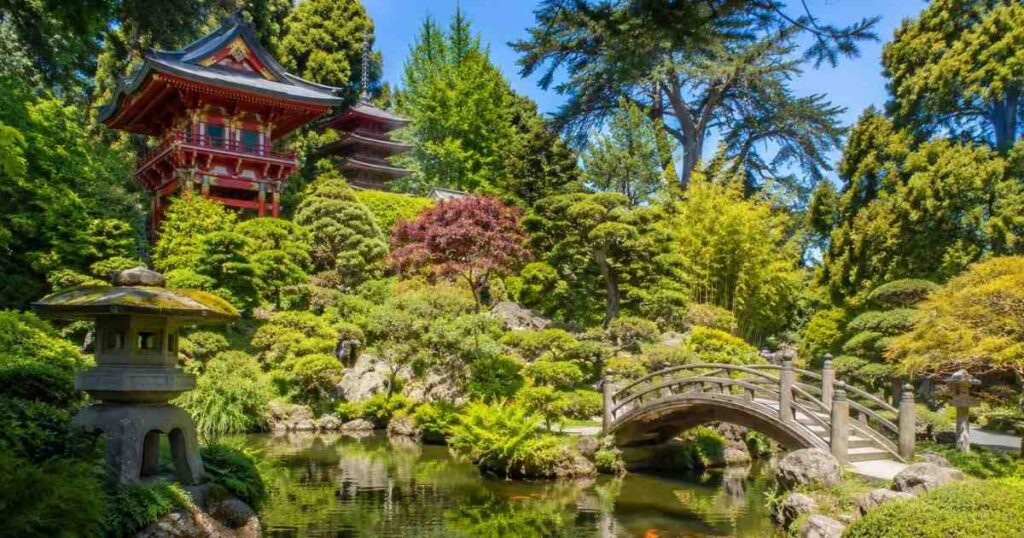
Most visitors expect a quiet Japanese garden and instead walk into a line of 40 people waiting for a photo on a bright red bridge. That’s the real scene at the japanese tea garden golden gate park visitors flock to every day. The koi ponds are still there and the bonsai grove still feels like a different country but timing your visit matters more than most guides admit.
The Japanese tea garden golden gate area sits inside Golden Gate Park at 75 Hagiwara Tea Garden Drive, five acres that have been open since 1894. This guide covers exact ticket prices, the free admission hour almost nobody uses and which entrance avoids the worst of the crowd.
IN THIS GUIDE YOU WILL FIND:
- Exact 2026 admission prices for adults, seniors and children
- The specific days and hours when entry is completely free
- Which season brings the cherry blossoms and which brings the fewest tourists
- How to combine this stop with the de Young Museum and California Academy of Sciences
- Parking and transit options that beat driving in on weekends
- What most first-time visitors get wrong about the drum bridge photo
| Quick Info | Details |
| Location | 75 Hagiwara Tea Garden Drive, Golden Gate Park, San Francisco |
| Nearest Airport | San Francisco International Airport (SFO), 14 miles / 25–35 minutes by car |
| Best Time to Visit | Early March for cherry blossoms; late October–November for fall color and smaller crowds |
| Travel Time from City Center | 15–20 minutes from Union Square by transit or car |
| Days Recommended | 45 minutes to 1 hour, paired with a half day in the Music Concourse |
| Average Daily Cost | Free (9–10 AM Mon/Wed/Fri) to $15 per adult otherwise |
Visiting the Japanese Tea Garden Golden Gate Park
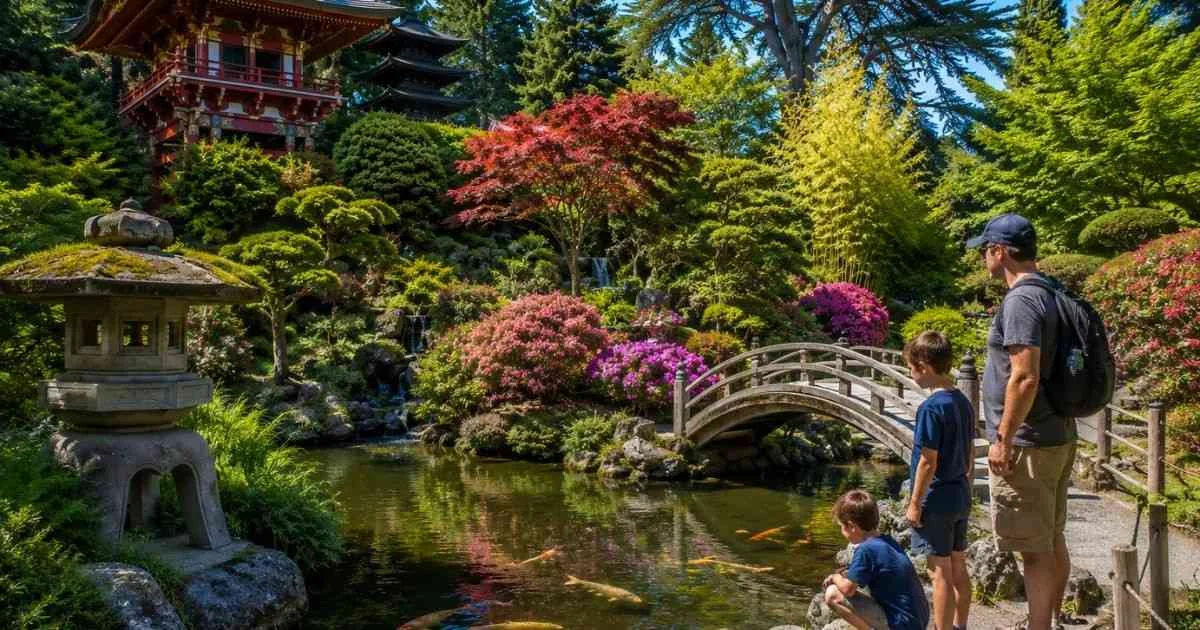
The japanese tea garden golden gate park location opened as a Japanese Village exhibit for the 1894 California Midwinter International Exposition. It’s now the oldest continuously operated Japanese public garden outside Japan. The five-acre grounds hold a five-tiered pagoda, a wooden drum bridge, a zen garden and koi ponds stocked with fish that are decades old.
Summer hours, from March 1 through October 31, run 9 AM to 5:30 PM daily. Winter hours, from November 1 through February 28, run 9 AM to 4:30 PM daily. The garden stays open every day of the year, including major holidays.
Most first-time visitors don’t realize the garden requires timed-entry tickets booked in advance, especially on weekends in March and April. Walking up without a reservation during cherry blossom season often means a 20 to 30 minute wait at the gate. A same-day walk-up ticket to the japanese tea garden golden gate park is usually available on weekday afternoons but weekends need booking at least two days out.
The 1915 pagoda bell, over two hundred years old and cast in 1790, was gifted to the garden in 1949 and still sits near the entrance path. Most visitors walk past it without reading the small plaque explaining its origin. It’s one of the few original 1894 features still standing inside the Japanese tea garden golden gate park grounds today.
Pro Tip: Book your timed ticket for the 9 AM slot. You’ll get the drum bridge and pagoda almost empty before tour buses arrive around 10:30 AM.
Cost, Hours and the Free Admission Window

A standard adult ticket to the japanese tea garden golden gate park costs $15 for non-residents. Seniors ages 65 and up and youths ages 12 to 17 pay $7, children ages 5 to 11 pay $3 and kids under 4 enter free. San Francisco residents with valid ID get in free any day, any hour.
Everyone, resident or not, can enter free between 9 AM and 10 AM on Mondays, Wednesdays and Fridays. This one hour is rarely mentioned on tourist sites, yet it’s the same garden, same koi ponds, same pagoda, at zero cost. Arrive by 8:50 AM, since the gate closes the free window strictly at 10 AM sharp.
A combined Gardens Pass covers the Tea Garden, the Conservatory of Flowers and the Botanical Garden for less than the cost of two single tickets. If you’re visiting all three, the pass usually pays for itself after the second stop. Buying a single ticket to the japanese tea garden golden gate park at the gate costs the same as booking online, so there’s no discount for planning ahead beyond guaranteed entry.
Tea and light snacks at the on-site Tea House run separately from admission, with a pot of tea and mochi typically costing $8 to $10 per person. The Tea House accepts card payment only, so don’t count on paying cash for a snack after your walk.
Verdict: Time your visit for the 9 AM free hour on a weekday or budget $15 per adult for any other slot.
Best Season and Nearby Stops

Cherry blossoms bloom in early March most years, though the exact week shifts with the weather, so check bloom reports 10 days before your trip. Autumn, from late October through November, brings orange and red maple color with far smaller crowds than spring. Fall visits to the japanese tea garden golden gate park routinely feel half as busy as a Saturday in April.
The de Young Museum sits a 4-minute walk away and the California Academy of Sciences sits directly across the Music Concourse plaza, about 5 minutes on foot. The San Francisco Botanical Garden is a 3-minute walk in the opposite direction and offers free entry for everyone before 9 AM daily. Most visitors pair two of these three stops with the tea garden in a single morning.
Compare this to the Portland Japanese Garden, which charges $21.95 for adults and sits on a hillside outside the city center. The japanese tea garden golden gate park version is smaller but far easier to reach without a car and it costs $6 to $7 less per adult ticket.
Summer weekends bring the heaviest crowds of the year, often peaking between noon and 3 PM when tour groups from downtown hotels arrive together. Weekday mornings, especially Tuesday and Thursday, stay noticeably calmer even in July and August.
Pro Tip: Visit the Botanical Garden first at 7:30 AM while it’s free, then walk to the Tea Garden for its 9 AM free hour and you’ll see two gardens before spending a dollar.
Getting There, Parking and What to Avoid

Muni’s N-Judah streetcar and the 44-O’Shaughnessy bus both stop within a two-minute walk of the entrance on Hagiwara Tea Garden Drive. Driving in means parking at the Music Concourse Garage, which charges by the hour and fills fast on weekends after 11 AM. Street parking exists along Martin Luther King Jr. Drive and Nancy Pelosi Drive, though spots disappear quickly on Sundays when JFK Drive closes to cars.
Most tourists miss that strollers can’t fit through several of the narrower stepping-stone paths near the zen garden. Carriers work better than strollers if you’re visiting with a toddler. Anyone bringing a stroller to the japanese tea garden golden gate park should plan to park it near the entrance gate instead. The stepping-stone “wave” path near the pagoda is also uneven and gets slick after rain, so wear real shoes, not sandals.
Groups of seven or more need a private reservation rather than standard timed tickets, so plan two to three weeks ahead for larger families or tour groups. The free Golden Gate Park Shuttle also stops near the entrance and runs on weekends, which avoids both the garage fee and street parking hunt entirely for a japanese tea garden golden gate park visit.
Verdict: Take the N-Judah or the 44 bus, skip the garage on weekend afternoons and wear closed-toe shoes for the stone paths.
“Planning more California day trips? Our guides on mcway falls big sur, pfeiffer beach big sur, haight ashbury san francisco and san francisco bay cruise cover the rest of the region in detail.”
Frequently Asked Questions
How many hours do you need at the Japanese Tea Garden Golden Gate Park?
Most visitors spend 45 minutes to an hour walking the full five acres at a relaxed pace. Add 15 minutes if you want tea and mochi at the on-site Tea House before leaving.
Is the Japanese Tea Garden Golden Gate Park worth visiting in 2026?
Yes, it remains one of San Francisco’s most photographed gardens and the oldest Japanese public garden outside Japan. A $15 adult ticket or free entry during the Monday, Wednesday and Friday morning hours, still makes it one of the cheapest cultural stops in the city.
What is the best time to visit the Japanese Tea Garden Golden Gate Park?
Early March brings cherry blossoms, while late October through November brings fall color with noticeably smaller crowds. Arriving right at 9 AM on any day beats the tour bus rush that builds by 10:30 AM.
Is the Japanese Tea Garden Golden Gate Park expensive for tourists?
No, a $15 adult ticket is lower than most paid gardens in major U.S. cities and children under 4 always enter free. The free 9-to-10 AM hour on Monday, Wednesday and Friday removes the cost entirely for anyone willing to arrive early.
Can you visit the Japanese Tea Garden Golden Gate Park and the de Young Museum in one day?
Yes, the de Young Museum sits about a 4-minute walk from the garden entrance across the Music Concourse. Most visitors tour the garden first thing in the morning, then walk straight to the museum for the early afternoon.
Final Thoughts
The japanese tea garden golden gate park earns its reputation as one of San Francisco’s most peaceful stops, especially if you dodge the 10:30 AM tour bus rush. Five acres, a 130-year history and a $15 ticket buy more calm than almost anywhere else in the city. Arrive at 8:50 AM on a Wednesday, walk straight to the drum bridge before anyone else gets there and stay until the koi ponds start filling with midday reflections.


