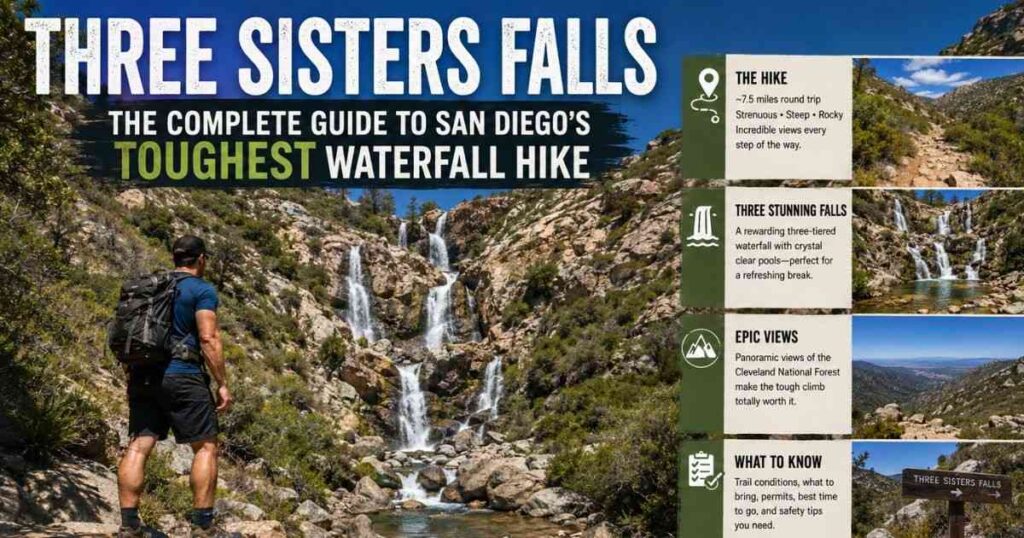
A helicopter gets called out to this trail almost every summer and it’s not because the waterfall is hard to find. Three Sisters Falls sits about 4 miles round trip into a canyon in the Cleveland National Forest and the hike works backward from what your legs expect you to descend first, swim, then climb 800 to 1,000 feet back out already exhausted. That single detail explains most of the rescues here.
The falls themselves are three cascading tiers dropping into cold, deep pools near Boulder Creek, roughly an hour and 15 minutes from downtown San Diego. This guide covers the real distance, the parking pass you actually need and the months when this hike turns from tough to dangerous.
IN THIS GUIDE YOU WILL FIND:
- The exact round-trip mileage and elevation change you’ll face
- Which parking pass you need and where to buy it
- The safest months to attempt this hike and which ones to skip entirely
- What the trail looked like before 2026 versus the rerouted version
- Swimming conditions at each of the three tiers
- What most hikers get wrong before they even reach the trailhead
| Quick Info | Details |
| Location | Cleveland National Forest, near Descanso, San Diego County, California |
| Nearest Airport | San Diego International Airport (SAN), 75 minutes by car |
| Best Time to Visit | March–May for water flow; November–February for cooler climbing conditions |
| Travel Time from San Diego | About 75 minutes via Interstate 8 |
| Days Recommended | Half a day (2.5–4 hours round trip) |
| Average Daily Cost | $5 day-use Adventure Pass or free if you already own an annual pass |
Hiking to Three Sisters Falls
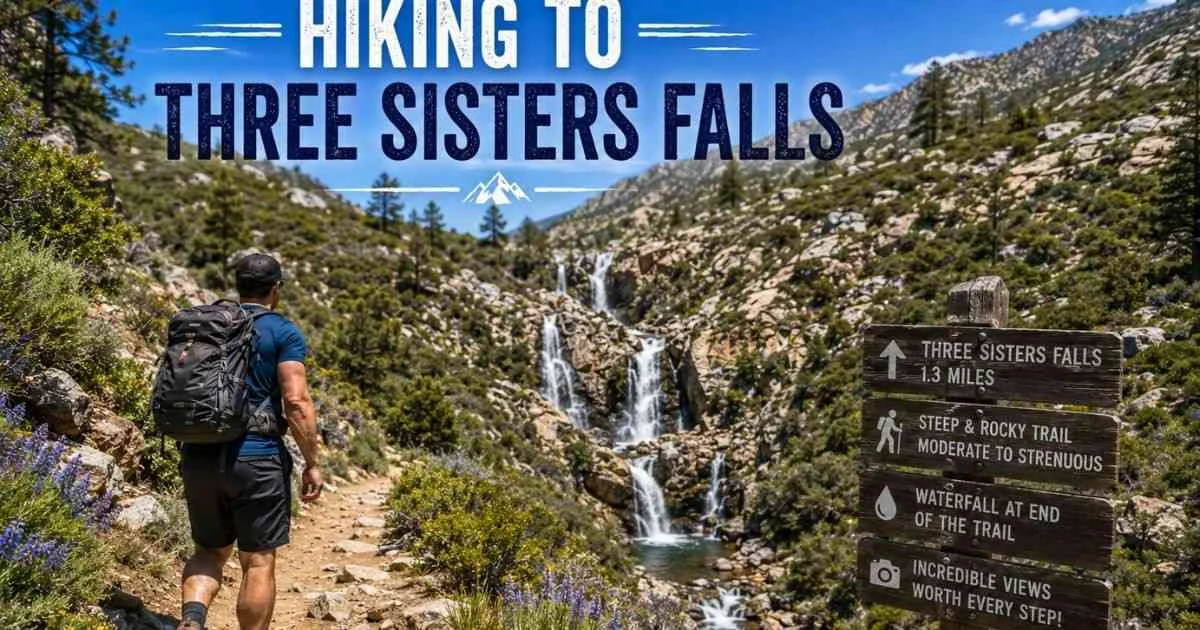
Three Sisters Falls starts from a trailhead off Boulder Creek Road near Descanso, about a 5-mile stretch of dirt road that a standard sedan can usually handle in dry weather. The hike itself runs close to 4 miles round trip, with the Forest Service’s rerouted trail cutting the older, rope-assisted descent down to a steadier switchback path. You’ll lose 800 to 1,000 feet of elevation on the way in, which means the return climb happens after you’re already tired and wet.
The trail crosses through a stand of Engelmann oak, one of the few native oak species found only in San Diego County. After about 1.5 miles, the path drops into the canyon and follows Boulder Creek toward the falls. The last stretch involves scrambling over granite boulders that turn slick the moment they’re wet. Watch your footing closely here, since the rock surface looks dry but often holds a thin film of moisture from spray.
Most hikers underestimate the return climb because the descent feels easy in cool morning air. By early afternoon, the same slope in direct sun turns into the hardest 45 minutes of the entire trip. Three Sisters Falls has a well-earned reputation for this exact reversal.
Trekking poles help significantly on the loose gravel sections near the top of the climb and sturdy hiking shoes with real tread matter more here than at most day hikes. Sandals and worn-out sneakers are common causes of slips reported by rangers who patrol the Three Sisters Falls trail during busy weekends.
Pro Tip: Start hiking by 7 AM in warmer months so you’re climbing back out before the canyon walls trap afternoon heat.
Swimming, Tiers and What You’ll Actually Find

The three tiers of Three Sisters Falls each end in a separate pool and the middle and top pools hold water deep enough for casual swimming, close to 10 feet in spring. The bottom pool tends to run shallower and rockier by August. Bring a swimsuit or quick-dry shorts, since there’s nowhere private to change at the falls.
Spring, from March through May, brings the strongest flow and the deepest swimming holes after winter rain. By late summer, the middle and upper pools often shrink to knee-deep wading spots and the waterfall itself can slow to a trickle in drought years. Compare this to nearby Cedar Creek Falls, which drops from a taller single 108-foot cliff but sees more crowding and stricter permit rules on busy weekends.
Cliff jumping happens here regularly and it’s the single biggest source of injuries beyond the climb itself. Water depth changes season to season and even week to week, so a spot that was safe in April can be too shallow by July. Anyone visiting Three Sisters Falls specifically to cliff jump should check current water levels with recent trip reports before assuming a pool is deep enough.
Verdict: Visit in April or May for the deepest pools and the most reliable swimming at all three tiers.
Best Season and What Most Tourists Miss

Summer temperatures inside the canyon regularly climb past 100°F and the Forest Service has issued emergency closures on Three Sisters Falls during heat advisories in past years. Most tourists miss that cell service disappears almost entirely once you’re near Boulder Creek, so downloading offline maps before you leave home matters more here than at most California trails.
Fall and mild winter days, especially November through February, offer the most forgiving temperatures for the return climb. Rattlesnakes are active from April through October, so watch the trail edges closely when scrambling over rocks near the pools. Three Sisters Falls closes temporarily during active fire danger periods, so check current Cleveland National Forest alerts the morning of your hike.
Most first-time hikers also don’t realize dogs are allowed on this trail but the exposed, rocky terrain and lack of shade make it a poor choice for pets in anything above 75°F. Paw pads can burn on the exposed granite near the falls even when the air temperature feels manageable to a person in hiking boots.
Weekday visits to Three Sisters Falls see a fraction of the weekend crowd and parking at the small trailhead lot fills by 8 AM on Saturdays from March through May. Arriving on a Tuesday or Wednesday morning often means having entire stretches of the canyon to yourself.
Pro Tip: Check the Cleveland National Forest alerts page the same morning you plan to hike, since closures can happen with only hours of notice during heat waves.
Parking, Permits and Getting There

You need a SoCal Adventure Pass to park at the trailhead, available for $5 for a day pass or $30 for an annual pass at most outdoor retailers and ranger stations near San Diego. No separate hiking permit is currently required for Three Sisters Falls itself, though rules have shifted before and are worth confirming with the Palomar Ranger District the week of your trip. The drive from downtown San Diego takes about 75 minutes via Interstate 8 and local mountain roads.
Cell reception drops out almost completely along Boulder Creek Road and inside the canyon, so tell someone your planned return time before you leave. Bring at least 2 liters of water per person, since there’s no potable water source anywhere on the trail. Most rescues here trace back to hikers who ran out of water on the climb out, not to falls or injuries at the pools themselves.
The final 5 miles of Boulder Creek Road before the Three Sisters Falls trailhead are unpaved and rutted and low-clearance sports cars occasionally bottom out on the larger potholes. A midsize SUV or truck handles the drive with fewer worries than a compact sedan, especially after recent rain.
Verdict: Buy your Adventure Pass in advance, carry more water than feels necessary and start early enough to finish the climb before peak afternoon heat.
“Planning more California day trips? Our guides on mcway falls big sur, pfeiffer beach big sur, haight ashbury san francisco, san francisco bay cruise, japanese tea garden golden gate and things to do in newport beach cover the rest of the region in detail.”
Frequently Asked Questions
How many hours do you need for Three Sisters Falls?
Most hikers finish the full round trip in 2.5 to 4 hours, depending on fitness and how long you stay to swim. Add 30 to 45 minutes if you’re hiking with kids or anyone unfamiliar with steep, loose terrain.
Is Three Sisters Falls worth visiting in 2026?
Yes, the rerouted trail makes the descent safer than the old rope-assisted path and the three-tiered waterfall remains one of San Diego County’s most rewarding backcountry hikes. It still demands real preparation, since rescues happen most summers due to heat and dehydration.
What is the best time to visit Three Sisters Falls?
Spring, from March through May, offers the deepest swimming holes and the most reliable waterfall flow after winter rain. Fall and mild winter mornings offer safer temperatures for the steep return climb.
Is Three Sisters Falls expensive for tourists?
No, the only real cost is a $5 day-use Adventure Pass for parking or $30 for an annual pass if you plan to hike other Southern California trails. There’s no separate entry fee for the falls themselves.
Can you visit Three Sisters Falls and Cedar Creek Falls in one trip?
Technically yes but both hikes take 3 to 4 hours each and sit roughly 30 minutes apart by car, so most hikers pick one per day rather than both. Attempting both in a single day multiplies heat exposure and fatigue right when the return climbs matter most.
Final Thoughts
Three Sisters Falls rewards hikers who respect the return climb more than the descent, since 800 to 1,000 feet of elevation gain waits at the end, not the beginning. The three swimming tiers and the Boulder Creek scenery are worth the effort but only with enough water, an early start and a checked weather forecast. Start hiking by 7 AM, swim at the middle tier where the water runs deepest and begin your climb out no later than 11 AM in warm months.


