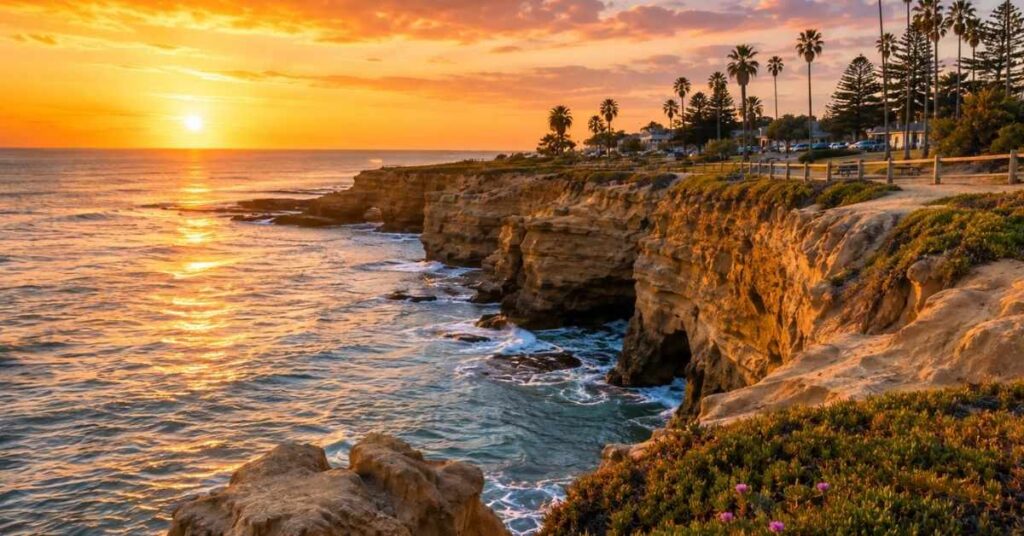
The cliffs here do not slope gently into the Pacific. They drop straight down, sandstone walls carved by 75 million years of wave action and the ground under your feet is only 120,000 years old by comparison. Stand at the edge on a clear evening and you will watch the sun sink into the ocean with nothing between you and the horizon but open water.
Most first-time visitors expect a beach. What they find instead is a 1.5-mile stretch of blufftop trail, hidden sea caves and a free public park that locals treat like their backyard.
This guide covers exactly what you need to plan a visit to Sunset Cliffs Natural Park, from where to park to which trail leads to the tide pools.
IN THIS GUIDE YOU WILL FIND:
- Where the free parking lots are and which one to use for tide pools versus sunset viewing
- The exact sunset viewing spots locals actually use, including Luscomb Point
- How low tide changes what you can see and do at the cliffs
- Which nearby neighborhood has the best food before or after your visit
- Safety details most tourists miss about the cliff edges and rip currents
- A day-trip plan that pairs the park with Ocean Beach and Cabrillo National Monument
QUICK INFO
| Detail | Info |
| Location | Point Loma peninsula, San Diego, CA 92107 |
| Nearest Airport | San Diego International Airport (SAN), 8 miles / 20 minutes |
| Best Time to Visit | November to February for whales and fewer crowds; arrive 30-45 minutes before sunset year-round |
| Travel Time from Downtown San Diego | 20 minutes / 8 miles via I-8 West |
| Days Recommended | Half a day or one full day paired with Ocean Beach |
| Average Daily Cost | $0 to $25 (parking and entry are free; budget for food and coffee) |
What Makes Sunset Cliffs Natural Park Worth the Trip
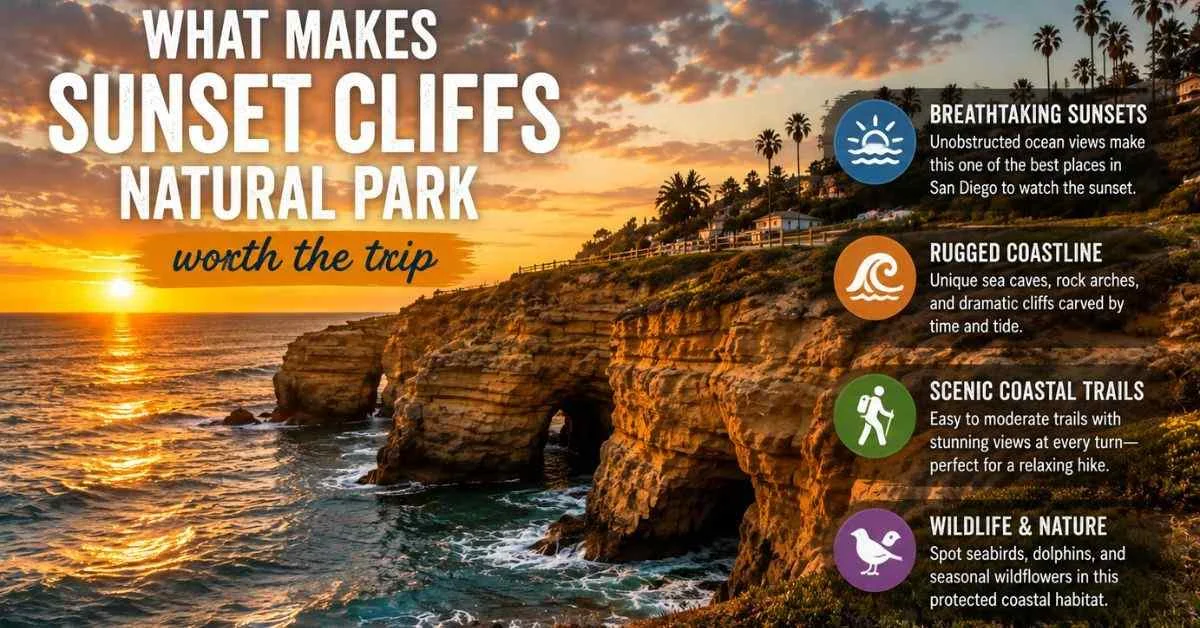
Sunset Cliffs Natural Park sits on the western edge of the Point Loma peninsula, 1.5 miles of coastline protected since 1983. The city dedicated the full 68 acres for passive recreation only, which means no restaurants, no gift shops and no entrance gates were ever built here. You park on the street or in one of two dirt lots, then walk a network of footpaths that locals have worn into the bluffs over decades. The lack of development is the point: this is raw San Diego coastline, not a manicured tourist attraction.
The park splits into two sections. Linear Park runs one mile along Sunset Cliffs Boulevard from Adair Street to Ladera Street, with pullouts and short paths to cliff-edge viewpoints every few hundred feet. Hillside Park picks up south of Ladera Street and covers 50 acres of steeper terrain leading down toward the water. Both sections sit roughly 300 feet above sea level at their highest points and the drive along Sunset Cliffs Boulevard is an officially designated scenic route.
Pro Tip: Park at the dirt lot at Ladera Street and Cornish Drive if tide pools are your priority. It sits closest to the steep access trail down to the rocks.
Tide Pools, Sea Caves and the Beach Below the Cliffs

Sunset Cliffs Natural Park earns its reputation among tidepoolers mostly at low tide. Time your visit against the NOAA tide chart for San Diego and you will find sea stars, anemones and small octopuses in the rock pools near Luscomb Point. At high tide, the same pools disappear completely under whitewater, so checking tide times before you leave home matters more here than at most beaches.
The beach directly below the lower parking lot has earned the local nickname Garbage Beach and reaching it means a steep, rope-assisted scramble down a sandstone gully. It is considered one of the toughest beach accesses in California and flip-flops are a bad idea. Surfers use this same stretch for a fast, hollow break called Garbage that only works on the right swell. If you just want to see a sea cave without the climb down, several are visible from the blufftop trail itself, especially near the south end of Hillside Park.
Verdict: Skip the climb down unless you are an experienced surfer or comfortable scrambling on loose rock; the blufftop views cost nothing and carry zero risk.
Best Time to Visit and What the Seasons Change

Every season at Sunset Cliffs Natural Park looks different. From December through February, gray whales migrate past the point close enough to spot their spouts without binoculars and winter storms send waves crashing dramatically against the sandstone. June through August brings warmer evenings and the biggest crowds, so parking spots near Sunset Cliffs Boulevard disappear fast after 6pm. Spring, particularly April and May, pairs mild weather with wildflowers blooming along the coastal sage scrub.
At Sunset Cliffs Natural Park, sunset itself is the main event no matter the month. Arrive 30 to 45 minutes early to claim a spot at Luscomb Point or the Osprey Street overlook, both popular for their unobstructed western views. On clear evenings, watch for the green flash, a brief flash of green light right as the sun disappears below the horizon. It is rare but San Diego’s flat ocean horizon gives you better odds than most coastal cities.
Pro Tip: Check exact sunset time online the morning of your visit; it shifts by several minutes across the year and dictates how early you need to grab parking.
Getting There, Getting Around and What to Avoid

San Diego International Airport sits 8 miles from the park, about a 20-minute drive down I-8 West and onto Sunset Cliffs Boulevard through Ocean Beach. From downtown San Diego, the same route takes roughly 20 minutes without traffic. There is no public transit stop directly at Sunset Cliffs Natural Park, so a car or rideshare is the only realistic option. Parking is free everywhere: on Sunset Cliffs Boulevard itself, at the dirt lot off Ladera Street and Cornish Drive and at the lot near 3980 Lomaland Drive across from Point Loma Nazarene University.
The single biggest mistake visitors make at Sunset Cliffs Natural Park is walking too close to the crumbling cliff edge for a photo. The sandstone erodes constantly and sections collapse without warning, which is why fencing exists in several spots and why rangers strongly discourage stepping past it. Rip currents below the cliffs are strong enough that swimming is not recommended anywhere along this stretch. Most tourists also miss that restrooms are limited to one location near the main entrance, so plan ahead if you are visiting with kids.
Verdict: Bring your own water and use the restroom before you arrive; facilities here are minimal by design.
Where to Eat and What Else to Do Nearby

Ocean Beach sits just north of the park and delivers the closest food options, from fish tacos at the OB Pier area for around $6 to a sit-down dinner at a seafood spot for $20 to $30 per person. Point Loma Nazarene University borders the park’s northern edge and its campus paths connect directly to some of the quieter viewpoints away from the main crowds. For a half-day add-on, Cabrillo National Monument sits about 15 minutes south and charges a $20 per vehicle entry fee, a useful comparison since Sunset Cliffs Natural Park costs nothing to visit.
Weddings and small gatherings are permitted at both Luscomb Point and the Osprey Street area for groups up to 50 people, which explains why you might stumble across a ceremony at golden hour. Photographers favor the same two spots for engagement and portrait sessions. If you want a picnic dinner before sunset, pack it in; there are no vendors inside the park itself.
Pro Tip: Pair your visit with an early dinner in Ocean Beach around 5pm, then walk over to the cliffs with a full stomach and time to spare before sunset.
“Planning more California day trips? Our guides on mcway falls big sur, pfeiffer beach big sur, haight ashbury san francisco, san francisco bay cruise, japanese tea garden golden gate, things to do in newport beach and three sisters falls cover the rest of the region in detail.”
Frequently Asked Questions
How many days do you need at Sunset Cliffs Natural Park?
Most visitors need two to three hours to walk the main blufftop trails and watch the sunset. If you want to add tide pooling at low tide and a stop in Ocean Beach for food, budget a half day. A full day works well if you pair it with Cabrillo National Monument or Point Loma’s other viewpoints.
Is Sunset Cliffs Natural Park worth visiting?
Yes, and it remains one of the few free, undeveloped stretches of coastline left in Southern California. The combination of sea caves, tide pools and unobstructed sunset views over the open Pacific is hard to match at any paid attraction in San Diego. Locals return here weekly, which says more than any review score.
What is the best time to visit Sunset Cliffs Natural Park?
Arrive 30 to 45 minutes before sunset for the best light and easiest parking. November through February adds gray whale sightings and thinner crowds, while low tide any time of year exposes the tide pools near Luscomb Point. Summer evenings are busiest, so plan for a 6pm arrival if visiting June through August.
Is Sunset Cliffs Natural Park expensive for tourists?
No, entry and parking are completely free every day of the year. Your only real cost is food nearby in Ocean Beach, where meals run $6 for tacos up to $30 for a sit-down dinner. Compare that to the $20 per vehicle fee at nearby Cabrillo National Monument and the savings add up fast.
Can you do a day trip from downtown San Diego to Sunset Cliffs Natural Park?
Yes, it is a 20-minute, 8-mile drive from downtown with no toll roads or complicated routing. Most visitors combine it with Ocean Beach for lunch and Point Loma’s other viewpoints in the same afternoon. A rideshare there and back typically runs $15 to $25 each way depending on traffic.
Final Thoughts
Sunset Cliffs Natural Park delivers something increasingly rare on the California coast: a genuinely free, undeveloped place to watch the sun go down over the Pacific. The sandstone cliffs, the sea caves and the tide pools would justify an entrance fee anywhere else, yet this park has never charged one and never will. Skip the crowds at the main overlooks if you can and walk 10 minutes south toward Hillside Park instead. Arrive at Luscomb Point 30 minutes before sunset, find a flat rock near the edge and stay until the last color drains from the sky over the water.


