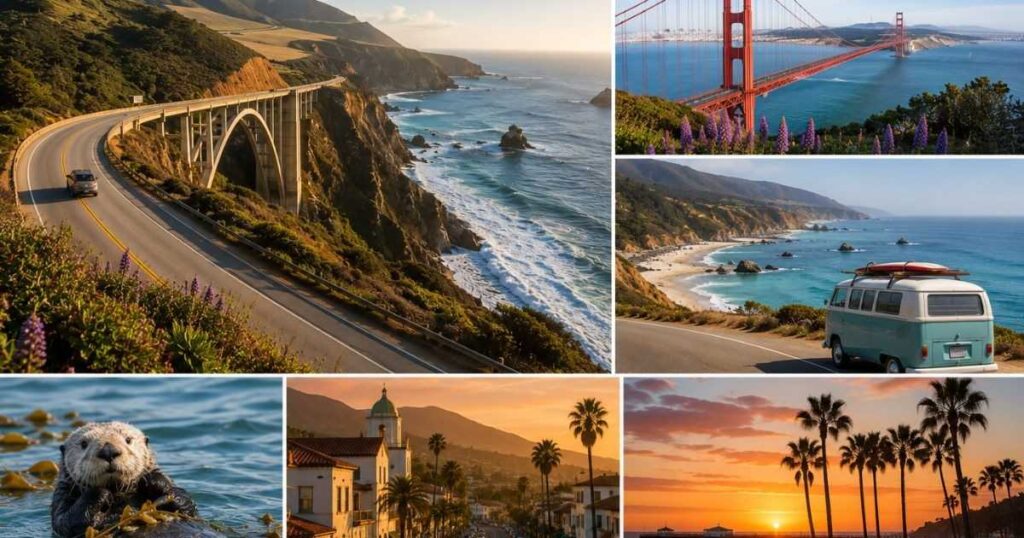
Most people assume the Pacific Coast Highway road trip is just a long drive with the ocean on one side. It is not. You pass 400-foot cliffs at Bixby Bridge, elephant seals sleeping on Sand Dollar Beach and McWay Falls, a waterfall that drops directly onto the beach. The PCH runs 480 miles from San Francisco to Los Angeles along Highway 1 and every 20 minutes the landscape changes completely. This guide gives you the exact stops, real costs and the timing details that most travel sites leave out.
In This Guide You Will Find:
- The 7 must-stop locations between San Francisco and San Diego, with driving times between each
- Exact entry fees for 17-Mile Drive ($11.25), Hearst Castle tours ($25–$35) and state park day-use fees
- Why September beats July for this Pacific Coast Highway road trip
- The Big Sur lodging rule that first-timers always ignore and regret
- What most tourists miss at Pfeiffer Beach (and why you need the exact GPS coordinates)
- A day-by-day cost breakdown for budget, mid-range and comfort travelers
Quick Info
| Detail | Info |
| Route | San Francisco to San Diego, California |
| Nearest Airport | San Francisco International (SFO) start point LAX or SAN for end |
| Best Time to Visit | April–May and September–October |
| Total Distance | 480 miles (770 km) San Francisco to LA |
| Days Recommended | 7–10 days |
| Average Daily Cost | $150–$200 per person (mid-range) |
The Best Stops on a Pacific Coast Highway Road Trip
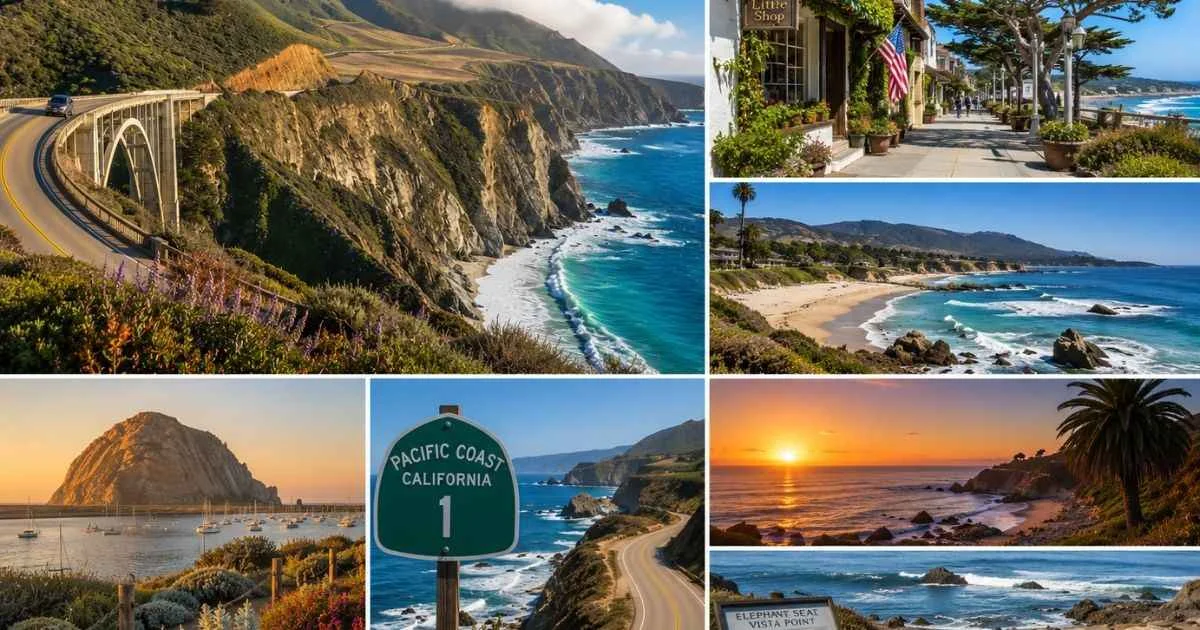
The Pacific Coast Highway road trip runs through three distinct zones: the foggy, rugged Northern California coast from San Francisco to Carmel (about 120 miles), the dramatic Big Sur stretch from Carmel to San Simeon (90 miles) and the sun-baked Southern California coast from San Luis Obispo down to San Diego (270 miles).
Drive southbound. On the right-hand lane, you sit on the ocean side of the road. Driving south on the right-hand side puts you directly facing the coastline, giving you unobstructed views of the cliffs and water at every turn. Start in San Francisco, pick up your rental car at SFO and head south on Highway 1.
Your first real stop is Half Moon Bay, 30 miles from San Francisco. Half Moon Bay sits 30 miles and 45 minutes from SF and it is known for Mavericks, one of the world’s biggest-wave surf spots, plus coastal trails and local seafood restaurants. From there, drive 45 miles to Santa Cruz, then another 45 miles to Monterey.
Monterey is where the Pacific Coast Highway road trip shifts into a higher gear. Spend a full day here. The 17-Mile Drive costs $11.25 per vehicle but delivers some of the most photographed coastline in California at sunset for the best light. Cannery Row has solid seafood restaurants with ocean views budget $25–$40 per person for dinner at any of the waterfront spots.
Pro Tip: Buy the America the Beautiful Annual Pass for $80 before you leave home. It covers entry to all national parks and federal lands along the route and pays for itself by the time you reach Big Sur.
Big Sur: The Heart of the Pacific Coast Highway Road Trip

Big Sur is the reason people plan this Pacific Coast Highway road trip. The 90-mile stretch from Carmel to San Simeon has no traffic lights, no chain restaurants and almost no cell service. The winding road gives up one jaw-dropping surprise after another. This stretch of rugged coastline is the main reason to do a PCH road trip at all.
Bixby Bridge is your first major landmark, 13 miles south of Carmel. Pull into the small north-side turnout, not the crowded south-side one, for the clean shot of the arch against the canyon. McWay Falls sits inside Julia Pfeiffer Burns State Park, a $12 day-use fee per car gets you a half-mile walk to the overlook where an 80-foot waterfall drops directly onto the sand.
Pfeiffer Beach is what most tourists miss. It requires a short, unmarked turn off Highway 1 look for Sycamore Canyon Road, a narrow one-lane road that Google Maps frequently fails to route correctly. The beach has purple sand due to manganese garnet in the cliffs and rock arches that frame the sunset perfectly. There is a $12 parking fee.
Book Big Sur lodging 3 to 6 months in advance is one of the most limited accommodation zones on the entire PCH and last-minute visitors often have to skip it entirely. Budget options start around $180/night at Big Sur River Inn. Mid-range rooms at Ventana Big Sur run $400–$600/night.
Pro Tip: Fill up your gas tank in Carmel before entering Big Sur. There is one gas station in the entire 90-mile stretch and it charges roughly $1.50 more per gallon than the California average.
San Luis Obispo, Santa Barbara and the Southern Stretch

After Big Sur, the Pacific Coast Highway road trip opens up into a wider, sunnier landscape. San Luis Obispo sits 95 miles south of Big Sur, a college town with Hearst Castle nearby and a Thursday night farmers market on Higuera Street that locals actually attend.
Hearst Castle sits 45 minutes north of San Luis Obispo in San Simeon. Tours run $25–$35 per adult depending on the route you choose. The Experience Tour covers the main rooms and pools in about 45 minutes. The Grand Rooms Tour at $30 adds the private guest wings. Book online at least two weeks ahead in summer.
Santa Barbara is 100 miles south of SLO and marks the start of Southern California. The city has Spanish colonial architecture, a waterfront and Stearns Wharf, the oldest working wooden wharf on the US West Coast. The Santa Barbara County Courthouse is free to enter and climbing the clock tower gives you a panoramic view of the red-tile rooftops and the Pacific. Lunch on State Street runs $15–$22 per person at most sit-down restaurants.
Malibu sits 80 miles south of Santa Barbara. El Matador Beach, just north of Malibu, has sea caves and rock formations that rival anything in Big Sur. Parking costs $8. The beach requires a short, steep 10-minute hike down a cliff path most tourists driving through miss it entirely because there is no sign visible from the highway.
Pro Tip: Avoid driving through Los Angeles between 7–9 AM or 4–7 PM. The 30-mile stretch from Malibu to Santa Monica can take 90 minutes in peak traffic. Time your LA approach for mid-morning or after 8 PM.
Practical Tips: Cost, Timing and What to Avoid

The total Pacific Coast Highway road trip from San Francisco to Los Angeles covers approximately 480 miles. Without stops, that is 10 to 12 hours of driving but with proper stops, plan for 7 to 10 days. Trying to rush this into 3 days means you spend all your time in the car and miss every worthwhile stop.
Cost breakdown for the full Pacific Coast Highway road trip:
Budget roughly $200 per person per day for a PCH road trip covering accommodation, food, gas and basic activities. A 7-day itinerary for one person runs approximately $1,400–$1,500. Two people sharing a car and splitting hotel rooms can bring that down to $130–$160 per person per day.
Gas is the overlooked cost. California’s gas prices are among the highest in the country, factor in roughly $60 per tank fill in a standard sedan and plan on 2–3 fill-ups for the SF-to-LA stretch.
Best time to go: April to May and September to October bring the best conditions, fewer crowds than the June-August peak, good weather across most of the route and accommodation prices 20–30% lower than summer rates. July and August bring heavy fog to the Bay Area and Central Coast, which can block the views you came to see. September in particular gives you warm days, clear skies and near-empty parking lots at Big Sur trailheads.
Download offline maps before you leave any major town. Cell service disappears for long stretches between Santa Cruz and Big Sur and between Malibu and Santa Barbara.
Pro Tip: Travel in the shoulder season April–May or September–October for lower accommodation prices. Big Sur lodging alone drops 25–40% compared to July rates.
“Planning more Hawaii day trips? Our guides on things to do in big sur cover the rest of the region in detail.”
Frequently Asked Questions
How many days do you need for a Pacific Coast Highway road trip?
Plan for 7 to 10 days to cover the route from San Francisco to San Diego without feeling rushed. A 7-day itinerary gets you through all the major stops if you drive 2 to 4 hours per day. Spending fewer than 5 days means skipping either Big Sur or the Southern California coast entirely and neither is worth sacrificing.
Is the Pacific Coast Highway road trip worth it for international visitors?
Yes, the PCH delivers a concentration of scenery, wildlife and coastal towns that no other single drive in the US matches. You see elephant seal colonies at Piedras Blancas, a waterfall onto a beach at McWay Falls and the Bixby Bridge arch all within 90 miles. Most international visitors say Big Sur alone justifies the flight.
What is the best time to visit for a Pacific Coast Highway road trip?
September and October are the best months. The summer fog that blankets San Francisco and the Central Coast clears out, temperatures stay in the mid-60s to low 70s Fahrenheit and crowds at Big Sur drop significantly after Labor Day. April and May are the second-best window when wildflowers bloom along the cliffs and pumpkin farms open near Half Moon Bay.
Is the Pacific Coast Highway road trip expensive?
The PCH is one of the pricier US road trips, mainly due to California’s high accommodation costs and gas prices. Expect $150–$200 per person per day at mid-range. Budget travelers who camp at state park sites ($35/night per site) and self-cater can bring the daily cost down to $80–$100 per person. Big Sur and Santa Barbara are the two most expensive overnight zones for $180–$300/night for a basic hotel room in those areas.
Is the Pacific Coast Highway road trip better than Route 66?
They serve different purposes. Route 66 is about American history, desert landscapes and roadside Americana across 2,400 miles. The PCH is shorter 480 miles from SF to LA and delivers ocean scenery, wildlife and dramatic cliffs rather than cultural history. If you have 7–10 days and want pure natural scenery, the PCH wins. If you want a cross-country adventure with small-town history stops, Route 66 is the better fit.
Conclusion
The Pacific Coast Highway road trip earns its reputation because it delivers variety that most scenic drives do not. In a single week you go from big-city San Francisco to elephant seal beaches, redwood-lined canyons, purple-sand coves and Spanish colonial Santa Barbara. No other 480-mile drive in the US packs that range into one route. Book your Big Sur accommodation 3 months ahead, drive southbound so you sit on the ocean side and time your arrival at Pfeiffer Beach for one hour before sunset the light through the rock arch turns the purple sand deep red and most tourists have already left for the day.


