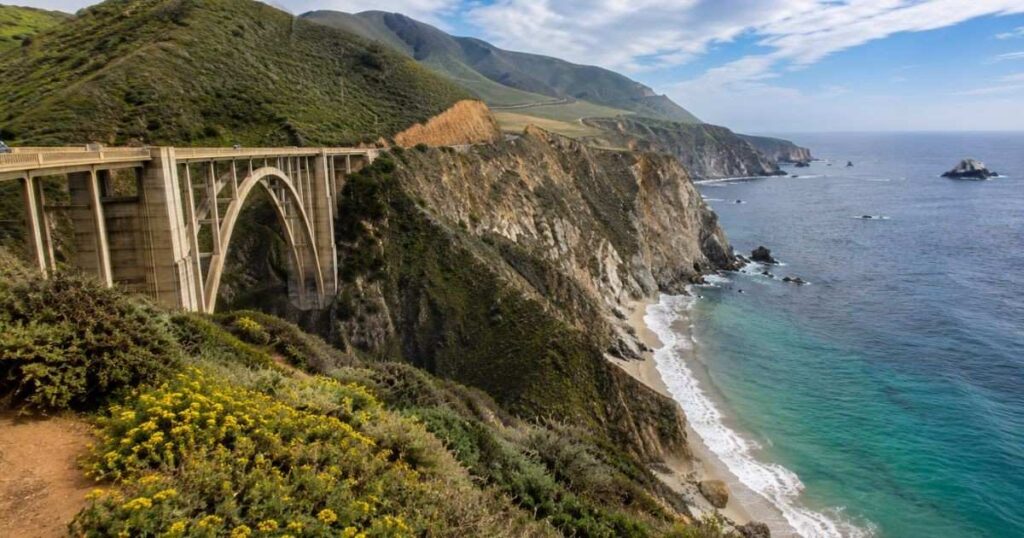
Many travelers think Big Sur is just a scenic drive along California’s coastline. The reality feels very different the moment you arrive. Towering redwoods stand a few minutes from rugged cliffs, waterfalls drop directly toward the Pacific Ocean and winding roads reveal a new viewpoint every few kilometers.
Big Sur stretches roughly 90 miles along California’s Central Coast between Carmel and San Simeon. This region attracts road trippers, photographers, hikers and nature lovers who want more than a quick roadside stop. The best experiences often sit beyond the famous viewpoints that dominate social media.
This guide covers the top things to do in Big Sur, where to stop, how much activities cost, when to visit and several spots that most tourists drive past without noticing.
In This Guide You Will Find:
- Where to see McWay Falls from the best viewing platform
- The exact beach famous for its purple sand reflections at sunset
- The most rewarding hikes with realistic walking times
- What most visitors miss along Pacific Coast Highway
- The best months for clear skies and lighter traffic
- How much to budget for food, parking and accommodation
Quick Info Box
| Information | Details |
| Location | Central California Coast, USA |
| Nearest Airport | Monterey Regional Airport (45 miles / 72 km) |
| Best Time to Visit | April–June and September–November |
| Travel Time from Major City | 2.5 hours from San Jose, 3 hours from San Francisco |
| Days Recommended | 2–3 days |
| Average Daily Cost | $180–$350 per person |
Things to Do in Big Sur: Visit Bixby Creek Bridge, McWay Falls and the Most Famous Landmarks
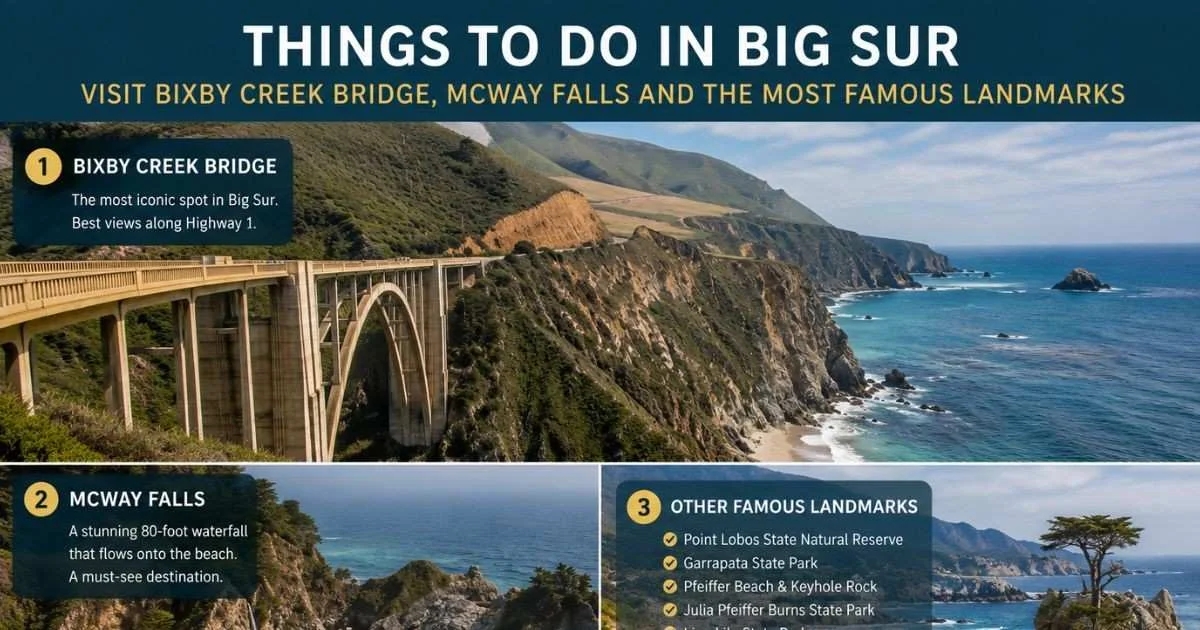
No list of things to do in Big Sur feels complete without the area’s three iconic landmarks. Start with Bixby Creek Bridge, located about 13 miles south of Carmel. Built in 1932, this concrete arch bridge stands 260 feet above the canyon and remains one of the most photographed locations on the Pacific Coast Highway.
Continue south to McWay Falls inside Julia Pfeiffer Burns State Park. The park charges $10 per vehicle. A short 10-minute walk leads to the overlook where an 80-foot waterfall flows year-round toward a small cove. Most visitors arrive midday but the lighting improves significantly during late afternoon.
Another essential stop sits at Hurricane Point. Many travelers rush past it on their way south. You will find expansive views of the coastline and a clear perspective of Bixby Creek Bridge from above.
Most tourists miss Calla Lily Valley near Garrapata State Park. During February and March, thousands of white lilies bloom beside a creek less than 20 minutes from Carmel.
The combination of cliffs, ocean views and historic engineering makes these landmarks some of the most memorable things to do in Big Sur during any season.
Pro Tip: Arrive at Bixby Creek Bridge before 8:00 AM to avoid tour buses and secure parking near the viewpoints.
Things to Do in Big Sur: Explore Pfeiffer Beach, Hidden Coves and Coastal Landscapes

Among all the things to do in Big Sur, spending time on the coastline offers the greatest variety. Pfeiffer Beach stands out because of its purple-tinted sand, created by manganese garnet deposits washing down nearby hillsides.
The entrance road remains easy to miss. Look for Sycamore Canyon Road, approximately 2 miles south of the Big Sur Station. Entry costs $15 per vehicle. The beach features Keyhole Rock, a massive offshore formation where sunlight shines through a natural arch during winter sunsets.
Sand Dollar Beach, the largest sandy beach in Big Sur, provides another excellent stop. Surfers often gather here because waves remain more consistent than at smaller coves. A short trail leads down from the parking area.
Partington Cove offers something different. A brief hike through a historic tunnel opens onto a rocky shoreline once used by cargo ships during the late 1800s. Few first-time visitors add this stop to their itinerary.
Compared with nearby Carmel Beach, Big Sur’s coastline feels wilder and less developed. You will find fewer facilities but significantly more dramatic landscapes.
These coastal stops rank among the most rewarding things to do in Big Sur because each location offers a completely different perspective of the Pacific Ocean.
Pro Tip: Visit Pfeiffer Beach one hour before sunset during December or January for the best Keyhole Rock light conditions.
Things to Do in Big Sur: Hike Through Redwoods, Waterfalls and Mountain Trails

Many travelers focus only on scenic overlooks but hiking remains one of the top things to do in Big Sur. The region contains trails that range from easy walks to challenging mountain climbs.
Pfeiffer Big Sur State Park serves as a great starting point. Day-use entry costs $10 per vehicle. The Pfeiffer Falls Trail covers roughly 1.4 miles round trip and takes about 45 minutes. A viewing platform overlooks a waterfall surrounded by redwood forest.
For a longer adventure, tackle the Buzzards Roost Trail. This 5-mile round-trip hike climbs through forested slopes and rewards visitors with sweeping coastal views.
Ewoldsen Trail inside Julia Pfeiffer Burns State Park offers one of the most balanced hikes in the region. The 4.5-mile loop combines ocean viewpoints, redwood groves and shaded canyons.
Most visitors don’t realize that Big Sur contains some of California’s southernmost coastal redwoods. Several groves stand only minutes from the ocean, creating a landscape that feels completely different from inland redwood parks.
Spring months such as April and May bring flowing waterfalls and green hillsides. Autumn offers clearer skies and lighter crowds.
If you enjoy outdoor activities, hiking easily ranks among the most satisfying things to do in Big Sur.
Verdict: Choose Ewoldsen Trail if you want one hike that combines forests, ocean views and manageable distances.
Things to Do in Big Sur: Best Time to Visit, Costs and Road Trip Planning

Timing plays a major role when planning things to do in Big Sur. Summer attracts the largest crowds, especially from June through August. Hotel prices often exceed $350 per night during peak weekends.
April, May, September and October provide the strongest balance between weather and visitor numbers. Temperatures usually range from 60°F to 75°F and coastal fog appears less frequently.
Food costs vary considerably. Breakfast at a local café typically costs $12–$18. Lunch averages $15–$25, while dinner at a well-known restaurant can reach $35–$60 per person.
Fuel up before entering Big Sur whenever possible. Gasoline prices often run significantly higher than nearby Monterey due to transportation costs.
Road closures occasionally affect Highway 1 after winter storms. Check current conditions before departure. A drive from Monterey to McWay Falls usually takes around 1.5 hours without extended sightseeing stops.
Many travelers attempt Big Sur as a day trip from San Francisco. While possible, a two-night stay allows enough time to experience more than the roadside viewpoints.
Understanding seasonal conditions and budgeting properly helps you enjoy more things to do in Big Sur without unnecessary stress.
Pro Tip: Stay in Monterey or Carmel if Big Sur accommodation exceeds your budget by more than $100 per night.
Things to Do in Big Sur: Practical Travel Tips and What Tourists Often Miss

The best things to do in Big Sur become even better when you avoid common mistakes. Mobile phone coverage remains limited throughout much of the region. Download maps before arriving.
Parking fills quickly at major attractions between 10:00 AM and 3:00 PM. Early mornings provide easier access and better photography conditions.
Many visitors spend their entire trip along Highway 1. They miss inland trails, redwood groves and smaller attractions such as Limekiln State Park. This park includes historic lime kilns, shaded forest paths and a waterfall trail within a single visit.
Water and snacks remain essential because services spread out across long stretches of coastline. Distances between facilities often exceed 20 miles.
Wildlife watching also deserves attention. Sea otters, harbor seals, migrating gray whales and California condors appear throughout different seasons. December through April offers the strongest whale-watching opportunities.
Compared with destinations such as Santa Barbara, Big Sur focuses less on beaches and nightlife and more on raw landscapes and outdoor exploration.
Travelers who slow down and explore beyond the famous photo stops consistently discover the most rewarding things to do in Big Sur.
Verdict: Spend at least one full day away from the major viewpoints to experience the side of Big Sur that most tourists never see.
“Planning more Hawaii day trips? Our guides on things to do maui , red sand beach maui, lulumahu falls, things to do in hilo hawaii, things to do in kona, captain cook monument trail, lanikai pillbox hike and papakolea green sand beach cover the rest of the region in detail.”
Frequently Asked Questions
How many days do you need in Big Sur?
Two to three days works best for most travelers. This timeframe allows enough time for hiking, scenic viewpoints, beaches and relaxed driving without rushing between attractions.
Is Big Sur worth visiting this year?
Yes, Big Sur remains one of the most distinctive coastal destinations in North America. You will find waterfalls, redwood forests, ocean cliffs and scenic drives within a relatively compact area.
What is the best time to visit Big Sur?
April through June and September through November offer the best conditions. These months usually bring mild temperatures, fewer crowds and clearer coastal views than peak summer periods.
Is Big Sur expensive for tourists?
Big Sur can be moderately expensive. Budget travelers may spend around $180 daily, while visitors staying in premium hotels and dining at upscale restaurants can easily exceed $350 per day.
Can you do a day trip from San Francisco to Big Sur?
Yes, but it creates a long day. The drive takes roughly three hours each way, so an overnight stay provides significantly more time for exploring the top things to do in Big Sur.
Conclusion
The strongest reason people return to Big Sur is the variety packed into a single stretch of coastline. Within one day, you can walk through redwood forests, stand above an 80-foot waterfall, photograph a historic bridge and watch waves crash against rocky cliffs. Few destinations combine such different landscapes within such short driving distances.
The best things to do in Big Sur extend beyond the famous viewpoints. Slow down, take a trail that most drivers ignore and spend time at places like Partington Cove or Limekiln State Park. Before leaving, reach Pfeiffer Beach 45 minutes before sunset and watch the final light pass through Keyhole Rock.


