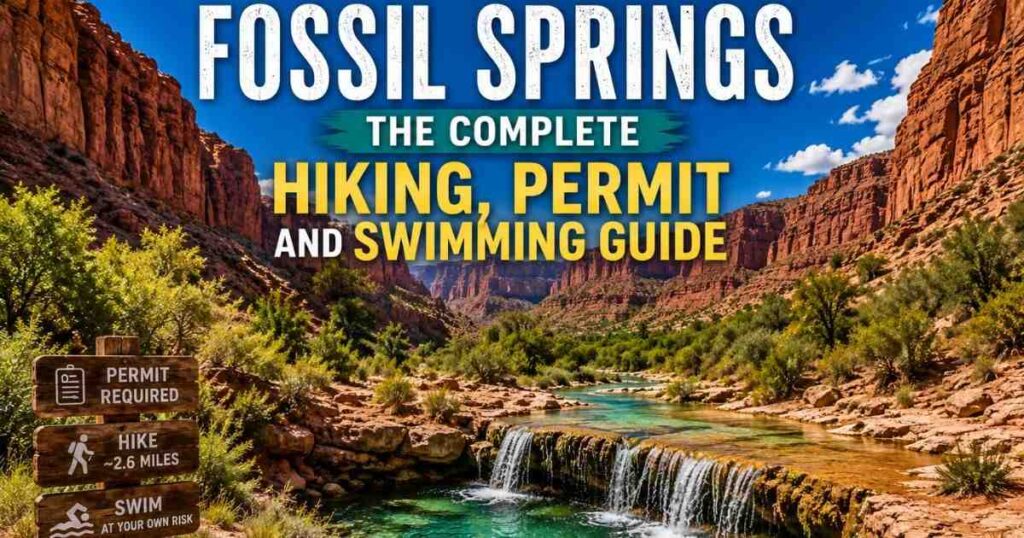
Fossil Springs pumps 20,000 gallons of 72°F water into a canyon every minute and most hikers still underestimate the climb back out. This isn’t a flat stroll to a swimming hole. You’ll drop 1,500 feet down a dusty switchback trail, swim in water so clear you can count pebbles ten feet down, then hike straight back up in the Arizona sun. This guide covers permits, trail options, timing and the mistakes that leave people stranded at the trailhead gate.
In This Guide You Will Find:
- The real permit rules for the Bob Bear Trail versus the free winter season
- Exact mileage and elevation change for the main trail to the springs
- The difference between Fossil Springs and Fossil Creek, which confuses almost everyone
- Which months bring the coolest hike and the warmest swim
- Parking gate hours and what happens if you arrive after 4 p.m.
- Direct answers to the questions hikers search most before booking a permit
Quick Info
| Category | Details |
| Location | Coconino National Forest, near Strawberry, Arizona |
| Nearest Airport | Phoenix Sky Harbor (PHX), about 2 to 2.5 hours by car |
| Best Time to Visit | April and May or September and October |
| Travel Time from Phoenix | Approximately 2 to 2.5 hours to the Bob Bear Trailhead |
| Days Recommended | 1 day (arrive early, most visitors finish in 5 to 7 hours) |
| Average Daily Cost | $10 to $30 per person, including permit and gas |
Fossil Springs Permits and Trail Basics
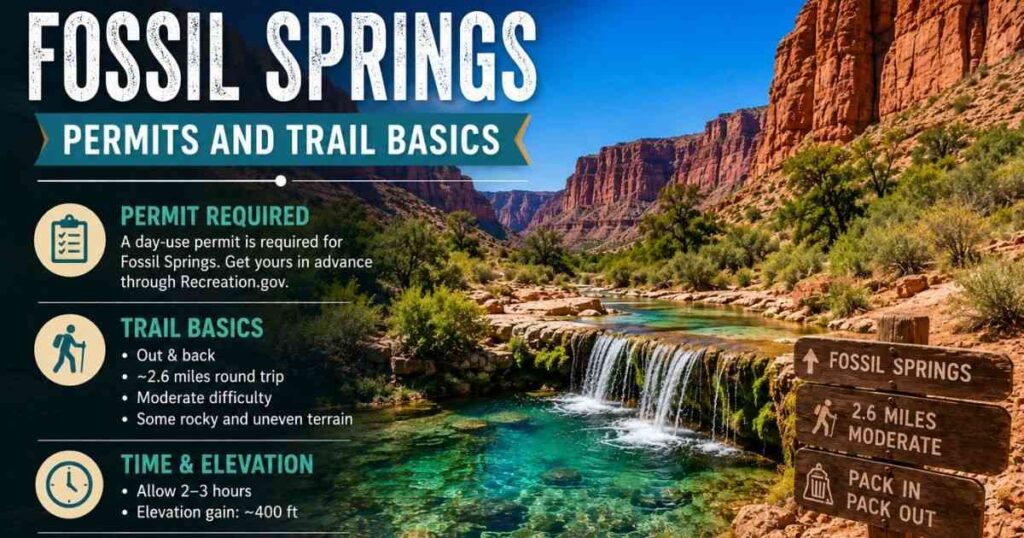
The permit area locks down from April 1 through October 1 every year and the Forest Service enforces it strictly at the gate. During that window, you need a $6 vehicle permit booked through Recreation.gov before you drive out. For the 2026 season, the area is only open Friday through Sunday in April, so a Tuesday trip in early spring won’t work at all. From October 2 through March 31, the gate opens with no permit, no fee and no reservation required, though rangers can still close the road for weather.
The Bob Bear Trailhead sits five miles west of Strawberry, Arizona, off Fossil Creek Road. The hike to the springs and swimming holes covers 8.6 miles round trip with 1,434 feet of elevation change, according to trail data from repeat hikers. Most people take 5 to 7 hours total, including swim time.
The trailhead gate closes at 4 p.m. with a one-way spike barrier, so leaving after that time works but arriving does not. Rangers check printed permits at this gate and a phone screenshot alone won’t always satisfy them if you have no signal to prove it’s valid. Bring a paper copy or download it before you lose service in Strawberry.
Pro Tip: Book your permit exactly one month ahead at 7 a.m. Arizona time on Recreation.gov, since permits for popular weekend dates disappear within minutes.
Fossil Springs vs. Fossil Creek: What’s the Difference
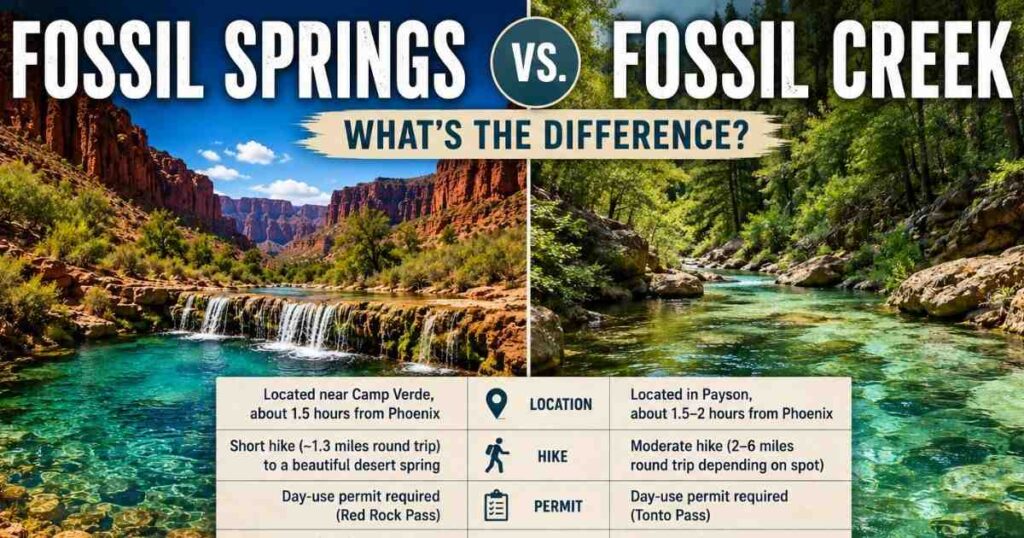
Fossil Springs is the actual spring source, tucked at the top of the canyon near the Bob Bear Trailhead. Fossil Creek is the stream that flows downstream from that spring, reached through separate trailheads near Camp Verde like Dixon Lewis. Most people use both names interchangeably online, which causes real confusion when booking permits. Each side requires its own separate Recreation.gov reservation and a permit for one side won’t get you into the other.
The Fossil Springs side, via Bob Bear Trail, leads to a dam waterfall and a partially submerged cave locals call the Mermaid Grotto. The Fossil Creek side near Dixon Lewis is roughly 1 mile from its lot to the main waterfall, far shorter than the 4.3-mile one-way hike from Bob Bear. If you want swim-through caves and don’t mind the longer hike, choose Fossil Springs. If you want an easier walk to a waterfall, Fossil Creek’s downstream trails suit families better.
Verdict: Fossil Springs rewards hikers willing to earn the view Fossil Creek suits anyone who wants water access without the 1,500-foot climb back up.
Best Time to Visit Fossil Springs
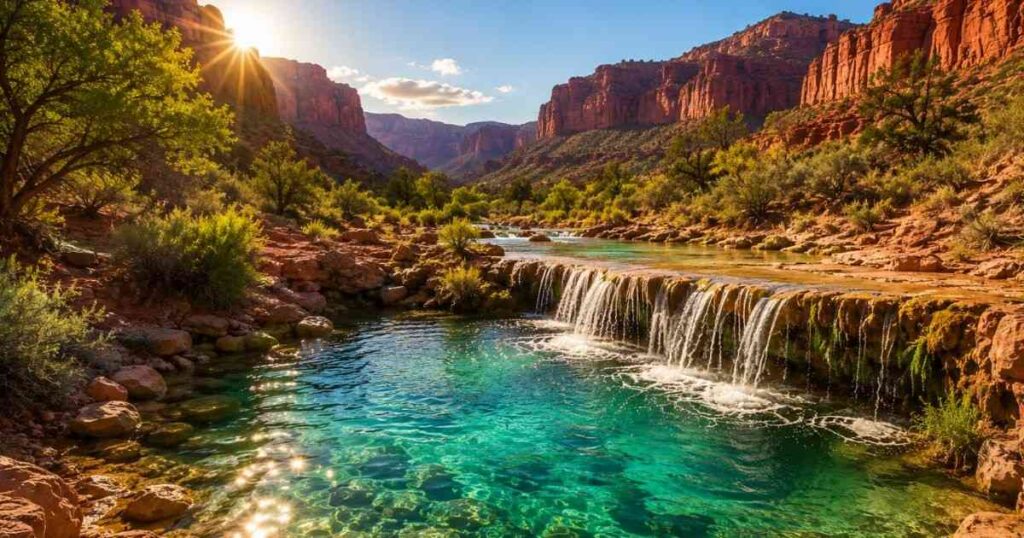
April and May bring air temperatures in the 70s and 80s at the trailhead, with water still cold enough to shock you on entry at 72°F year-round. September and October offer the same mild hiking weather without the crowded permit competition that peaks in June and July. Summer visits mean triple-digit heat on the exposed switchbacks, since the trailhead itself sits at 5,600 feet but the canyon floor traps heat by early afternoon. Winter hiking from November through March needs no permit at all, though morning temperatures at the trailhead can drop close to freezing.
Most visitors don’t realize the off-season window is completely free and far less crowded, since nearly everyone assumes a permit is required year-round. Weekday hikes in the permit season, especially Tuesday through Thursday when they’re allowed, see far fewer cars than any weekend slot. Afternoon monsoon storms roll through the region between July and August, turning the dirt access roads slick within minutes. Check the Coconino National Forest alerts page before any summer trip, since flash flooding closes the canyon without warning.
Rainfall in late summer also raises the risk of flash flooding directly inside the canyon walls, where there’s no higher ground to escape to quickly. Rangers have closed the trail with almost no notice during active monsoon warnings, stranding cars at the lot until conditions clear. A clear morning sky at the trailhead doesn’t guarantee a clear afternoon at the water, since storms build fast over the Mogollon Rim. Check the forecast the night before, not just that morning.
Pro Tip: Aim for a weekday in late September, when water levels stay high, air temperatures drop into the comfortable 70s and permit competition eases compared to peak summer weekends.
Getting to Fossil Springs and What to Bring
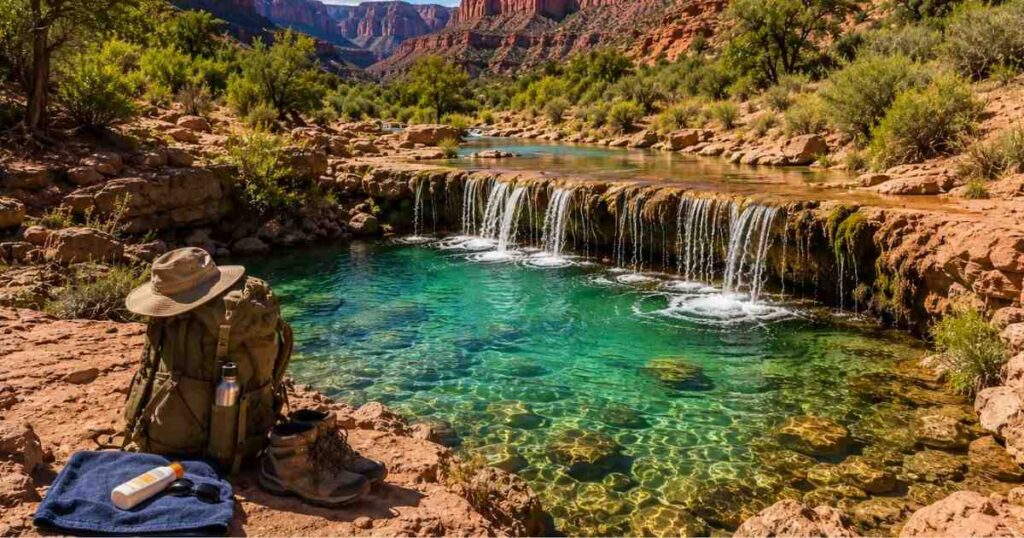
From Phoenix, the drive to the Bob Bear Trailhead runs about 2 to 2.5 hours, heading north through Payson and Strawberry on Highway 87. From Camp Verde, exit Interstate 17 at Exit 287, then head east on Highway 260 toward Payson before turning onto Fossil Creek Road. The final stretch to the trailhead includes several miles of graded dirt road and a standard sedan handles it fine in dry conditions. Bring at least 2 liters of water per person, since there’s no potable water source anywhere on the trail.
Pack water shoes for the rocky creek bottom, a headlamp in case your hike back runs past sunset and a printed permit copy since Recreation.gov confirmation emails alone aren’t accepted at the gate. Glass containers and campfires are banned throughout the entire permit area and rangers do check coolers at the trailhead. Cell service disappears completely once you’re inside the canyon, so plan your return time before you lose signal in Strawberry. Every year, unprepared hikers need mountain rescue from this exact trail, mostly from underestimating the climb back to the parking lot.
Sturdy hiking shoes matter more than sandals on the switchbacks, since loose gravel makes the descent slippery and the climb back punishing on bare soles. A lightweight daypack with a hip belt distributes weight better over 8.6 miles than a simple backpack. Sunscreen and a wide-brim hat help on the exposed upper third of the trail, where there’s almost no shade until you reach the canyon floor. Most hikers pack a lunch to eat at the streamside, since there’s nowhere to buy food closer than Strawberry, roughly 20 minutes back toward the highway.
Verdict: Treat Fossil Springs like a real backcountry hike, not a casual swim stop and pack accordingly.
“Planning more Arizona day trips? Our guides on phoenix to grand canyon, north rim grand canyon, upper vs lower antelope canyon , goosenecks state park utah , coral pink sand dunes utah and vegas to grand canyon cover the rest of the region in detail.”
Frequently Asked Questions
How many days do you need at Fossil Springs?
One day covers the full experience, since most hikers finish the 8.6-mile round trip in 5 to 7 hours including swim time. Start before 8 a.m. to avoid midday heat on the climb back up. No camping is allowed inside the permit area from April through October, so overnight stays aren’t an option during peak season.
Is Fossil Springs worth visiting in 2026?
Yes, especially given the 72°F spring-fed water that flows year-round regardless of drought conditions elsewhere in Arizona. The travertine pools and swim-through cave near the dam waterfall remain among the clearest swimming spots in the state. The 2026 permit system now releases 20% of spots three days before each date, making last-minute trips more realistic than in past years.
What is the best time to visit Fossil Springs?
April, May, September and October offer the mildest hiking temperatures and the most manageable permit competition. Summer months bring 100°F-plus heat on the exposed trail sections and heavier crowds fighting for the same permits. Winter requires no permit but includes near-freezing mornings at the 5,600-foot trailhead elevation.
Is Fossil Springs expensive for tourists?
No, the entire trip costs $10 to $30 per person once you factor in the $6 vehicle permit, gas from Phoenix and simple packed food. There are no entrance fees beyond the vehicle permit, no gift shops and no paid parking beyond the reserved spot. The biggest cost most visitors face is the gas for the 4- to 5-hour round-trip drive from Phoenix.
Can you do a day trip to Fossil Springs from Phoenix?
Yes, the drive takes about 2 to 2.5 hours each way, making a single-day round trip realistic if you leave by 6 a.m. Add the 5- to 7-hour hike itself and you’re looking at a 10- to 12-hour day total. Staying overnight in Strawberry or Payson the night before gives you an earlier start and less driving fatigue.
Final Thoughts
Fossil Springs delivers one of Arizona’s clearest swimming holes but only to hikers who respect the 1,500-foot climb and lock in a permit ahead of time. Skip the confusion between Fossil Springs and Fossil Creek by booking the Bob Bear Trailhead specifically if the dam waterfall and swim-through cave are your goal. Time your visit for a September weekday, arrive at the gate before 8 a.m and you’ll have the Mermaid Grotto nearly to yourself before the afternoon crowds hike in.