Krka National Park sits just 85 km north of Split, yet most tourists treat it like a distant expedition requiring an organized tour and a full day of preparation. The reality is sharper: you can leave Split at 08:00, pull into the Lozovac car park by 09:00, walk the 1.9 km Skradinski Buk boardwalk loop before the tour buses arrive at 10:30 and be back in Split for a late lunch. This guide covers every route from Split to Krka National Park bus, car and organized tour with 2026 ticket prices, the correct entrance to use and the exact timing that separates a relaxed visit from a crowded one.
In this guide you will find:
- A direct comparison of bus, car and tour options from Split to Krka National Park with 2026 prices
- Exact entry ticket costs by season including the post-15:00 discount that most visitors never use
- The critical difference between Lozovac and Skradin entrances and which one suits your transport method
- What the Skradinski Buk boardwalk actually covers in distance, time and what the Visovac boat excursion adds
- The one seasonal window when Split to Krka National Park delivers the fewest crowds and the best waterfall levels
Quick Info Box
| Detail | Info |
| Location | Šibenik-Knin County, central Dalmatia, Croatia |
| Nearest Airport | Split Airport (SPU) — 85 km / ~1 hour to Lozovac entrance |
| Best Time to Visit | May, June and September |
| Travel Time from Split | 1 hour by car; 1.5–2 hours by bus |
| Days Recommended | 1 full day is enough; half-day possible via car |
| Average Daily Cost | €60–€95 per person including entry, transport and food |
Split to Krka National Park: Bus, Car or Tour
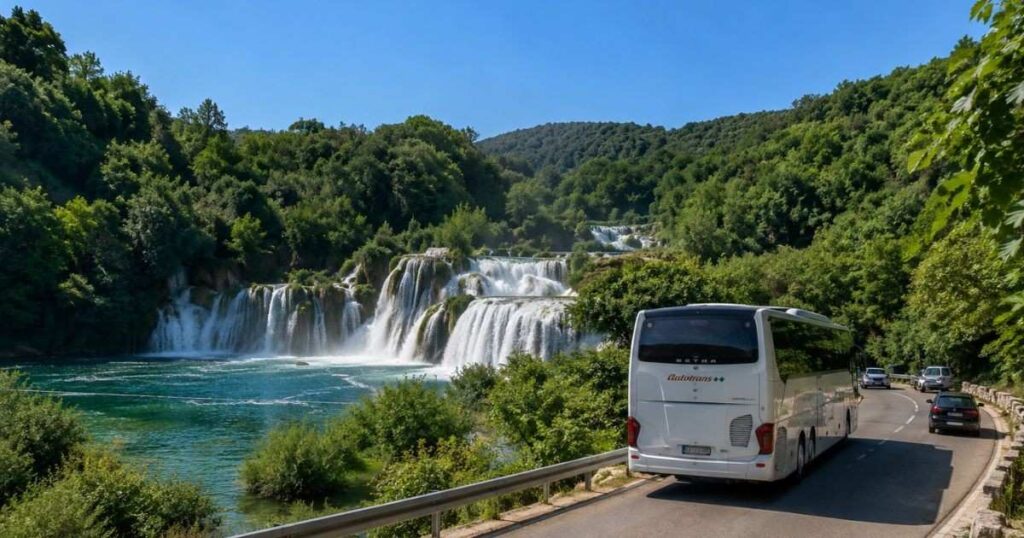
The journey from Split to Krka National Park runs three ways and the right choice depends entirely on whether you value cost or flexibility. By car, the drive from Split center to the Lozovac entrance covers 85 km via the A1 motorway and takes 1 hour. The one-way toll costs approximately €4 and parking at Lozovac is free. This is the fastest option and gives you complete control over arrival time critical in July and August when arriving before 09:30 is the difference between a calm morning walk and shoulder-to-shoulder boardwalk queues.
By bus, Split to Krka National Park connects through Šibenik. You take a bus from Split Bus Station to Šibenik (journey: 1 hour, ticket: €5–€8), then a second bus from Šibenik to Skradin or directly to the Lozovac stop. Total journey time runs 1.5–2 hours each way. Some direct seasonal buses drop passengers at park Entrance 1 near Lozovac check timetables at Split Bus Station or on FlixBus before travel, as direct routes only operate April through October.
Organized tours from Split depart daily from the Riva promenade at 08:15 (morning tour) or 11:15 (afternoon tour). Tour prices start at €26–€41 per person for transport only, with park entry (€40 in peak season) paid separately on arrival in cash. Full-package tours including entry, boat cruise and guide run €55–€85 per person. Tours cover the Skradinski Buk area with 2.5 — 3 hours of free park time, then include a stop in Skradin town where you can swim in the Krka River, a feature that independent day-trippers often miss because they don’t know Skradin offers river swimming outside park boundaries.
Pro Tip: Drive from Split and arrive at Lozovac before 09:00. The free car park fills by 10:30 in July and August and latecomers park 1.5 km away on the roadside verge.
Krka National Park Entry Ticket Prices for 2026
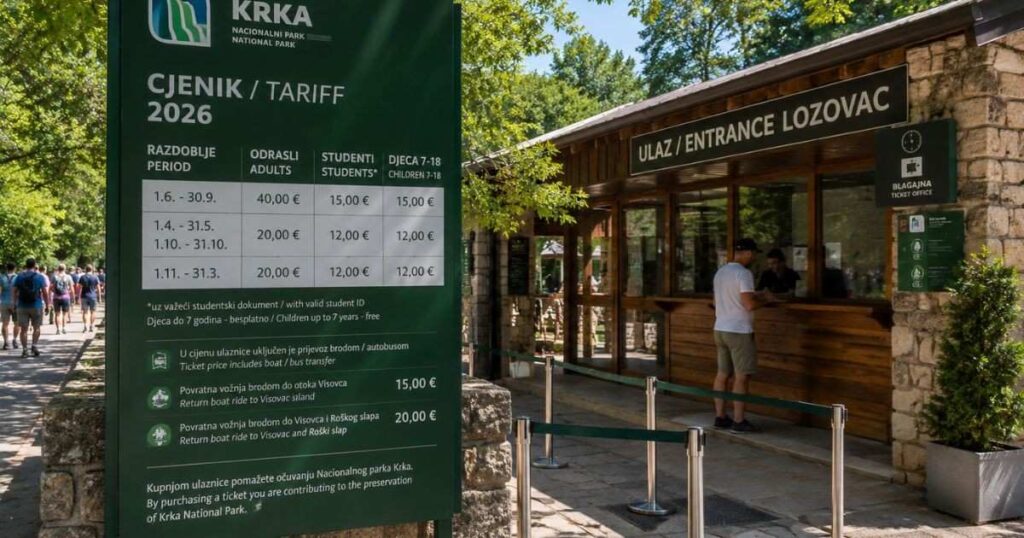
Krka National Park uses a three-tier pricing system in 2026 and understanding it saves you real money. Peak season (June–September): €40 per adult. Mid-season (April–May and October): €20 per adult. Off-peak (November–March): €20 per adult. Children under 7 enter free across all seasons. Students with valid ID pay €15 in peak season and €12 in all other periods.
The most underused discount in the park: from June through September, anyone entering after 15:00 pays the reduced rate of €30 per adult instead of €40. Most day-trippers from Split arrive between 09:00 and 11:00 and pay full price. If you drive from Split, arriving at 15:00 cuts your entry cost by €10 per person and the afternoon light on Skradinski Buk’s cascades between 16:00 and 18:00 outperforms the harsh midday glare that most morning visitors experience.
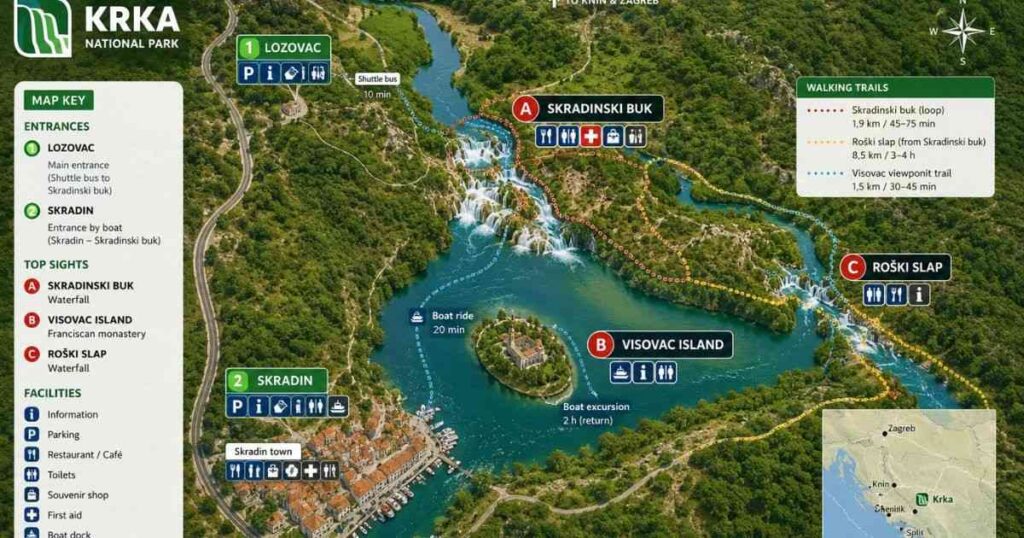
Your entry ticket includes two internal transport options when in operation: the free shuttle bus between Lozovac and Skradinski Buk (a 10-minute ride down a forested hillside) and the boat from Skradin to Skradinski Buk. Optional boat excursions cost extra, the Skradinski Buk to Visovac Island return trip takes 2 hours and costs €15 per person the longer Visovac plus Roški Slap route takes 4 hours and costs €20 per person. Both run April through October and are worth adding if you spend a full day rather than a half-day at the park.
Pro Tip: Buy your Krka entry ticket online at np-krka.hr up to 7 days before your visit online booking guarantees entry on busy July dates when walk-up visitors occasionally face capacity delays at the gate.
Lozovac vs Skradin: Which Entrance to Use
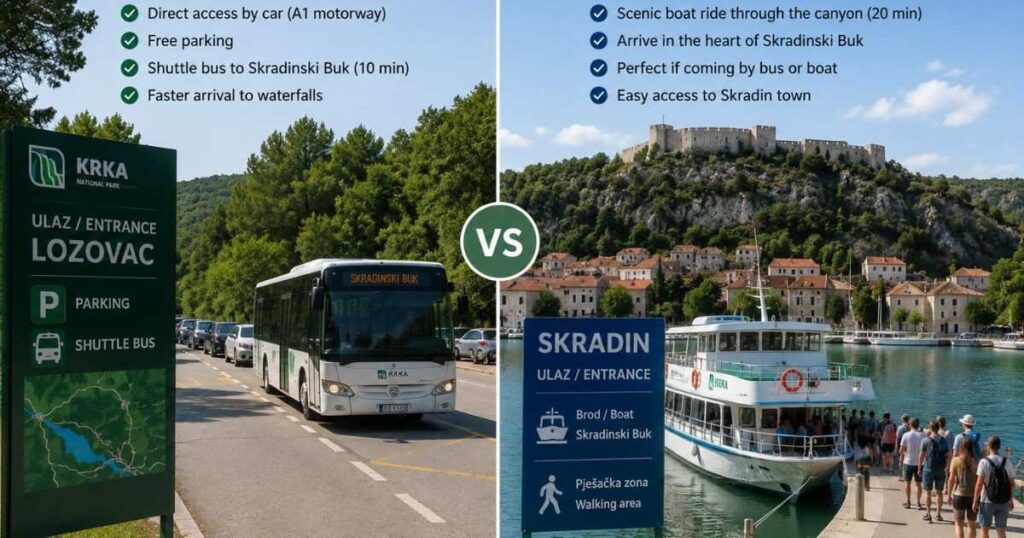
Krka National Park has two main entrances serving the Skradinski Buk area and choosing the wrong one adds unnecessary time and cost to your Split to Krka National Park day trip. Lozovac entrance sits on the park’s eastern edge, directly accessible from the A1 motorway. Drivers from Split use this entrance park for free in the large Lozovac car park, buy your ticket at the booth and board the free shuttle bus down to Skradinski Buk. The shuttle runs every 15–20 minutes in peak season and takes 10 minutes. Total time from car park to the first waterfall cascade: 20 minutes.
Skradin entrance sits on the western side and requires a scenic 20-minute boat ride up the Krka River canyon to reach Skradinski Buk. The boat is included in your entry ticket when operating (April–October). Skradin suits visitors arriving by bus from Šibenik or those who want the river approach as part of the experience. The canyon section between Skradin and Skradinski Buk is genuinely one of the most overlooked stretches in Croatian national park tourism, with forested limestone walls, reed beds and herons that tour groups arriving by shuttle bus never see.
Most visitors coming from Split by car default to Lozovac because it is faster and signposted directly off the motorway. If you have time and arrive before the park’s peak hours, drive past Lozovac and park in Skradin instead the additional 20 km adds 25 minutes of driving but gives you the boat approach, which transforms the arrival experience completely.
Pro Tip: Skradin town (at the Skradin entrance) is where river swimming happens after your park visit, walk down to the Krka River bank in Skradin and swim for free. This is something most tourists who use only the Lozovac entrance miss entirely.
What to See at Krka: Skradinski Buk and Beyond
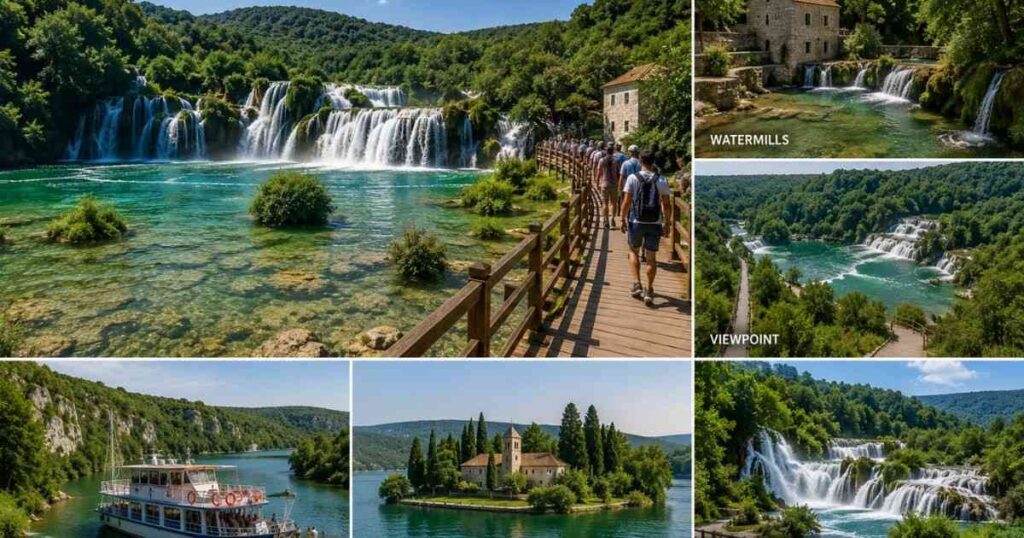
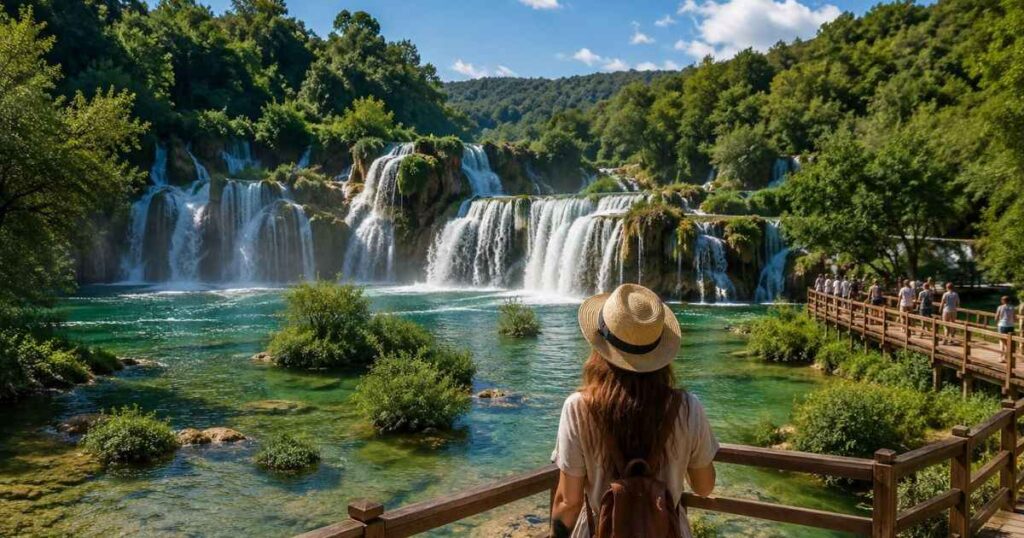
Skradinski Buk is the centerpiece of any Split to Krka National Park day trip, a 17-terrace travertine waterfall system stretching 800 m along the Krka River, making it the largest travertine waterfall in Europe. The standard boardwalk loop covers 1.9 km and takes 45–75 minutes at a relaxed pace. The route crosses wooden bridges directly over active cascade sections, passes a cluster of restored 19th-century watermills and reaches a viewpoint platform at the top of the main falls where the Krka River drops its full height before flattening into the lower pool.
Most visitors who arrive on organized tours spend their entire park time on the Skradinski Buk loop and leave without seeing Visovac Island. Visovac sits 7 km upstream on a small island in the middle of the Krka River holding a 15th-century Franciscan monastery and a collection of Turkish maps from the Ottoman siege period. The monastery museum charges a separate entry fee of €3 and the boat from Skradinski Buk to Visovac and back runs 2 hours at €15 per person. For a full-day visitor from Split, combining the Skradinski Buk loop with the Visovac boat trip fills 5–6 hours in the park without rushing.
Roški Slap, the park’s second major waterfall system located 14 km north of Skradinski Buk, requires either the longer 4-hour boat excursion (€20) or a car to the separate northern entrance. Day-trippers from Split rarely reach Roški Slap on a standard visit but it draws a fraction of Skradinski Buk’s crowds and the upper millpond section is genuinely quieter and less photographed.
Pro Tip: Walk the Skradinski Buk boardwalk loop counterclockwise start at the lower pool and finish at the upper viewpoint. This direction puts you moving against the main tour-group flow and gives you clearer sight lines to the main cascade face without tour groups blocking the foreground.
Best Time for the Split to Krka National Park Trip
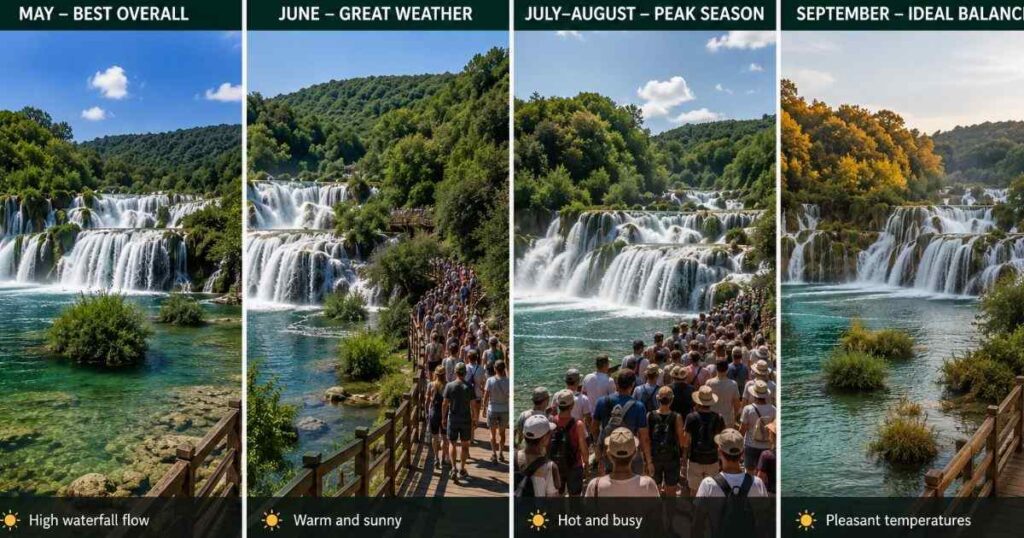
Timing the Split to Krka National Park visit correctly cuts crowds by 50% and saves €20 on entry. May is the strongest month: waterfall volume is at its highest after spring rainfall, temperatures at the park reach 20–24°C (cooler than Split by 4–6°C) and daily visitor numbers run well below the July peak. Entry costs €20 in May versus €40 in July, a direct saving of €20 per adult simply by adjusting your travel month.
September matches May in practical value. Sea temperatures in Split stay at 24–26°C through mid-September, so beach days remain viable and Krka crowds drop sharply after the first week of September when European school holidays end. The park’s vegetation turns from dusty summer green to a richer tone by late September and the Krka River runs fuller again after summer evaporation slows.
July and August work only if you arrive before 09:00 or after 15:00. The 10:00–14:00 window at Skradinski Buk in peak season involves boardwalk sections where forward movement stops while groups photograph the same waterfall terrace. The afternoon entry discount (€30 from 15:00) partially compensates and the light quality between 16:00 and sunset is dramatically better for photography than the flat midday illumination.
Winter (November–March) delivers the park at €20 entry with almost no visitors but the Skradin boat and Lozovac shuttle do not operate and some boardwalk sections close for maintenance. You walk the park on foot from Lozovac with a longer trail to Skradinski Buk. If you have a car and visit in December, the mist over the lower pools and the bare-branched riverbank vegetation create a visual tone that looks nothing like the summer Instagram version.
Pro Tip: Check the Croatian national park website np-krka.hr for the exact dates when the Skradin boat service starts each April the opening date shifts by 1–2 weeks each year and arriving before the boat opens means missing the Skradin approach entirely.
Practical Tips for the Split to Krka National Park Visit
A few operational details consistently catch first-time Split to Krka National Park visitors off guard. First, swimming inside the park at Skradinski Buk is no longer permitted. Krka banned in-park swimming in 2021 and the ban remains in place through 2026. Most tourists who pack swimwear for Skradinski Buk arrive expecting to swim at the base of the falls and find it prohibited. The swimming happens in Skradin town, 20 minutes downstream by boat, in the river section outside the park boundary. All organized tours that advertise “swimming” take you to Skradin, not into the park itself.
Second, entry fee payment at the gate accepts credit cards at Lozovac and Skradin as of 2025 but cash-only conditions occasionally apply at smaller auxiliary entrances and at the Visovac boat ticket desk carrying €40–€50 in euro cash per person as backup. Third, mobile signal is weak throughout the park’s interior trail network. Download the offline park map from np-krka.hr before leaving Split and screenshot your e-ticket QR code so it displays without internet at the entry gate.
Food inside the park concentrates at two kiosk points near Skradinski Buk grilled meats and sandwiches run €8–€14 per item. The restaurant in Skradin town offers a full menu at €12–€20 for mains, with far better quality than the park kiosks and a riverside terrace overlooking the Krka canyon. Pack a light lunch from a Split bakery to eat at the Skradinski Buk viewpoint benches or budget €15–€18 for a Skradin sit-down meal after the boat returns from the park.
Pro Tip: The Lozovac shuttle bus stops running 30 minutes before park closing time. If you miss the last shuttle up, you walk 2.5 km uphill back to the car park on a forested trail. Set a phone alarm 45 minutes before closing and be at the shuttle stop on time.
“Planning a longer Croatia trip? Our guides on Split to Hvar, things to do in Split Croatia, things to do in Zadar and split to plitvice lakes cover the rest of the Dalmatian Coast in detail.”
FAQ’s
How long does the Split to Krka National Park journey take?
The Split to Krka National Park drive takes 1 hour by car via the A1 motorway 85 km from Split center to the Lozovac entrance. By bus, the Split to Krka National Park route via Šibenik takes 1.5 to 2 hours each way using two connecting services. Organized tours from Split’s Riva promenade reach the park in 75–90 minutes by air-conditioned coach. The split to Krka National Park journey is significantly shorter than the Split to Plitvice Lakes drive, making Krka the more practical choice for a half-day or late-start day trip.
Is Krka National Park worth visiting in 2026?
Krka National Park is worth visiting in 2026, particularly in May or September when the €20 entry fee gives access to Skradinski Buk’s 17-terrace cascade system and the Visovac Island boat trip at half the peak season price. The Split to Krka National Park day trip works as a half-day excursion by car, which no other Croatian national park can match from Split’s location. The main limitation is the swimming ban at Skradinski Buk, so visitors expecting to swim in the falls need to adjust expectations. Swimming happens in Skradin town, outside the park.
What is the best time to visit Krka National Park from Split?
May and September are the best months to do the Split to Krka National Park trip. May offers the highest water volume, entry at €20 per adult and 50–60% fewer visitors than July. September keeps sea temperatures in Split at 24–26°C for beach days while Krka crowds drop after school holidays end. July and August require arriving before 09:00 or after 15:00 the post-15:00 discount cuts adult entry from €40 to €30 and the afternoon light on Skradinski Buk’s cascades significantly outperforms the flat midday glare.
Is Krka National Park expensive for tourists?
Krka National Park costs €40 per adult in peak season (June–September) and €20 in April, May and October. A full Split to Krka National Park day including car petrol (€8 return), motorway toll (€8 return), entry (€40 peak), lunch in Skradin (€15) and the Visovac boat excursion (€15) totals approximately €86 per person. Budget travelers visiting in May or October bring the same day down to €55 by paying €20 entry and skipping the optional boat. By European national park standards, Krka’s peak price is mid-range cheaper than Slovenia’s Triglav and comparable to Croatia’s Plitvice.
Is Krka National Park better than Plitvice Lakes for a day trip from Split?
For a day trip from Split, Krka National Park is the more practical choice 85 km and 1 hour by car versus Plitvice’s 240 km and 2.5 hours. Krka’s entry fee is €40 in peak season versus Plitvice’s €39.50, making costs nearly identical. Plitvice offers 16 terraced lakes and a longer trail system that rewards a full-day visit; Krka delivers Skradinski Buk and the Visovac boat trip in 4–5 hours, making it a better fit for travelers who want a national park experience without sacrificing an entire day. If you have time for both, visit Krka from Split and Plitvice from Zagreb.
Conclusion
No other national park in Croatia sits within 1 hour of a major coastal city and delivers this combination a 17-terrace European waterfall record-holder, a 15th-century island monastery and a river canyon approach by boat. The Split to Krka National Park trip works as a half-day excursion in May or a full-day immersion in any season and it fits any budget from €20 entry self-drive to fully guided tours.
Drive to Lozovac, reach the park before 09:00, walk the Skradinski Buk boardwalk counterclockwise before the first tour bus unloads, then take the afternoon boat to Visovac Island and stand on the monastery steps while the Krka River curves around the island below that 20-minute stop is what separates a Krka day from a standard waterfall tick.