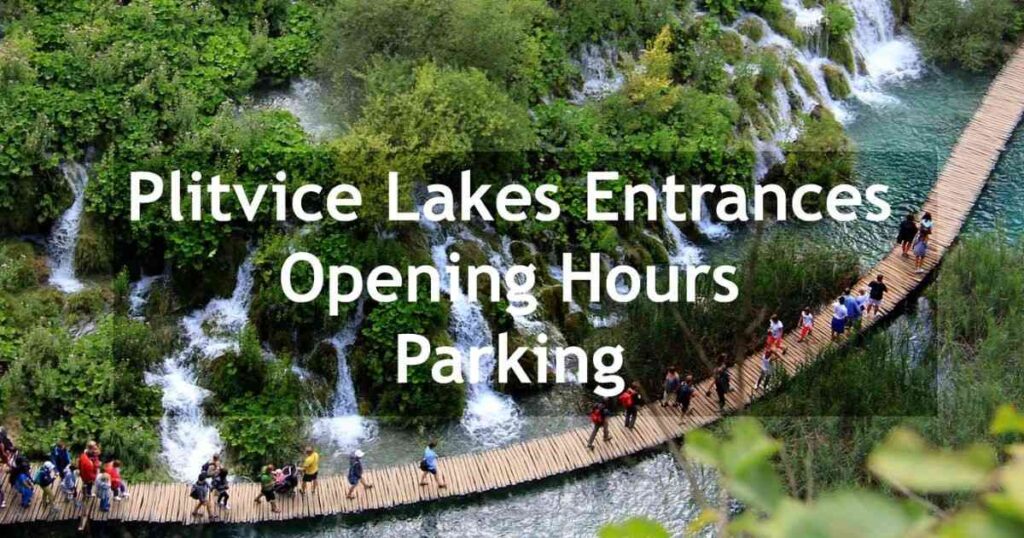
Plitvice Lakes sits 230 km north of Split and most tourists assume the distance makes it impractical a destination best saved for Zagreb visitors. That assumption costs them one of the most visually striking national parks in Europe: 16 terraced lakes connected by 92 m of waterfalls, all within a UNESCO World Heritage site that you can reach from Split in under 3 hours by car. This guide covers every transport option from Split to Plitvice Lakes in 2026, the exact ticket prices you will pay at the gate and the precise timing you need to avoid the 10:00–14:00 crowd peak.
In this guide you will find:
- A direct price and time comparison between bus, car rental and organized tour from Split to Plitvice Lakes
- 2026 entry ticket prices for both Peak (April–October) and Off-Peak seasons, with the route options explained
- The single best arrival time to beat the tour groups at Entrance 1 or Entrance 2
- Which hiking route (Programme A, B, C or H) actually fits a one-day visit from Split
- Why May and September give you waterfall levels and crowd numbers that July and August cannot match
Quick Info Box
| Detail | Info |
| Location | Lika region, central Croatia — Plitvička Jezera National Park |
| Nearest Airport | Split Airport (SPU) — 230 km / ~2.5 hrs to Plitvice by car |
| Best Time to Visit | May, June and September |
| Travel Time from Split | 2.5–3 hours by car; 4–5 hours by bus |
| Days Recommended | 1 full day minimum; 2 days to see Upper and Lower Lakes properly |
| Average Daily Cost | €50–€90 per person including entry, food and transport |
Split to Plitvice Lakes: Bus, Car or Tour Which Option Wins
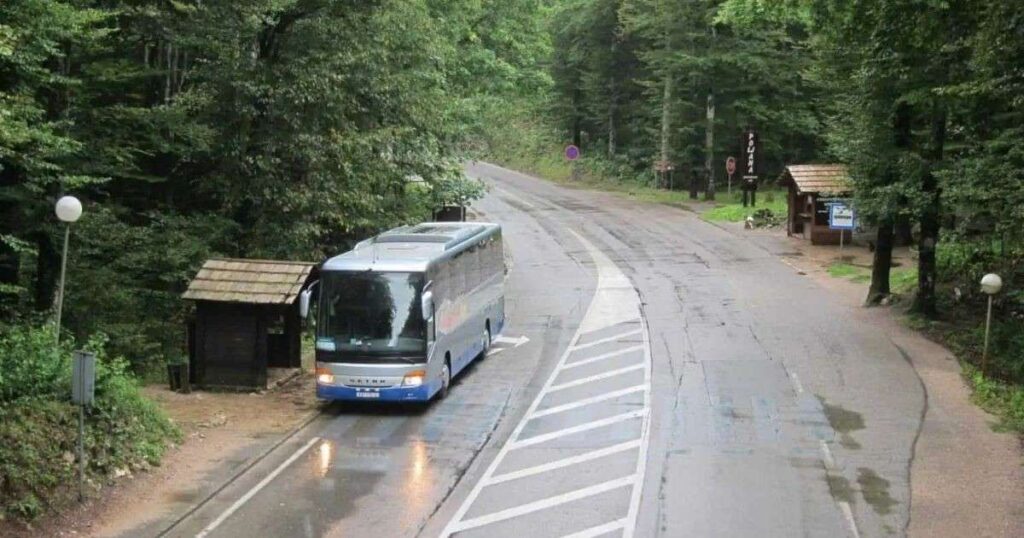
Three transport options connect Split to Plitvice Lakes and each one suits a different traveler. The direct bus from Split Bus Station (Autobusni kolodvor Split) to Plitvice Lakes runs daily through operators including Flixbus and Autotrans. Journey time is 4 to 5 hours and a one-way ticket costs €15–€22 depending on the operator and booking date. The bus drops you at the national park entrance on the main road (D1) and the walk to Entrance 1 takes under 5 minutes. The return bus from Plitvice to Split departs in late afternoon to confirm the exact time when booking because schedules shift by season.
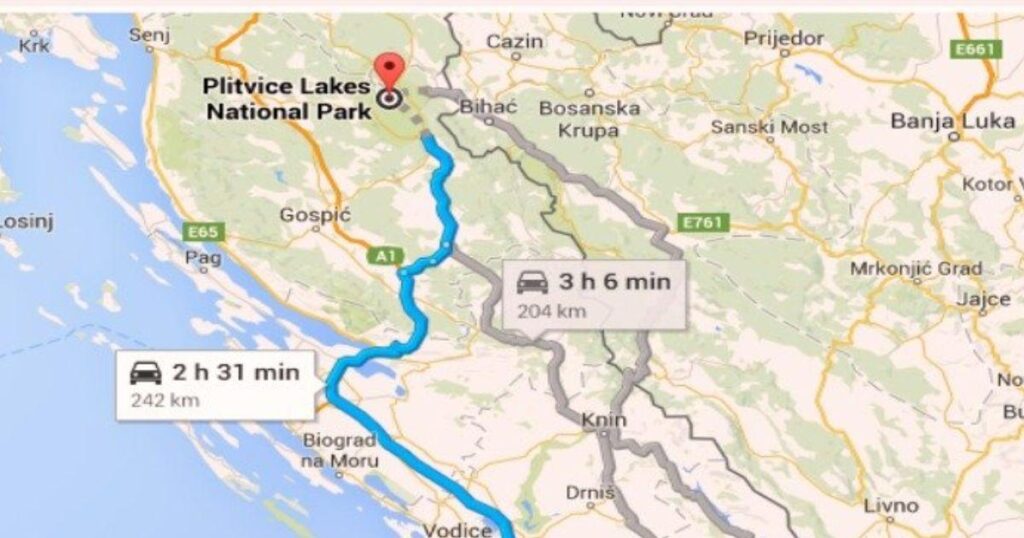
Renting a car in Split and driving to Plitvice Lakes takes 2.5–3 hours via the A1 motorway north toward Zagreb, then the D1 road toward the park. The toll from Split to the Plitvice exit costs approximately €10–€14 depending on the entry and exit points. A compact car rental in Split for one day runs €35–€55 in shoulder season and €60–€90 in July and August. Driving gives you full flexibility, you can stop at Rastoke village (30 minutes south of Plitvice, free to walk around) and leave the park whenever you want rather than chasing a bus departure.
Organized day tours from Split cost €55–€85 per person and include transport, a guide and sometimes the park entry fee read the small print, because many tours list entry as “not included,” adding €23.50 — €39.50 to the total. Tours depart Split around 07:00 and return by 22:00, giving you 4–5 hours in the park. They suit travelers without a driving license or those who prefer not to navigate Croatian motorways. The downside is rigid timing when you leave when the group leaves, regardless of whether you have finished Programme B.
Pro Tip: If you rent a car, depart Split by 06:30 to reach Plitvice before 09:30 the park car park (€7 per day) fills by 10:00 in July and August and late arrivals park 2 km away on the roadside.
Plitvice Lakes Entry Tickets and Route Options in 2026
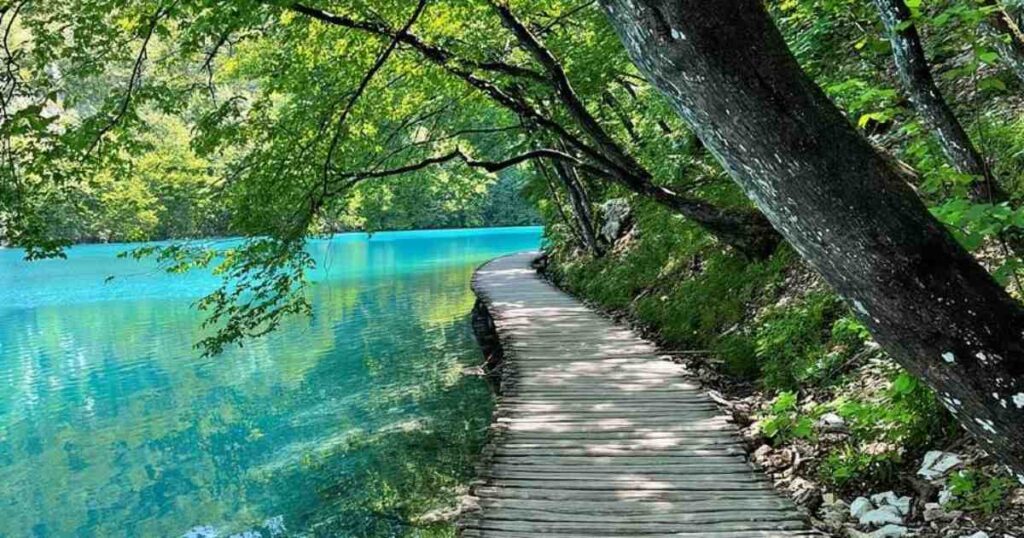
Plitvice Lakes National Park charges tiered entry fees based on season and 2026 prices align closely with 2025 rates. Peak season (April 1 – October 31): adults pay €39.50 for a full-day ticket covering all routes. Off-peak (November 1 – March 31): the entry fee drops to €10.00 for adults. Children under 7 enter free year-round. The entry price includes the panoramic train that runs between Entrance 2 and the Upper Lakes and the electric boat that crosses Lake Kozjak, both of which are not optional extras but integral to completing the standard loop.
The park offers four main hiking programmes. Programme A (2–3 hours, Lower Lakes only) covers 3.5 km and suits visitors with limited time or mobility. Programme B (3–4 hours, Lower and Upper Lakes) covers 4 km and is the most complete single-day optionit crosses Lake Kozjak by boat and reaches Veliki Slap, Croatia’s tallest waterfall at 78 m. Programme C combines the lower route with the full upper plateau and takes 4–6 hours over 8 km. Programme H is the longest at 8–10 hours and covers 18 km realistically only achievable if you stay overnight near the park.
For a day trip from Split, Programme B is the correct choice. It hits every landmark that makes Plitvice worth the drive Veliki Slap, Lake Kozjak’s blue-green surface and the wooden boardwalk sections over the cascades without requiring more than 4 hours on foot. Most visitors who attempt Programme C on a Split day trip end up rushing the upper plateau and missing the best light on the Lower Lakes in late afternoon.
Pro Tip: Buy your Plitvice entry tickets online at np-plitvicka-jezera.hr at least 3 days in advance in June, July and August the park caps daily visitor numbers and online slots sell out, leaving walk-up visitors turned away at the gate.
Best Time to Do the Split to Plitvice Lakes Trip
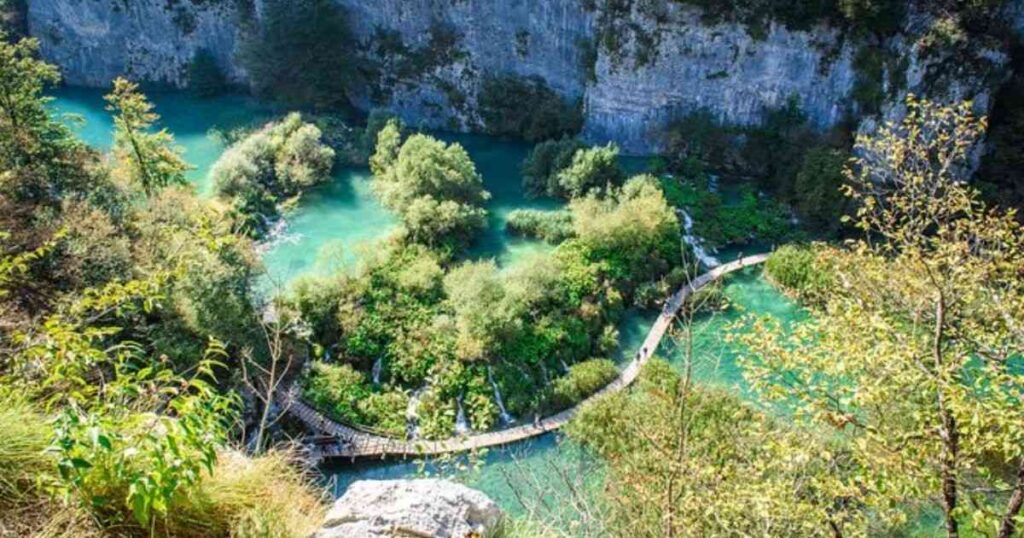
Timing your Split to Plitvice Lakes trip correctly changes the experience completely. July and August bring the largest waterfalls snowmelt from the Mala Kapela mountains peaks in late spring but the lakes stay full through summer along with 35°C heat and 5,000+ daily visitors who queue at every boardwalk junction and fill the lake boat to standing capacity. The park limits daily entries but the cap is generous enough that July still feels crowded between 10:00 and 15:00.
May is the strongest month for this trip from Split. Water levels are at their highest after spring rains, daytime temperatures at the park reach 18–22°C (significantly cooler than the Dalmatian coast in the same month) and the deciduous beech and hornbeam forest surrounding the lakes is a sharp, fresh green that looks nothing like the dusty August version. Entry tickets are available without advance booking most days in May and the car park does not fill before 10:30.
September matches May for practical travel quality. Sea temperatures in Split remain at 24–26°C for beach days and Plitvice shifts into its most photogenic phase, the beech trees turn gold and orange by late September and the crowds drop roughly 50% compared to August. The entry fee stays at the peak rate (€39.50) through October but the experience delivers far more than the July price tag suggests.
Winter visits (December–February) are genuinely underrated and most tourists miss this entirely. The frozen waterfalls and snow-covered boardwalks create a different landscape altogether and the €10 entry fee makes it the best value in Croatian national park tourism. The electric boat and panoramic train do not operate in winter, limiting you to Programme A but the Lower Lakes in January look like a scene that 95% of Plitvice’s annual visitors never see.
Pro Tip: Arrive at Entrance 1 (Lower Lakes entrance) at 08:00 in summer the park opens at 07:00 and the first hour gives you the boardwalks over Milanovac and Gavanovac completely to yourself before tour buses unload at 09:30.
Practical Tips for the Split to Plitvice Lakes Journey
The logistics of a Split to Plitvice Lakes day trip have a few friction points that catch first-time visitors off guard. The park has two entrances on opposite ends of the main road: Entrance 1 sits at the Lower Lakes end and suits Programme A and B visitors who want to start with the most dramatic cascades. Entrance 2 is 2 km north and serves Programme C and H hikers who prefer to start at the Upper Lakes. Most day-trippers from Split should use Entrance 1 where you complete Programme B in a counterclockwise loop, finishing back near Entrance 1 after crossing the lake by boat.
Footwear matters more at Plitvice than at any other Croatian destination. The wooden boardwalks over the cascades are wet from permanent spray year-round and smooth-soled shoes or sandals result in slips, the park records minor injuries every week during peak season from inadequate footwear. Wear closed-toe shoes with grip. Bring a light waterproof layer even in July because the spray from Veliki Slap soaks anyone standing within 15 m of the base.
Food inside the park is available at two restaurants near the entrances (mains €12–€18) and at a snack kiosk near the Lake Kozjak boat dock. Prices run 20–30% higher than equivalent restaurants in Split and the food quality does not justify the premium. Pack lunch from a Split bakery or supermarket the morning of your trip you can eat on the benches near the lower cascade viewpoints, which doubles as one of the most dramatic picnic locations in Croatia.
Mobile signal inside the park is weak to nonexistent on the trail sections around the Lower Lakes. Download the offline park map from np-plitvicka-jezera.hr before you leave Split and screenshot your entry ticket QR code so it loads without internet at the gate.
Pro Tip: The wooden boardwalk section between Milanovac and Kaluđerovac on the Lower Lakes trail is the single most photographed stretch in the park, reach it before 09:15 or after 16:30 to photograph it without 200 people in the frame.
“Planning a longer Croatia trip? Our guides on Split to Hvar, things to do in Split Croatia and things to do in Zadar cover the rest of the Dalmatian Coast in detail.”
FAQ’s
How long does the Split to Plitvice Lakes journey take?
The Split to Plitvice Lakes drive takes 2.5 to 3 hours by car via the A1/E71 motorway the fastest and most practical option. If you travel by bus, the Split to Plitvice Lakes route takes 3.5 to 5 hours depending on which service you book; always pick a direct morning departure and avoid routes that stop in multiple towns, as those stretch the journey to nearly 6 hours. By organized tour, the total door-to-door day runs 12 hours including park time. The distance between Split and Plitvice Lakes is approximately 240–255 km depending on the route you take.
Is a day trip from Split to Plitvice Lakes worth it in 2026?
A Split to Plitvice Lakes day trip in 2026 is worth it if you go by car or join a morning tour but it demands a full day with no flexibility. The honest math is this: by bus you get roughly 4 hours in the park after 7 hours of total travel, which most visitors find exhausting. By car, leaving Split at 06:30, you arrive before 09:30 and get 6–7 solid hours inside the park before the return drive. If Plitvice is your only Croatian national park, make the drive the 16-lake system and 78 m Veliki Slap waterfall justify every kilometer of the Split to Plitvice Lakes road.
What is the cheapest way to get from Split to Plitvice Lakes?
The cheapest way to travel from Split to Plitvice Lakes is by direct bus, with one-way tickets starting at €15–€26 depending on the operator and booking date. FlixBus and Prijevoz Knežević both serve the Split to Plitvice Lakes route with 2–3 departures daily, dropping passengers directly at park Entrance 1. Book online at least 2–3 days ahead in July and August because morning buses sell out. The bus option adds 1–2 hours of extra travel each way compared to driving but it saves you €35–€55 in car rental costs plus €10–€14 in motorway tolls.
Do you need to book Split to Plitvice Lakes tickets in advance?
Yes, in peak season (June through August) you must book both your transport and your Plitvice entry tickets in advance for the Split to Plitvice Lakes trip. The national park caps daily visitor numbers and online entry slots sell out days ahead in July, leaving walk-up visitors turned away at the gate. Buy entry tickets at np-plitvicka-jezera.hr at least 3 days before your visit, 2026 peak season adult tickets cost €39.50. If you join an organized tour from Split, confirm whether park entry is included in the price, many Split to Plitvice Lakes tours list it as a separate expense paid on arrival, in cash only.
Is it better to visit Plitvice Lakes from Split or from Zagreb?
Zagreb sits just 130 km from Plitvice Lakes roughly half the distance of the Split to Plitvice Lakes route making the Zagreb day trip faster and less tiring at 1.5 hours by car or 2 — 2.5 hours by bus. However, most tourists visiting Croatia’s Dalmatian coast are already based in Split and the Split to Plitvice Lakes journey makes practical sense as a dedicated full day en route to Zagreb or as a standalone excursion. If you have the choice of base, Zagreb delivers a more relaxed Plitvice day. If Split is your base, go by car, leave early and treat the Split to Plitvice Lakes drive as part of the experience the A1 motorway cuts through dramatic Lika highland scenery that tour buses rarely stop to acknowledge.
Conclusion
The Split to Plitvice Lakes journey asks for an early start and a full day but it returns one of the most complete natural landscapes in Central Europe. The terraced blue-green lakes, the constant sound of moving water and the 78 m drop of Veliki Slap are not replicated anywhere else on the Croatian coast. Do the split to Plitvice Lakes trip in May, leave Split at 06:30 and reach Entrance 1 by 09:00. Walk Programme B in full. Then stand at the base viewpoint of Veliki Slap at 16:30 when the afternoon light hits the cliff face and the tour groups have already left that 20-minute window is the reason to make the drive.