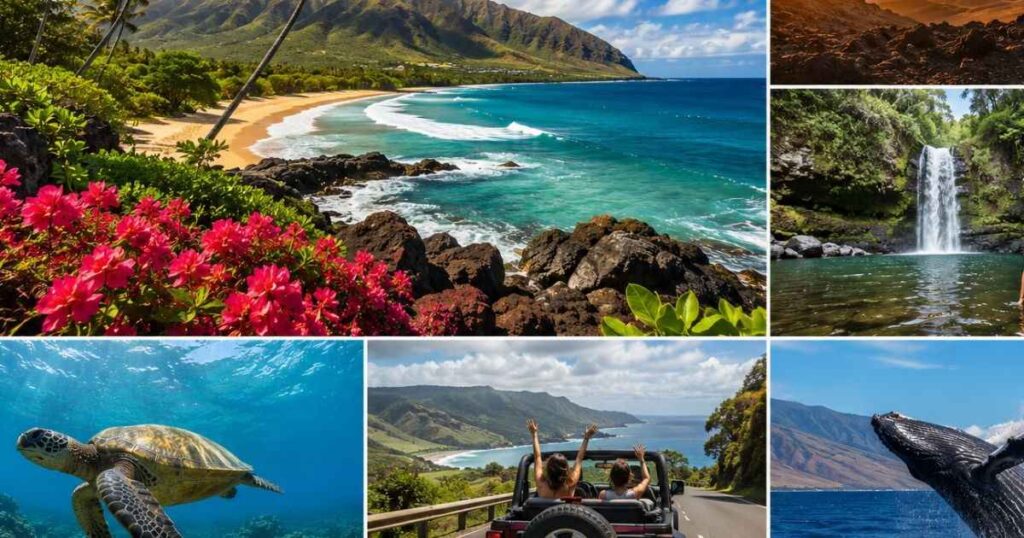
Maui gets 3 million visitors a year and most of them spend their days at the same three beaches and one luau. The things to do in Maui extend far beyond Ka’anapali resort row a 10,023-foot volcanic summit reachable by car, a half-submerged volcanic crater 2.5 miles offshore with 150-foot water visibility and 50 miles of winding highway through waterfalls and bamboo forest all sit on the same island. The island runs 727 square miles and holds two distinct mountain systems, a dry west side, a wet east side and a whale channel that ranks as the best humpback habitat in the Northern Hemisphere from December through May. This guide covers every major activity with current entry fees, honest timing advice and the spots most tourists on resort packages never reach.
In this guide you will find:
- Current entry fees for Haleakalā National Park, Waiʻānapanapa and Iao Valley including the 2026 reservation requirements
- The correct time to book Molokini snorkeling and why the 07:00 departure beats the 10:00 one
- Whale watching season dates for the upcoming 2026–2027 season with price ranges
- The Road to Hana broken into realistic stops and why most visitors attempt too many
- The one free sunset activity in Kaanapali that runs every evening and most resort guests walk past
Quick Info Box
| Detail | Info |
| Location | Maui, Hawaii, USA — second largest Hawaiian island |
| Nearest Airport | Kahului Airport (OGG) — 3 km from Kahului town center |
| Best Time to Visit | April–June and September–November |
| Island Size | 727 square miles — driving coast to coast takes 1.5–2 hours |
| Days Recommended | 7 days minimum to cover main areas without rushing |
| Average Daily Cost | $250–$400 per person including accommodation, food and activities |
Things to Do in Maui: Haleakalā and the Road to Hana
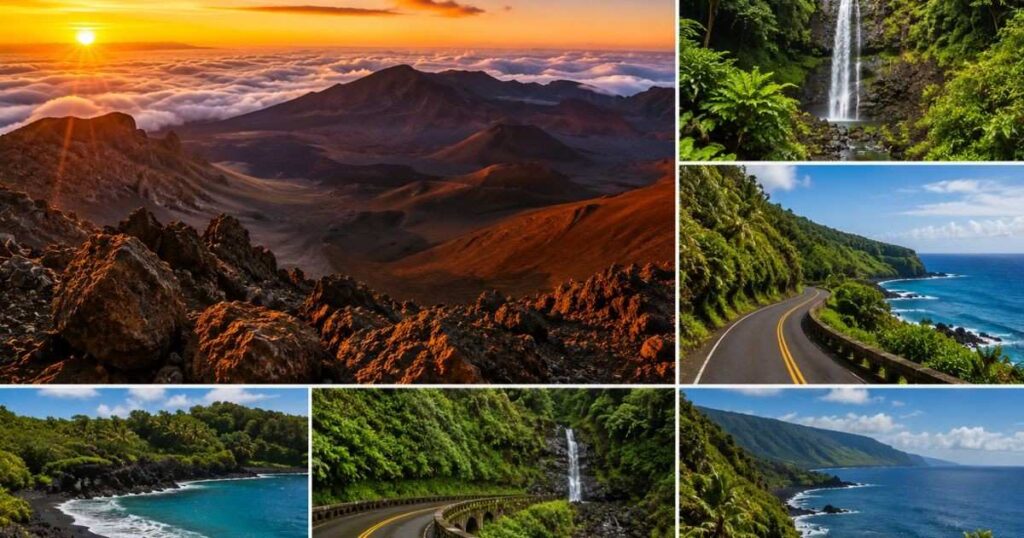
The two signature land-based things to do in Maui sit at opposite ends of the island and suit completely different days.
Haleakalā National Park rises to 10,023 feet at the summit, a dormant volcanic crater and one of the top things to do in Maui for first-time visitors. Entry costs $30 per vehicle (covers all passengers), paid at np-haleakala.hr or at the gate. The park operates cashless only credit/debit cards accepted, no cash. Sunrise at the summit requires an advance reservation through recreation.gov, reservations open 60 days ahead and sell out within hours. Sunset visits need no reservation and deliver equally dramatic light on the crater walls with 60% fewer people than sunrise.
The Road to Hana covers 50 miles of two-lane highway on Maui’s wet east side, 620 turns, 59 one-lane bridges and a dozen waterfall pulloffs between Kahului and Hana town. Budget a full day, not a half this is one of the most time-demanding things to do in Maui. Key stops: Twin Falls (free, 2 miles past the start), Waiʻānapanapa State Park black sand beach ($5 per person + $10 per vehicle, advance reservation required at dlnr.hawaii.gov) and the Pools of ‘Ohe’o in Haleakalā National Park’s Kīpahulu District ($30 per vehicle, same park pass covers both districts).
Iao Valley State Monument now requires advance reservations for non-residents $5 per person + $10 parking, booked at dlnr.hawaii.gov. The valley holds the Iao Needle, a 1,200-foot basalt formation rising from the valley floor and takes 45 minutes to walk. Most visitors driving the Road to Hana skip Iao Valley entirely, it sits 30 minutes west of Kahului and deserves a separate morning.
Pro Tip: Drive the Road to Hana on a Tuesday or Wednesday weekend traffic slows the one-lane bridge sections significantly and the fruit stands along the route run more freely stocked on weekdays. Leave Kahului by 07:00 to reach the first waterfall stops before tour vans arrive at 09:30.
Things to Do in Maui on the Water: Molokini, Whale Watching and Beaches
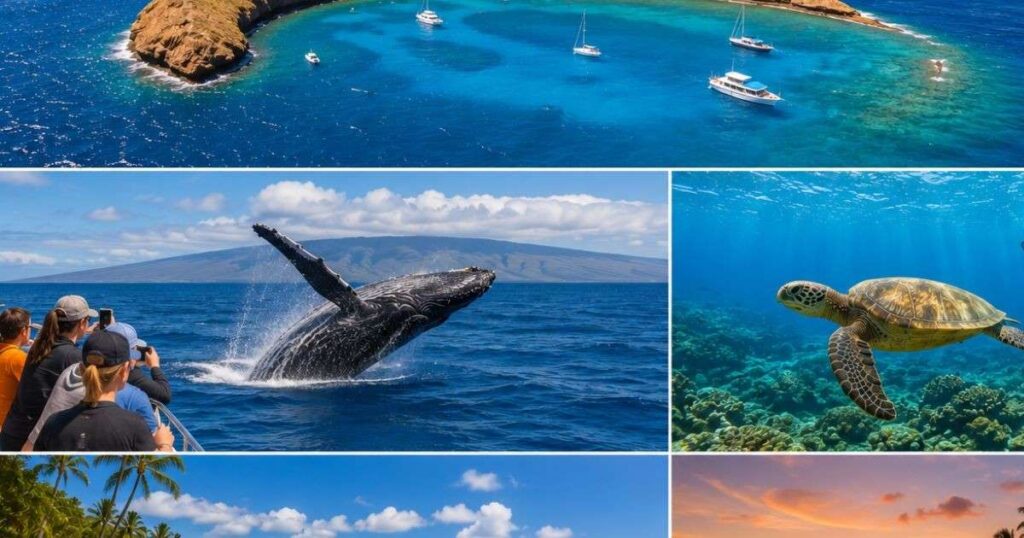
The ocean-based things to do in Maui run from free beach days to $200 guided tours and choosing the right activity for the right season makes a significant difference.
Molokini Crater sits 2.5 miles off South Maui’s Kihei coast, a partially submerged volcanic crater with water visibility regularly hitting 150 feet. Quality snorkel tours cost $130–$200 per adult including gear, breakfast and lunch. The key operators are Trilogy Excursions, Pride of Maui and Lani Kai. Book the 07:00 or 08:00 departure morning conditions are calmer, the crater is less crowded and afternoon trade winds create choppy water on the return crossing. Budget tours under $80 typically run overcrowded boats and cut corners on equipment quality.
Whale watching runs December through May in the Auau Channel between Maui, Molokai and Lanai, the primary humpback calving and nursing ground in the Northern Hemisphere. The upcoming 2026–2027 season (December through May) marks the fourth whale season since Maui’s 2023 wildfires. Tour prices run $60–$110 for 2-hour catamaran tours and $95–$160 for small-raft experiences. Most tour operators depart from Ma’alaea Harbor. Shore-based whale watching from McGregor Point on the Pali Highway (free, no booking) delivers consistent sightings in January and February from the elevated roadside viewpoint.
Maui beaches now carry parking fees at several South Maui locations. Kamaole Beach Parks I, II and III charge $10 per day as of early 2026. Dozens of other beaches including Baldwin Beach in North Shore and DT Fleming Beach in West Maui remain free. Kaanapali Beach runs 3 miles of accessible shoreline fronting the resort strip parking at Kaanapali costs $5 at the public lot off Nohea Kai Drive.
Pro Tip: The Black Rock cliff diving ceremony at Kaanapali Beach runs free every evening at sunset, a torch-lit traditional Hawaiian ceremony where a diver descends the lava rock face and swims out holding a torch. Most resort guests staying on Kaanapali never walk the 5 minutes to watch it.
Maui Luaus and Helicopter Tours: Cost Breakdown
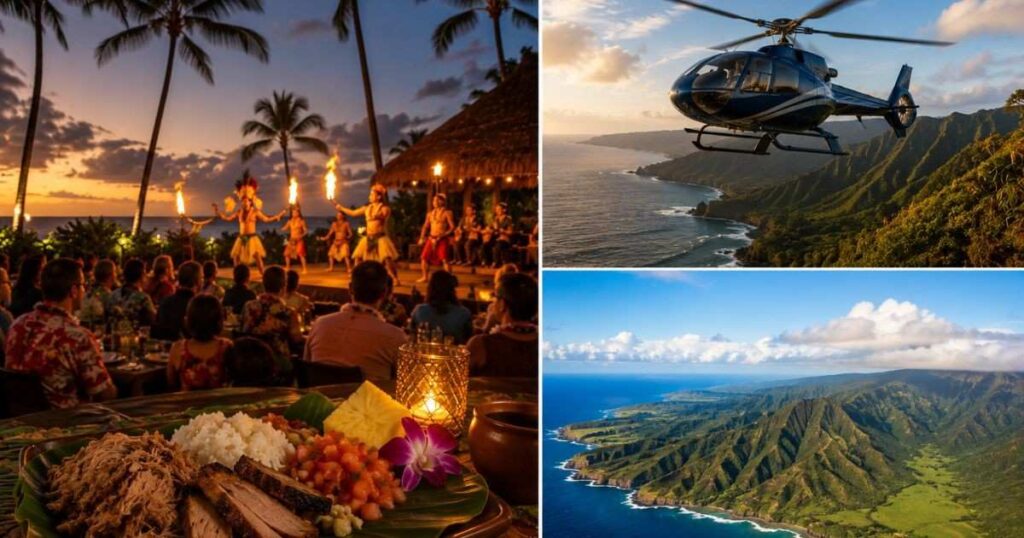
Two premium things to do in Maui demand upfront budget planning luaus and helicopter tours. Both are worth doing once neither is worth doing twice on the same trip.
Luaus in Maui start at $110 per adult for the basic versions and run to $200+ per adult for premium shows with open bar, better food and front-row seating. The Te Au Moana Luau at the Wailea Beach Marriott runs $175–$215 per adult and holds the strongest reputation for food quality and authentic cultural performance. The Feast at Mōkapu at the Four Seasons costs $265–$295 per adult reserve 3–4 weeks ahead in summer. Budget luaus exist but typically run in large venues with limited cultural context and limited-quantity food service.
Helicopter tours rank among the most unforgettable things to do in Maui. Tours from Kahului Airport start at $200 per adult for shared tours and rise to $350–$500 for doors-off private flights over the West Maui Mountains and Hana Coast. The doors-off experience requires advance booking most operators in Maui sell out 2–3 weeks ahead in summer. Blue Hawaiian and Air Maui are the two main operators. Most visitors don’t realize that helicopter tours from the Big Island fly over active lava flows. Maui’s Haleakalā is dormant, so Maui helicopter tours cover coastline and rainforest rather than volcanic activity.
Most visitors booking luaus in advance don’t know that the Te Au Moana luau at Wailea fills faster than most Maui hotels realize book 3–4 weeks ahead in July and August or the only available slots are the furthest tables with obstructed views of the ocean sunset backdrop.
Verdict: Book one luau and one helicopter tour in opposite weather windows. Helicopter tours need clear mornings (before 10:00 when clouds build on the mountain) luaus run evenings and are weather-independent.
Practical Tips for Things to Do in Maui
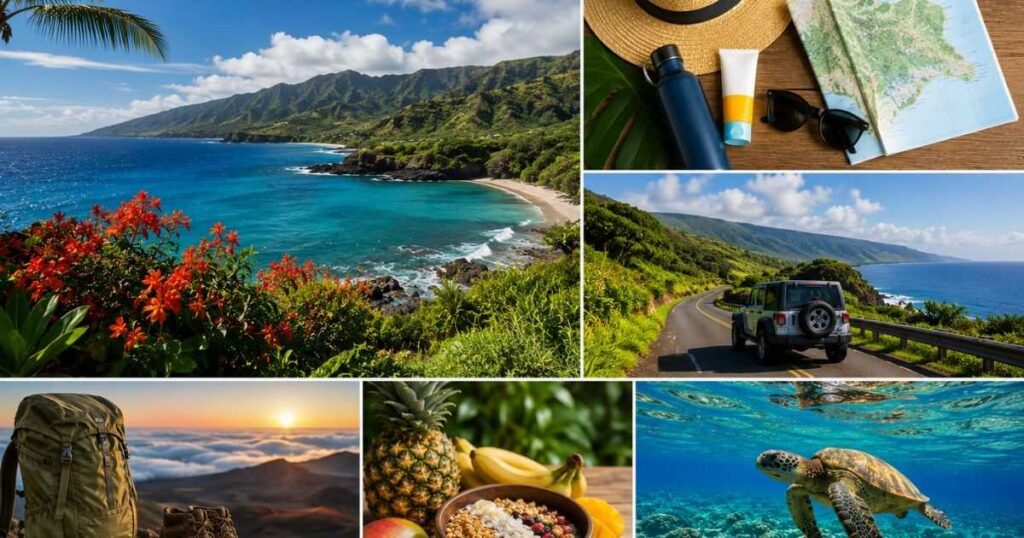
Three planning details about things to do in Maui catch first-time visitors consistently. First, Maui requires a car. No public transport connects the west side (Ka’anapali, Lahaina) with South Maui (Kihei, Wailea) or Upcountry Maui (the slopes of Haleakalā). Car rental at Kahului Airport costs $65–$120 per day in peak season (June–August) and $45–$75 in shoulder season. Book the rental before you book activities rental car availability drops significantly 2–3 weeks before peak travel dates.
Second, the Lahaina fire of August 2023 permanently changed the west side. Front Street remains partially closed as of mid-2026 several restaurants and shops have reopened but the historic area north of Lahaina town is still restricted. All major activities from Lahaina Harbor (whale watching, snorkeling tours) operate normally. Visiting Lahaina means visiting a community in active recovery. It remains one of the most meaningful stops for visitors who want cultural context beyond beach tourism.
Third, food costs in Maui run significantly above mainland US prices. A casual breakfast at a plate lunch spot costs $15–$20 per person. A mid-range dinner runs $35–$50 per person before drinks. Grocery stores (Safeway and Foodland in Kahului) stock full provisions at normal supermarket prices. Cooking two meals per day from groceries saves $80–$120 per day for a couple compared to eating out every meal.
Pro Tip: Fill your rental car at the Costco in Kahului fuel runs $0.30–$0.50 per gallon cheaper than resort-area gas stations. A Costco membership pays for itself in 2–3 fill-ups on a week-long Maui trip.
“Planning more Portugal day trips? Our guides on Day Trips From Lisbon, lisbon to cascais , where to stay lisbon, things to do sintra , lisbon to sintra and porto wine tours cover the rest of the region in detail.”
Frequently Asked Questions
How many days do you need for things to do in Maui?
Seven days gives you enough time to cover the main things to do in Maui without rushing one full day for the Road to Hana, one day for Haleakalā, two days for snorkeling and beaches, one evening luau and two flexible days for North Shore, Upcountry and rest. Five days works if you cut one major activity. Less than five days means choosing between the Road to Hana and Haleakalā you cannot do both properly in a short trip.
Is Maui worth visiting?
Maui consistently delivers on the core promise for things to do in Maui Molokini Crater’s 150-foot visibility, Haleakalā’s 10,023-foot summit above the clouds and humpback whales in the Auau Channel are genuinely difficult to replicate anywhere else in the US. The main caveat is cost: Maui runs $250–$400 per person per day for a mid-range trip. Visitors who research free and low-cost things to do in Maui (Twin Falls, Baldwin Beach, McGregor Point whale watching) can bring that daily cost down significantly.
What is the best time to visit Maui?
April through June and September through November are the best months for things to do in Maui. April and May add the tail end of whale season to warm water snorkeling conditions. September and October bring the calmest ocean conditions of the year with fewer visitors than summer. December through March delivers peak whale season but rougher crossing conditions for Molokini tours. July and August are the busiest and most expensive months. Haleakalā sunrise reservations sell out 60 days ahead and rental cars book out weeks in advance.
Is Maui expensive for tourists?
Maui is one of the most expensive US domestic destinations. A mid-range hotel in Kihei or Ka’anapali costs $300–$500 per night in peak season. Car rental adds $65–$120 per day. Activities run $30–$200 per person for major experiences. A couple doing a week of mid-range travel in Maui spends $6,000–$9,000 total including flights. Budget strategies include booking vacation rentals with kitchens, eating from Costco and plate lunch spots and focusing on free beaches and trails rather than guided tours for every day.
Is Maui better than the Big Island for first-time Hawaii visitors?
Maui and the Big Island suit different priorities. Maui delivers the best beaches, the most accessible snorkeling at Molokini and the strongest whale watching in Hawaii from December through May. The Big Island offers active lava flows (unique in the US), more dramatic volcanic landscapes and cheaper accommodation. First-time Hawaii visitors who want beaches and water activities will find the best things to do in Maui outperform any other island, those who want geology and raw volcanic scenery choose the Big Island. Both islands are fully accessible with a direct flight from the US mainland.
Conclusion
No other island in Hawaii packs this range of land and ocean experiences into a single week. The things to do in Maui move from a 10,023-foot volcanic summit at dawn to a 150-foot-visibility snorkel crater by midmorning and the best version of that day costs $30 for the park pass and $130 for the boat. Drive to Haleakalā for sunset on a clear Tuesday in October, park at the summit visitor center by 17:00 and watch the shadow of the volcano stretch west across the Pacific as the light drops that view, free after the $30 entry fee, is why Maui keeps drawing people back year after year.