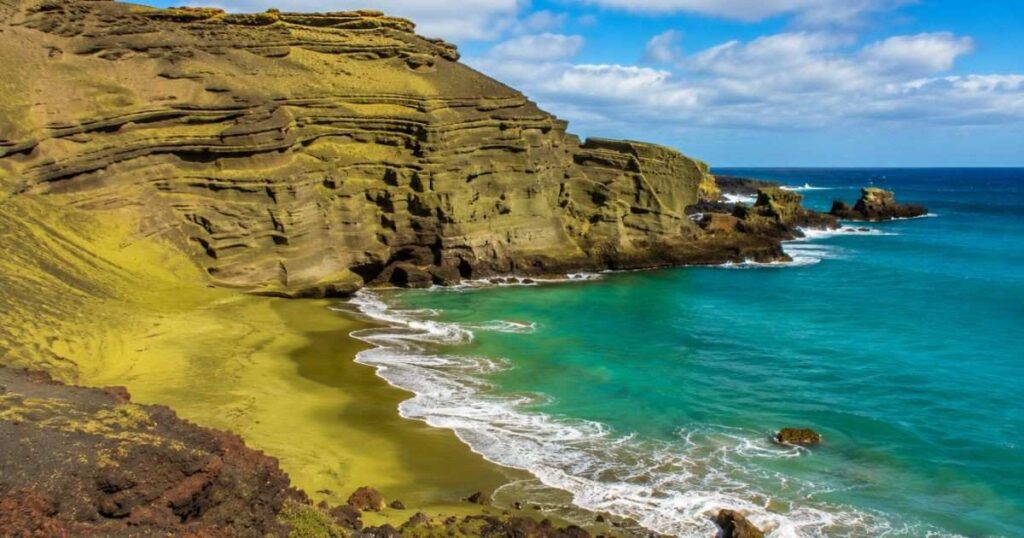
Only four green sand beaches exist on Earth and this is the most visited of the four a volcanic cove on Hawaii’s southern tip where centuries of ocean erosion have left nothing behind but pure olivine crystals, a mineral so dense and dark it colors the entire shoreline a deep olive-green. Most visitors assume the shuttle at the parking lot is the official way in. It is not the Department of Hawaiian Home Lands banned vehicles on this road to stop erosion damage and your rental car contract specifically prohibits driving it. This guide covers the trail, the shuttle facts, the olivine geology and exactly what to bring for a 5-mile round trip with no shade on the southernmost point in the United States.
In this guide you will find:
- Why the local shuttle costs $15–$25 and what the legal status actually is in plain terms
- Exact trail distance (2.5 miles each way), terrain type and why shade is the biggest challenge not the distance
- The olivine science why Papakolea green sand beach is green and why the color is permanent
- Swimming conditions at the cove when it is safe and when it is not
- How Papakolea compares to Punalu’u Black Sand Beach 30 minutes away
Quick Info Box
| Detail | Info |
| Location | Near Ka Lae (South Point), Kaʻū District — Big Island, Hawaii |
| Nearest Airport | Kona International Airport (KOA) — 2 hours by car |
| From Hilo | 1.5 hours by car via Highway 11 |
| Trail Distance | 2.5 miles one way — 5 miles round trip |
| Hike Time | ~1 hour each way / 2.5 hours total |
| Entry Fee | Free — County of Hawaii public land |
| Facilities | None — no restrooms, no shade, no water |
| Best Time | Early morning, April–October |
Papakolea Green Sand Beach: How to Get There and What the Trail Involves
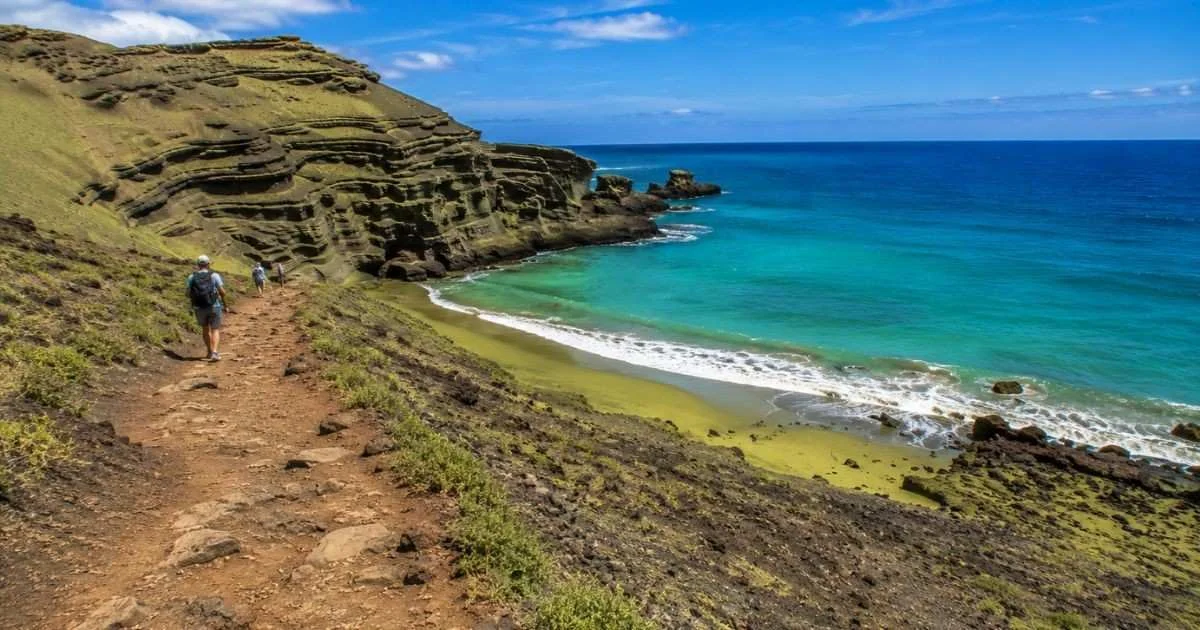
Papakolea green sand beach sits at the end of a 2.5-mile trail from the South Point parking area, the southernmost point in the United States. The parking lot is free, has space for 30–40 cars and sits at the end of a long narrow road off Highway 11. The road to the parking area is legal and paved for the first section the dirt track beyond is where vehicles are prohibited.
From the parking lot, the trail runs 2.5 miles along the coastline on ancient lava fields now covered in dry pasture grass. The terrain is mostly flat with one steep descent at the end down into the cove itself. The path is exposed to direct sun for the entire route, no trees, no shade structures and no cover of any kind. Heat accumulates on the dark lava surface from 09:00 onward and makes afternoon hikes significantly harder than morning ones.
The one-way hike takes approximately 1 hour for most adults at a steady pace. Allow 2.5–3 hours total for the round trip including time at the beach. Along the trail you pass the Kaulana Boat Ramp and several ancient Hawaiian stone temple remnants visible from the path. Do not disturb or climb on them.
The descent into the cove at the end drops steeply on a cinder cone slope. The green sand becomes visible from the top of the rim before you descend. The color hits harder from above than at sea level because you see the full contrast of the sand against the dark lava walls and turquoise water simultaneously.
Pro Tip: Start the trail by 07:00 at the latest the parking lot fills by mid-morning in summer and the trail in direct afternoon sun at Ka Lae’s southern latitude runs significantly hotter than equivalent hikes elsewhere on the Big Island.
Papakolea Green Sand Beach: The Shuttle Honest Facts

The local shuttle is the most misunderstood part of visiting this beach. Here are the facts without ambiguity.
The Department of Hawaiian Home Lands (DHHL), which manages the land between the parking lot and the cove, prohibits vehicles on the dirt track to protect the ecosystem and the ancient sites from erosion. This prohibition covers rental cars, private 4WD vehicles and the local pickup trucks that offer shuttle rides. Individual locals charge $15–$25 per person round trip and drive passengers in privately owned 4WD trucks.
Multiple sources from 2026 confirm the shuttles continue to operate regardless of the prohibition. The majority of visitors arriving at the parking lot now take a shuttle rather than hike. The practical reality is you are unlikely to face legal consequences as a passenger but the trucks are causing measurable erosion damage to the trail surface and the sacred heiau sites alongside it.
Your rental car contract explicitly prohibits driving on this road if you drive your own rental and damage it on the route, your insurance coverage may be void. This applies even with 4WD vehicles.
Multiple credible sources agree to hike the trail if you are physically able. The shuttle removes the most scenic part of the approach, the coastal views along the lava fields and contributes to the erosion destroying what makes the site worth visiting in the first place.
Pro Tip: If you do take the local shuttle, bring cash only $20–$25 per person is standard. No card readers exist at the parking lot and negotiating without cash means missing the ride.
Why Papakolea Green Sand Beach is Green: The Olivine Science

The color at papakolea green sand beach is not algae, not a filter and not tourism exaggeration. The science is simple and the result is permanent as long as the volcano’s original deposit holds.
The beach sits inside the collapsed cone of Puʻu o Mahana, a volcanic cinder cone that erupted and deposited lava rich in olivine, a magnesium iron silicate mineral that forms at high temperatures inside volcanic rock. Basalt rock typically contains olivine but weathering breaks basalt apart and lighter particles wash away while denser minerals like olivine concentrate.
Over centuries, ocean waves eroded the crater walls at Puʻu o Mahana. Basalt particles dispersed into the water and floated away. Olivine 2.5 times heavier than water sank and accumulated in the protected cove below the crater rim. The olivine grains look like crushed pale-green sea glass and feel coarser than typical beach sand because they are genuinely heavier.
Only four green sand beaches exist globally because this combination of conditions is extremely rare volcanic activity producing olivine-rich lava, a protected cove geometry that prevents dispersal and ocean energy high enough to erode the rock but not so destructive it clears the deposit. Papakolea green sand beach is the most visited of the four, the others sit in the Canary Islands, Guam and Norway.
Morning light before 09:00 shows the color most vividly. Afternoon light flattens the green-tone sunrise light from the east hits the cove at an angle that emphasizes the contrast between sand and dark lava walls.
Verdict: The green color at Papakolea is a geological fact produced by olivine mineral concentration, it looks exactly like photos suggest and does not disappoint visitors who make the 5-mile round trip.
Practical Tips for Papakolea Green Sand Beach

Four practical details catch first-time visitors consistently. First, no facilities exist at the parking lot or the beach. No restrooms, no water, no food, no shade at either end. The nearest facilities sit at South Point itself, a 10-minute drive back up the access road. Use restrooms before arriving and carry all food and water from your car.
Water is the most critical thing to carry. The 5-mile round trip on exposed lava in direct sun requires a minimum of 2 liters per person. Dehydration is the most common reason visitors turn back before the cove. Multiple 2026 visitor reports specifically mention underestimating water needs on this trail.
Second, swimming is dangerous here. The cove has no lifeguards and receives strong, unpredictable wave action directly from the open Pacific. The cove geometry creates a surge effect where waves appear calm from above on the rim but intensify at the shoreline. Wading in shallow water is possible on calm days, full swimming is not recommended and multiple incidents have occurred here. Visit during April through September when swell patterns are lower on average but check surf reports specifically for Ka Lae the morning of your visit.
Third, the beach sits 2 hours from Kona and 1.5 hours from Hilo. It makes the most sense as a dedicated half-day trip rather than a quick stop. Pair it with Punalu’u Black Sand Beach 30 minutes north on Highway 11 free entry, restrooms, resident sea turtles and a completely different volcanic sand color in the same day.
Pro Tip: Wear closed-toe shoes with grip and change to water shoes or sandals at the cove. The cinder cone descent into the beach is steep, loose gravel flip-flops cause slips and cuts on the olivine grain surface at the bottom.
“Planning more Hawaii day trips? Our guides on things to do maui , red sand beach maui, lulumahu falls, things to do in hilo hawaii, things to do in kona, captain cook monument trail and lanikai pillbox hike cover the rest of the region in detail.”
Frequently Asked Questions
How far is the hike to Papakolea Green Sand Beach?
The hike to papakolea green sand beach is 2.5 miles one way from the parking lot and 5 miles round trip. The terrain is mostly flat across old lava fields with one steep descent into the cove at the end. Most adults complete the round trip in 2.5–3 hours including time at the beach. The trail has no shade for its entire length, making water and sun protection more critical than the distance itself.
Is Papakolea Green Sand Beach worth the hike?
Papakolea green sand beach is worth the 5-mile round trip for visitors who start early, carry sufficient water and wear proper footwear. The beach is one of four green sand beaches on Earth. The olivine color is genuine, striking and unlike any other beach in the United States. The main caveat afternoon visits in direct sun without adequate water preparation regularly result in trail abandonment before reaching the cove. Plan the hike as a half-day commitment, not a quick detour.
What is the best time to visit Papakolea Green Sand Beach?
Early morning visits between 06:00 and 09:00 are the best time for papakolea green sand beach. Starting at dawn avoids the peak heat window of 10:00–14:00 on the exposed trail and reaches the cove when olivine color contrast is strongest in morning light. April through September brings lower average swell levels at the cove, making wading safer. The parking lot fills by mid-morning on clear days, early arrival secures a spot and gives you the trail before the first local shuttle runs start.
Is the shuttle to Papakolea Green Sand Beach legal?
The local shuttle service is technically illegal, the Department of Hawaiian Home Lands prohibits vehicles on the road between the parking lot and the cove. Local operators drive privately owned 4WD pickup trucks and charge $15–$25 per person round trip without a permit or license. As of multiple 2026 sources, the shuttles continue to operate openly and passengers face no legal consequences in practice. The environmental impact is real, the trucks are eroding both the trail surface and the ancient heiau alongside it. Hiking remains the recommended approach for physically capable visitors.
Is Papakolea Green Sand Beach better than Punalu’u Black Sand Beach?
Papakolea green sand beach and Punalu’u Black Sand Beach suit different visitors and work best as a combined day. Punalu’u is 30 minutes north of Papakolea on Highway 11 free, has restrooms, has resident green sea turtles and requires zero hiking. Papakolea requires a 5-mile round trip with no facilities but delivers one of the world’s rarest geological beach formations. Visitors who can complete the hike should do both on the same day Punalu’u first (restrooms, turtles, easy access), then drive south for Papakolea with full water supplies and the morning light still favorable.
Conclusion
Three things make papakolea green sand beach worth the 5-mile round trip the olivine color is genuine and earned by the hike that delivers you to it, the southernmost beach in the United States sits inside a collapsed volcanic crater that no other destination on Earth replicates and the trail itself along Ka Lae’s lava coastline is striking enough to justify the walk back. Leave the South Point parking lot by 07:00, carry 2 liters of water per person and descend the cinder cone rim into the cove before 08:30 stand at the shoreline when the morning sun clears the eastern rim and the full green of the olivine sand reflects against the dark lava walls above you. That color, at that hour, is why the beach exists on every Big Island bucket list.


